
Gardening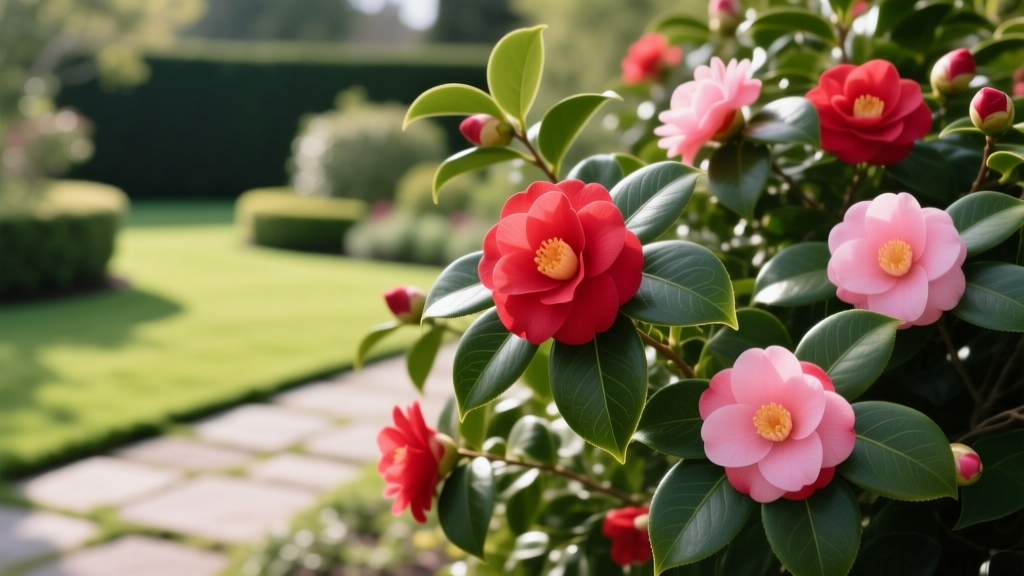
What Is the State Flower of Alabama? A Guide to Growing Camellias
Identifying the State Flower of Alabama
If you are researching Southern horticulture or local state symbols, you might be asking: what is the state flower of alabama? The official state flower is the Camellia, specifically the species Camellia japonica. While the goldenrod originally held the title starting in 1927, it was officially replaced by the camellia in 1959. The legislative push was led by the Greenville Garden Club, who argued that the goldenrod was a pervasive agricultural weed, whereas the camellia represented the refined, enduring beauty of the Southern landscape.
'The camellia, with its glossy evergreen foliage and spectacular winter-to-spring blooms, perfectly encapsulates the resilience and elegance of Alabama's horticultural heritage.' — Alabama Department of Archives and History
Today, Alabama is home to some of the most prestigious camellia collections in the United States, including the historic Bellingrath Gardens and the Mobile Botanical Gardens. For home gardeners, understanding how to cultivate Camellia japonica requires mastering specific soil chemistry, microclimate selection, and precise pruning schedules.
Botanical Profile and Hardiness Data
Before purchasing a shrub, verify that your local microclimate aligns with the camellia's environmental requirements. Camellia japonica is distinctly different from the fall-blooming Camellia sasanqua; it produces larger, more formal blooms and requires deeper shade.
| Characteristic | Specification |
|---|---|
| Botanical Name | Camellia japonica |
| USDA Hardiness Zones | 7a through 9a |
| Mature Dimensions | 8-15 feet tall, 5-10 feet wide |
| Bloom Window | January through April (varies by cultivar) |
| Light Requirements | Dappled sunlight, morning sun with afternoon shade |
| Optimal Soil pH | 5.5 to 6.5 (Strongly acidic) |
Selecting the Right Cultivar for Southern Gardens
The American Camellia Society registers over 2,000 cultivars, but only a fraction perform reliably in the humid, heavy-clay environments typical of the Deep South. When sourcing plants from local nurseries, prioritize these proven performers:
- 'Professor Sargent': A mid-season bloomer (February-March) featuring deep cherry-red, semi-double flowers. It exhibits superior heat tolerance and vigorous upright growth, reaching 10 feet tall.
- 'Debutante': An early bloomer (December-February) with pale pink, peony-form flowers. It is highly prized for its cold hardiness, surviving sudden Zone 7 temperature drops better than most formal doubles.
- 'Nuccio's Jewel': A mid-to-late season cultivar producing large, white flowers edged in dark rose. It requires strict afternoon shade to prevent petal scorch during unseasonably warm March afternoons.
Site Selection and Soil Chemistry Preparation
The most common cause of camellia failure is improper soil preparation. These shrubs possess shallow, fibrous root systems that suffocate in poorly drained clay and suffer from iron chlorosis in alkaline soils.
Warning: The Alkaline Threat
If your soil pH exceeds 6.5, the camellia cannot absorb iron, resulting in yellowing leaves with dark green veins (interveinal chlorosis). Do not attempt to fix this with surface fertilizers alone. You must amend the soil chemistry prior to planting.
The Ideal Planting Bed Recipe
To create an optimal growing medium in heavy clay, excavate a planting area three times the width of the root ball and 12 inches deep. Backfill with a mixture of:
- 40% Native Soil: To anchor the plant and encourage root expansion beyond the amended zone.
- 30% Pine Bark Fines: Provides essential aeration and naturally lowers soil pH over time.
- 30% Leaf Mold or Composted Oak Leaves: Retains moisture without waterlogging the root zone.
If a soil test indicates a pH above 6.5, incorporate elemental sulfur at a rate of 1 pound per 100 square feet to lower the pH by approximately 0.5 points. According to regional horticultural guidelines from Clemson University Extension, sulfur applications should be made 3 to 6 months before planting for maximum efficacy.
Step-by-Step Planting Protocol
Execute these steps during the dormant season (November through February) to allow root establishment before the stress of summer heat.
- Determine Depth: Place the root ball in the hole so that the top of the root mass sits 1 to 2 inches above the surrounding grade. Camellias will rapidly succumb to root rot if the trunk flare is buried.
- Backfill and Water: Fill the hole with your amended soil mix, tamping gently to remove air pockets. Apply 10 gallons of water immediately to settle the soil.
- Apply Acidic Mulch: Spread a 3-inch layer of pine straw or shredded hardwood bark over the root zone. Keep the mulch strictly 4 inches away from the main trunk to prevent fungal collar rot.
Troubleshooting Common Camellia Pathologies
Even well-sited camellias face environmental and biological stressors. Use this diagnostic framework to address declining shrub health.
Issue: Premature Bud Drop
Cause: While some bud drop is natural, excessive dropping is usually triggered by erratic watering, sudden freezing temperatures after a warm spell, or a severe infestation of spider mites.
Action: Maintain consistent soil moisture using a drip irrigation system delivering 1 inch of water per week. If temperatures are forecasted to drop below 25°F after buds have swollen, cover the shrub with frost cloth (never plastic) overnight.
Issue: Tea Scale (Fiorinia theae)
Cause: A pervasive armored scale insect that attaches to the underside of leaves, causing yellow mottling on the upper leaf surface and a white, crusty appearance underneath.
Action: Systemic insecticides are largely ineffective against armored scales. Apply a 2% to 3% horticultural oil spray specifically targeting the undersides of the leaves. The optimal application window is late May to early June when the 'crawler' stage is active and vulnerable. Refer to the American Camellia Society for updated regional spray schedules.
Pruning and Fertilizing Framework
Camellias require minimal pruning, but timing is critical. Never prune after mid-July. The shrub begins forming next year's flower buds in late summer; pruning in the fall will erase the following spring's bloom cycle.
- Maintenance Pruning: Immediately after the spring bloom cycle ends (usually May), remove dead wood, crossing branches, and any suckers emerging from the base.
- Size Reduction: If the shrub outgrows its space, selectively cut entire branches back to a lateral branch joint rather than shearing the exterior, which destroys the natural weeping architecture.
Fertilization Strategy
Avoid high-nitrogen synthetic fertilizers, which promote weak, leggy growth susceptible to aphid attacks. Instead, use an organic, acid-forming fertilizer such as cottonseed meal (NPK 6-2-1) or a specialized azalea/camellia blend (e.g., 10-8-8). Apply 1 cup of cottonseed meal per foot of plant height in early spring just as the leaf buds begin to break, and a second, lighter application in early June.
Frequently Asked Questions
Can I grow the Alabama state flower in containers?
Yes, Camellia japonica thrives in containers, which is ideal for gardeners with alkaline native soil. Use a 20-gallon pot with bottom drainage holes. Fill it with a commercial azalea/camellia potting mix. Containerized camellias require more frequent watering and must be repotted or root-pruned every 4 to 5 years to prevent them from becoming rootbound.
Are camellias resistant to deer browsing?
Camellias are generally classified as deer-resistant due to their thick, waxy, and slightly bitter leaves. However, during severe winter food shortages, deer will browse the tender new growth and flower buds. If you live in an area with high deer pressure, protect the shrubs with physical netting during the winter blooming period.
Why are the edges of my camellia leaves turning brown?
Leaf scorch, characterized by crispy brown margins, is typically caused by excessive direct afternoon sun, wind desiccation, or salt buildup from over-fertilization. Relocate the plant to a spot with strict morning-only sunlight and flush the soil with heavy watering to leach out excess mineral salts.

