
Gardening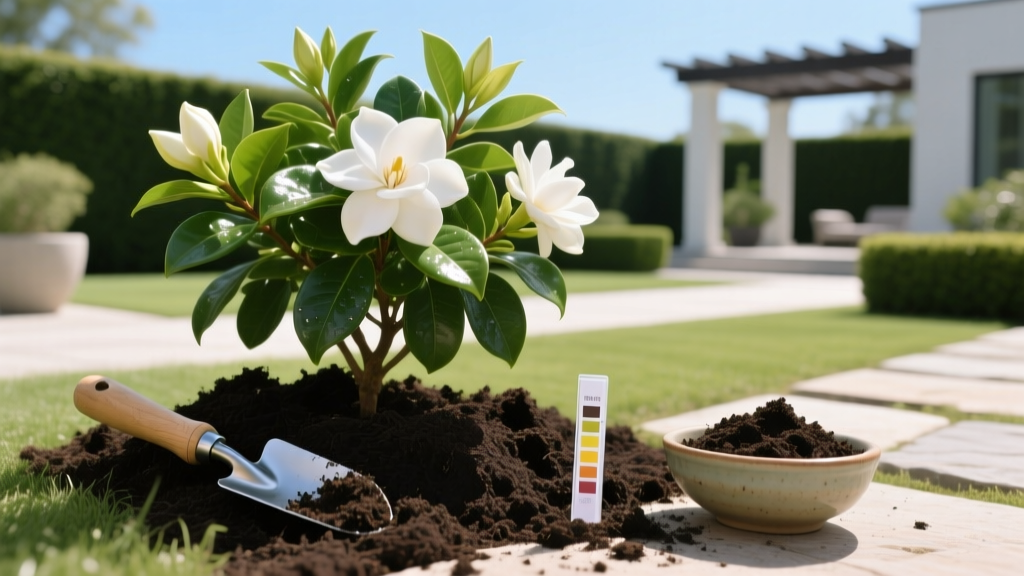
How to Use Peat Moss for Gardenias: Soil & pH Amendment Guide
The Soil Chemistry: Why Gardenias Demand Acidic Amendments
Gardenias (Gardenia jasminoides) are notoriously finicky shrubs that require a highly specific soil environment to thrive. The most critical factor is soil pH, which must be maintained strictly between 5.0 and 6.0. When soil pH drifts above 6.5, iron and manganese become chemically locked in the soil matrix, leading to severe interveinal chlorosis (yellowing leaves with green veins) and eventual bud drop. According to the Clemson University Home & Garden Information Center, maintaining this acidic threshold is non-negotiable for sustained blooming.
Sphagnum peat moss is one of the most effective organic amendments for achieving this pH range. Naturally registering a pH between 3.5 and 4.5, peat moss acts as a biological acidifier. Beyond pH adjustment, it boasts a high Cation Exchange Capacity (CEC), allowing it to hold onto essential nutrients like magnesium and calcium, preventing them from leaching out of the root zone during heavy rainfall or frequent irrigation.
Soil Amendment vs. Surface Mulch: Choosing the Right Application
A common mistake among home gardeners is treating peat moss exclusively as a top-dress mulch. While it can be used on the surface, its physical properties make it far more valuable when integrated directly into the root zone. Peat moss is highly hydrophobic when dry; if applied as a surface mulch and allowed to dry out, it will actually repel water away from the soil beneath it.
| Application Method | Primary Purpose | Recommended Depth | Best Timing |
|---|---|---|---|
| Soil Amendment | Lower pH, improve moisture retention, increase CEC | 20% to 30% of total soil volume | Prior to planting or during root-zone aeration |
| Surface Mulch | Weed suppression, minor temperature buffering | 1 inch maximum (must be kept moist) | Spring, after soil has warmed and been irrigated |
For optimal gardenia health, prioritize peat moss as a pre-planting soil amendment. If you require surface mulch for weed control and moisture retention, opt for pine bark fines or pine needles, which naturally maintain soil acidity without the hydrophobic risks associated with dry peat.
Exact Mixing Ratios for In-Ground and Container Gardenias
Gardenias require a delicate balance: the soil must retain moisture but drain rapidly enough to prevent Phytophthora root rot. Peat moss excels at moisture retention but lacks structural drainage. Therefore, it must be blended with coarse organic matter.
CRITICAL PRE-MIXING STEP: Never mix dry peat moss directly into garden soil. Sphagnum peat is naturally hydrophobic. Before blending, empty the peat moss into a wheelbarrow, add water gradually, and turn it with a spade until it reaches the consistency of a wrung-out sponge. This ensures it will absorb water evenly once placed in the garden bed.
In-Ground Bed Preparation Ratio
When planting a new gardenia shrub in native loam or clay soil, excavate a hole twice as wide as the root ball. Blend the excavated native soil using the following ratio:
- 50% Native Soil: Provides mineral structure and native microbiology.
- 30% Pre-moistened Peat Moss: Lowers pH to the 5.0–6.0 target and increases water-holding capacity.
- 20% Pine Bark Fines: Creates macro-pores for oxygen flow and prevents soil compaction.
Container Potting Mix Ratio
Potted gardenias dry out faster and are more susceptible to pH fluctuations. Do not use standard garden soil in containers. Mix a custom, highly aerated acidic blend:
- 40% Sphagnum Peat Moss: The primary moisture and acidity base.
- 40% Coarse Pine Bark or Orchid Bark: Ensures rapid drainage and prevents root asphyxiation.
- 20% Coarse Perlite: Provides structural aeration and keeps the mix lightweight.
Step-by-Step Bed Preparation Protocol
Follow this precise sequence to ensure your peat moss amendment integrates correctly with the gardenia's root system.
- Test Native Soil pH: Use a reliable digital meter or chemical dye kit (such as the Luster Leaf Rapitest). If your native soil is above 7.0, peat moss alone may not be sufficient to drop the pH to 5.5. You will need to incorporate elemental sulfur at a rate of 1 pound per 100 square feet for every 1.0 pH point reduction required.
- Hydrate the Peat: Pre-moisten your peat moss (e.g., Sun Gro Black Gold Canadian Sphagnum, typically $18–$25 per 2.2 cubic foot bale) in a wheelbarrow 24 hours before planting.
- Blend and Mound: Mix the hydrated peat with native soil and pine bark. Backfill the planting hole, creating a slight 2-inch mound above the surrounding grade to encourage surface runoff away from the gardenia's crown.
- Inoculate with Acidic Fertilizer: Peat moss contains virtually zero NPK nutrients. Immediately after planting, apply an acidic, slow-release organic fertilizer like Espoma Holly-tone (4-3-4) at a rate of 1 cup per foot of branch spread to fuel the initial root establishment.
Troubleshooting Peat Moss Failure Modes
Even with proper ratios, environmental factors can cause peat-amended soils to fail. Monitor your gardenias for these specific edge cases:
- Hydrophobic Dry-Out: If a containerized gardenia is allowed to dry out completely, the peat moss will shrink and pull away from the sides of the pot, creating channels where water runs straight out the bottom without wetting the root ball. Fix: Submerge the entire pot in a basin of water with a drop of liquid wetting agent (yucca extract) for 30 minutes to rehydrate the peat core.
- Over-Acidification (pH below 4.5): While rare, repeatedly amending with pure peat moss over several years without buffering can drop the pH too low, causing manganese toxicity (dark brown spotting on leaves). Fix: Top-dress with garden-grade agricultural lime at a rate of 1/2 cup per plant to gently raise the pH back to 5.5.
- Peat Decomposition and Compaction: Over 3 to 5 years, peat moss breaks down into fine particles, reducing soil aeration. Fix: Core-aerate the root zone annually and top-dress with fresh pine bark fines to restore macro-porosity.
The Sustainability Factor: Peat Moss vs. Coco Coir
The harvesting of sphagnum peat moss involves the destruction of peat bogs, which are critical global carbon sinks. This has led many eco-conscious gardeners to seek alternatives. According to the Royal Horticultural Society (RHS), transitioning to sustainable peat-free alternatives is highly recommended for environmental conservation.
Expert Insight: If you choose to replace peat moss with coco coir (coir pith) for your gardenias, be aware that coir has a natural pH of 5.5 to 6.8 and contains high levels of potassium and sodium. You must purchase 'buffered' coco coir—washed with calcium nitrate to remove sodium—and you will likely need to add elemental sulfur or soil acidifiers to push the pH down into the strict 5.0–5.5 range that gardenias prefer.
Nutrient Management Post-Amendment
Because both peat moss and coco coir are essentially devoid of immediate plant-available nutrients, your fertilization strategy must be rigorous. Gardenias are heavy feeders during their spring and summer blooming cycles. Apply a chelated iron supplement (such as Ironite or a liquid Fe-EDDHA chelate) every six weeks during the growing season. The chelation prevents the iron from binding to the soil particles, ensuring the gardenia can absorb it even if your peat moss amendment begins to lose its acidic buffering capacity over time.
By understanding the precise chemical and physical properties of peat moss, you can engineer a soil environment that eliminates the guesswork from gardenia cultivation, resulting in deep green foliage and prolific, highly fragrant blooms year after year.

