
Gardening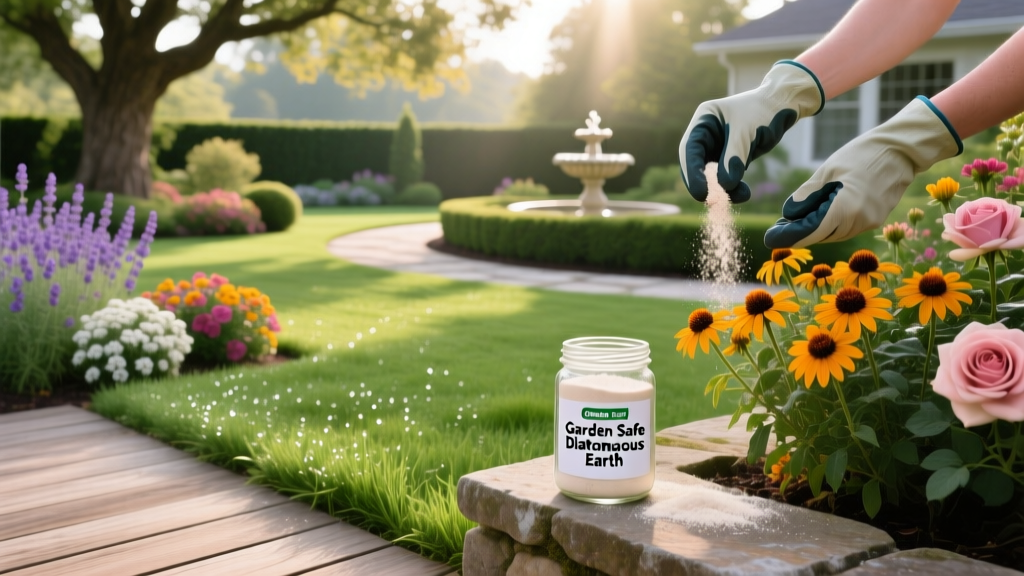
How to Use Garden Safe Diatomaceous Earth for Organic Pest Control
The Mechanics of Garden Safe Diatomaceous Earth
Diatomaceous earth (DE) is a naturally occurring, soft siliceous sedimentary rock crumbled into a fine white to off-white powder. When sourcing DE for organic gardening, the distinction between grades is a matter of plant and human safety. Garden safe diatomaceous earth—often labeled as food-grade or OMRI-listed—consists primarily of amorphous silicon dioxide. It contains less than 1% crystalline silica, making it safe for use around edible crops, pets, and humans when handled correctly.
Unlike chemical neurotoxins, DE operates via mechanical action. The fossilized diatoms possess microscopic, razor-sharp edges (typically 10 to 50 microns in size). When crawling insects with exoskeletons or soft-bodied pests cross the powder, these edges lacerate their waxy outer lipid layer. The pest subsequently dies from dehydration, usually within 24 to 48 hours. Because this is a physical mechanism, pests cannot develop genetic resistance to DE, making it a cornerstone of long-term integrated pest management (IPM).
Pest Efficacy Matrix: What It Kills and What It Spares
Applying DE blindly across your garden is an inefficient use of resources and can inadvertently disrupt local ecology. Target your application based on the physical characteristics of the pest.
| Target Organism | Efficacy | Application Strategy |
|---|---|---|
| Slugs and Snails | High | Create a continuous 2-inch wide, 1/4-inch thick ring around the base of hostas and lettuce. |
| Flea Beetles & Aphids | Moderate-High | Use a bulb duster to apply a fine mist to the undersides of leaves during dry, calm evenings. |
| Cutworms | High | Dust the soil surface and the lower 2 inches of seedling stems immediately after transplanting. |
| Earthworms | None (Safe) | Subsurface dwellers; surface applications do not penetrate deeply enough to harm them. |
| Bees & Butterflies | Low (If avoided) | Never apply directly to open blooms. Apply at dusk when pollinators are inactive. |
Step-by-Step Application Protocol for Raised Beds
To maximize the longevity and effectiveness of your garden safe diatomaceous earth, follow this precise application sequence. A standard 4 lb bag of Harris Food Grade DE (typically priced between $18 and $22) will treat approximately 800 to 1,000 square feet when applied correctly.
- Moisture Assessment: DE is entirely ineffective when wet. Check your soil and foliage. If dew is present or rain occurred within the last 12 hours, wait. The foliage must be bone-dry.
- Tool Selection: For soil barriers, use a shaker can or a wide-mouthed duster. For foliar pests (like aphids on brassicas), use a bellows-style bulb duster (such as the Pest Pistol Raptor) to ensure the powder reaches the leaf undersides.
- Establish the Perimeter: Pour a continuous barrier around the exterior of your raised bed or container. The barrier should be 1/8 to 1/4 inch thick and at least 2 inches wide. Gaps as small as a millimeter will allow slugs to bypass the treatment.
- Target the Stem Base: Lightly dust the soil surface in a 3-inch radius around the main stem of vulnerable seedlings (tomatoes, peppers, squash). Do not pile the powder against the stem, as this can trap moisture and invite fungal collar rot.
- Foliar Dusting (If Required): Squeeze the bulb duster gently to create a barely visible cloud. Coat the lower canopy. The goal is a light dusting, not a caked layer; heavy layers block stomata and reduce photosynthesis.
Troubleshooting: Why Your DE Application Failed
Gardeners frequently report that DE "doesn't work." In 90% of cases, this is due to environmental mismanagement rather than product failure. According to the National Pesticide Information Research Center (NPIC), DE's mechanical action is completely neutralized by water. Review these common failure modes:
1. The Micro-Humidity Problem
Even without rain, high ambient humidity (above 85%) or heavy morning dew can cause DE particles to clump and absorb moisture, blunting their sharp edges. The Fix: In humid climates, apply DE in the late afternoon after the sun has baked the moisture out of the soil, and reapply every 5 to 7 days regardless of rainfall.
2. Wind Displacement
Applying DE on a breezy day results in the powder drifting onto non-target areas, leaving your pest barriers patchy and ineffective. The Fix: Only apply when wind speeds are below 5 mph. If using a bulb duster, keep the nozzle within 4 inches of the target surface.
3. Over-Application Creating Hydrophobic Layers
Piling DE an inch thick around plants creates a hydrophobic crust. When you water the garden, the water sheets off the DE, leaving the plant roots dry while the top layer remains damp (neutralizing the DE). The Fix: Stick strictly to the 1/8-inch thickness rule. Less is more.
Reapplication and Soil Integration Timelines
DE does not degrade in the soil; it is essentially sand (silica). However, its pest-control efficacy on the surface requires maintenance.
- After Rainfall: Reapply immediately after any precipitation exceeding 0.25 inches.
- After Overhead Irrigation: If you use sprinklers, DE will wash into the soil. Switch to drip irrigation or soaker hoses beneath the DE barrier to maintain surface efficacy.
- End of Season: There is no need to remove DE from your beds. It will naturally integrate into the soil profile, slightly improving drainage in heavy clay soils due to its porous nature.
Safety Gear and Handling Protocols
While garden safe diatomaceous earth is non-toxic if ingested, it is a fine particulate dust. Inhaling any fine dust can cause mechanical irritation to the mucous membranes of the respiratory tract. The Centers for Disease Control and Prevention (CDC) emphasizes the importance of respiratory protection when handling silica-based dusts.
Required Personal Protective Equipment (PPE)
- Respirator: A NIOSH-approved N95 particulate respirator is mandatory during application. A standard cloth mask or surgical mask will not filter 10-micron particles effectively.
- Eye Protection: Safety goggles to prevent dust from causing corneal abrasions or severe dryness.
- Gloves: Nitrile or latex gloves. DE is highly desiccant and will rapidly strip the natural oils from your skin, causing cracking and dermatitis with prolonged bare-handed contact.
Store your DE in an airtight, moisture-proof container (like a sealed 5-gallon bucket with a gamma lid) in a dry shed. If the powder absorbs ambient moisture in its bag, it will become useless before you ever take it to the garden.

