
Gardening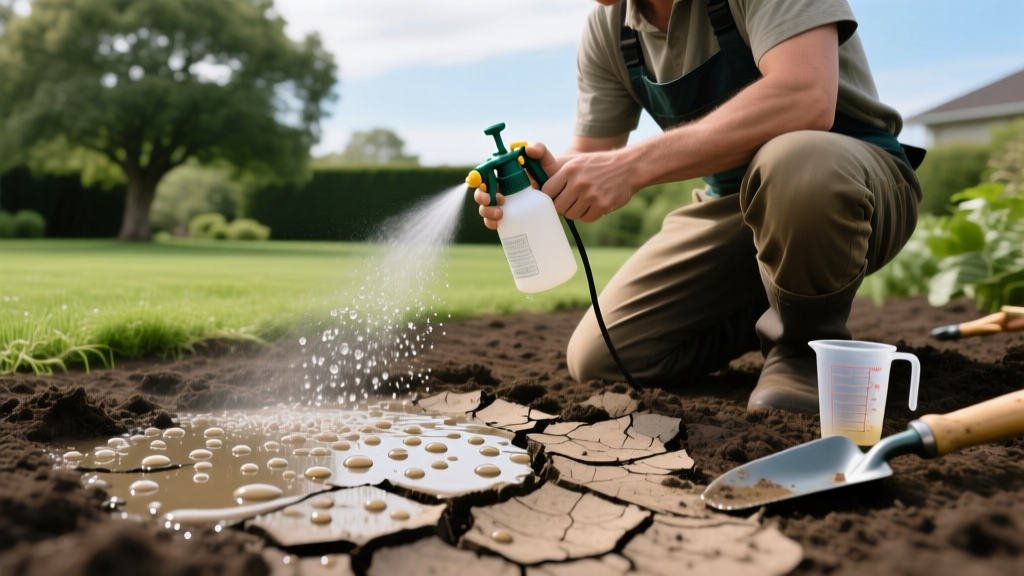
How to Apply a Wetting Agent for Hydrophobic Soil
The Science of Soil Water Repellency
When water beads up and rolls off your garden beds or lawn instead of soaking in, you are dealing with hydrophobic soil. This condition is not caused by a lack of rainfall or poor irrigation; it is a chemical imbalance at the microscopic level. As organic matter decomposes, it releases hydrophobic fatty acids and waxes. In sandy or low-clay soils, these waxy compounds coat the sand particles, creating a physical barrier that repels water molecules.
Applying a wetting agent for hydrophobic soil introduces surfactants (surface-active agents) that lower the surface tension of water. This allows the water to spread laterally and penetrate the waxy coating, reaching the root zone. According to research published by the Colorado State University Extension, soil water repellency is most severe in soils with high sand content and low moisture, making targeted surfactant application a critical intervention for gardeners and turf managers.
Diagnosing Hydrophobic Soil: The 3-Minute Water Drop Test
Before purchasing commercial surfactants, confirm that water repellency is actually the problem. The water drop penetration time (WDPT) test is the industry standard for measuring soil hydrophobicity.
- Scrape away the top inch of thatch or mulch to expose the bare soil surface.
- Using a dropper or your finger, place exactly three drops of distilled water onto the soil.
- Start a timer and observe how long it takes for the drops to fully absorb.
Interpreting Your Results
- Less than 1 minute: Soil is hydrophilic (normal). No wetting agent required.
- 1 to 5 minutes: Slight to moderate repellency. A standard non-ionic surfactant will resolve the issue.
- Greater than 5 minutes: Severe hydrophobicity. Requires a heavy-duty block copolymer or alkyl polyglucoside wetting agent, potentially combined with mechanical aeration.
Selecting the Correct Surfactant Chemistry
Not all wetting agents are formulated equally. Using the wrong chemistry can lead to rapid leaching, phytotoxicity, or zero improvement. The NC State Turffiles program categorizes soil surfactants into three primary chemical classes, each serving a distinct purpose in soil management.
| Surfactant Class | Active Ingredients | Best Use Case | Average Cost (per 32oz) |
|---|---|---|---|
| Non-Ionic | Organosilicones, Ethoxylated alcohols | General garden beds, rapid penetration, breaking surface tension. | $15 - $25 |
| Anionic | Sulfated fatty acids | Heavy clay soils, improving water infiltration in compacted zones. | $12 - $20 |
| Block Copolymers | Polyalkylene oxide, Polypropylene | Sandy soils, long-term moisture retention, preventing localized dry spots. | $30 - $45 |
Expert Recommendation: For most home gardeners dealing with localized dry spots in vegetable gardens or flower beds, a non-ionic surfactant containing alkyl polyglucosides is the safest and most effective choice. It does not react with soil nutrients or fertilizers and breaks down naturally within 3 to 4 weeks.
Step-by-Step Application Protocol
Proper calibration and timing are critical. Applying a wetting agent incorrectly can cause the chemical to bind to dry organic matter at the surface, rendering it useless.
Step 1: Pre-Moisture the Area
Never apply a concentrated surfactant to bone-dry soil. Lightly mist the target area with a hose for 2 to 3 minutes. This provides a minimal moisture base that allows the surfactant molecules to form micelles (clusters that trap water) rather than adhering permanently to dry humic acids.
Step 2: Mix and Calibrate
The standard application rate for professional-grade non-ionic wetting agents is 2 to 4 ounces per 1,000 square feet. Dilute the measured surfactant into 1.5 to 2 gallons of water inside a pump-action garden sprayer. Shake the tank vigorously for 30 seconds to ensure the solution is homogenous.
Step 3: Apply and Water-In
Spray the solution evenly over the hydrophobic zone using a fan-nozzle tip, keeping the wand 18 inches above the soil. Crucial Step: Within 15 minutes of application, you must water the area with 0.1 to 0.2 inches of irrigation. This physical water volume pushes the surfactant down into the root zone (the top 3-4 inches of soil) where it can interact with the waxy sand particles.
⚠️ Warning: Temperature Thresholds
Do not apply wetting agents when ambient temperatures exceed 85°F (29°C). Surfactants increase the permeability of plant leaf cuticles. If the solution drifts onto foliage in high heat and is not immediately washed off, it will cause severe phytotoxicity (leaf burn) within hours.
Beyond Surfactants: Permanent Remediation
A wetting agent for hydrophobic soil is a highly effective band-aid, but it does not cure the underlying biological cause. The waxy buildup is a symptom of poor soil structure and imbalanced microbial activity. To permanently eliminate water repellency, pair your surfactant applications with these cultural practices:
- Core Aeration: Pulling physical plugs from the soil breaks up the hydrophobic crust and allows oxygen to reach deeper layers, stimulating aerobic bacteria that consume waxy organic acids.
- Compost Topdressing: Applying a 1/4-inch layer of screened, mature compost introduces diverse microorganisms and humic substances that naturally buffer soil chemistry.
- Reduce Hydrophobic Mulches: Pine bark and uncomposted wood chips release high levels of water-repellent resins as they decay. Switch to leaf mold or composted cedar if repellency is a chronic issue.
Common Mistakes and Troubleshooting
Myth: Dish Soap is a Suitable Substitute
"Many homeowners attempt to use liquid dish soap (like Dawn) as a cheap wetting agent. While dish soap does break surface tension, it is formulated with high levels of sodium and aggressive degreasers. Over time, sodium accumulates in the soil, destroying soil aggregation and causing severe toxicity to mycorrhizal fungi and delicate root hairs. Always use agricultural-grade surfactants."
Troubleshooting: The Surfactant Washed Away
If you applied the wetting agent and experienced a heavy rainstorm (greater than 0.5 inches) within 24 hours, the product likely leached past the root zone before it could bind to the soil particles. Non-ionic surfactants are highly mobile. If heavy rain is in the forecast within 48 hours, delay your application or switch to a heavy-molecule block copolymer that binds more tightly to soil colloids.
Troubleshooting: Localized Dry Spots Return Quickly
If the soil dries out again within 5 days of treatment, your soil likely has a severe deficiency in organic matter, meaning there is nothing to hold the water once the surfactant lets it in. In this scenario, increase your application rate to the maximum label limit (usually 4 oz/1000 sq ft) and immediately follow up with a deep watering cycle and a liquid humic acid application to improve the soil's cation exchange capacity (CEC).

