
Gardening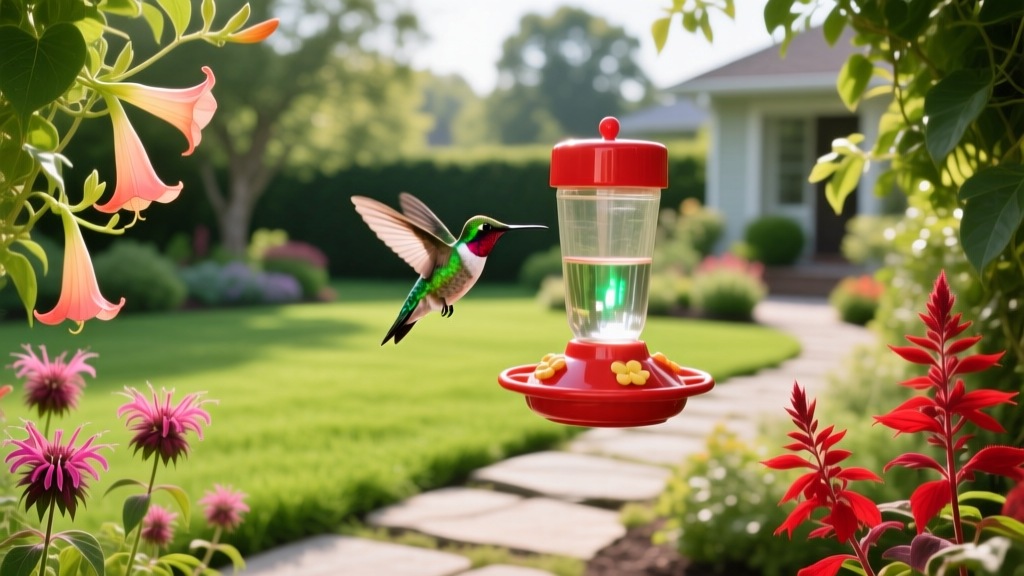
How to Attract a Hummingbird to Your Garden: Plants & Feeders
The Physiology of Attraction: Beyond Sugar Water
Understanding how to attract a hummingbird requires looking past the traditional red plastic feeder. Hummingbirds possess a hyperactive metabolism, requiring them to consume 1.5 to 3 times their body weight in nectar daily. However, nectar only provides carbohydrates for flight energy. To build muscle, sustain breeding, and feed their young, hummingbirds must consume hundreds of soft-bodied insects and arachnids every single day. A successful hummingbird habitat must therefore provide a dual-resource ecosystem: high-volume nectar corridors and a thriving, pesticide-free insect population.
The most common failure point in backyard habitats is an over-reliance on artificial feeders without the supporting botanical infrastructure. While feeders are excellent supplemental tools, native flora provides the essential amino acids, micro-nutrients, and insect life that commercial nectar completely lacks. According to research highlighted by the Cornell Lab of Ornithology, hummingbirds actively map out blooming schedules and will abandon territories that lack continuous, sequential floral resources.
The 4:1 Nectar Formula: Why Commercial Mixes Fail
If you choose to supplement your garden with feeders, the nectar recipe must precisely mimic the sucrose-to-water ratio found in native North American flowers. The only scientifically validated recipe is a 4:1 ratio of water to plain white cane sugar.
⚠ Warning: The Dangers of Red Dye and Commercial Nectar
Never use commercial nectar containing red dye (specifically FD&C Red No. 40 or erythrosine). The National Audubon Society explicitly warns against dyed nectar, as the chemical burden on a hummingbird's liver and kidneys—organs already stressed by rapid metabolism—can be fatal. Furthermore, avoid honey, brown sugar, and artificial sweeteners. Honey promotes rapid, deadly fungal growth, while artificial sweeteners provide zero caloric energy, leading to starvation.
Step-by-Step Nectar Preparation
- Measure: Combine 1 cup of refined white cane sugar with 4 cups of tap water. (Do not use distilled water; hummingbirds need trace minerals found in standard tap water).
- Heat: Bring the water to a gentle boil on the stove. This dissolves the sugar completely and delays initial fermentation by neutralizing waterborne microbes.
- Cool: Remove from heat and allow the mixture to cool to ambient temperature before filling feeders. Hot nectar can crack plastic reservoirs and warp feeding ports.
- Store: Keep unused nectar in a sealed glass container in the refrigerator for up to 14 days.
Tiered Native Planting Matrix for Continuous Blooms
Hummingbirds are highly territorial and will only establish a nesting site if they can defend a reliable food source. To ensure continuous occupancy from spring migration through fall departure, you must plant a tiered sequence of native flora. The Xerces Society recommends prioritizing tubular flowers, which have co-evolved specifically with the hummingbird's elongated bill and hovering flight mechanics.
| Common Name | Scientific Name | Bloom Window | Zones | Nectar Profile |
|---|---|---|---|---|
| Coral Honeysuckle | Lonicera sempervirens | Spring - Mid Summer | 4-9 | High volume, low per-flower yield |
| Bee Balm | Monarda didyma | Early - Late Summer | 3-9 | Moderate volume, high sugar concentration |
| Cardinal Flower | Lobelia cardinalis | Late Summer - Fall | 3-9 | Exceptionally high volume, critical fall fuel |
| Scarlet Sage | Salvia coccinea | Summer - First Frost | 8-10 | Continuous rebloom, drought-tolerant |
Feeder Hardware: Dish vs. Bottle Reservoirs
When selecting a feeder, prioritize hygiene and leak prevention over aesthetic design. The market is dominated by two primary architectures: inverted bottle feeders and saucer/dish feeders.
Why Dish Feeders Outperform Bottle Feeders
Inverted bottle feeders rely on a vacuum seal to prevent leaking. In fluctuating temperatures, the air inside the bottle expands and contracts, breaking the vacuum and causing sugar water to drip onto the ground. This wasted nectar attracts aggressive yellowjackets, Argentine ants, and can cause fungal growth on the underlying soil.
Dish-style feeders (such as the Aspects HummZinger line, typically priced between $25 and $35) sit below the feeding ports. They are inherently leak-proof, regardless of temperature shifts. Furthermore, their wide, flat basins allow for rapid, thorough scrubbing—a critical factor in disease prevention. When purchasing a dish feeder, ensure it includes a built-in ant moat, a small water cup at the top of the hanger that acts as a physical barrier against crawling insects.
Strategic Placement and Predator Deterrence
- Window Proximity: Place feeders either less than 3 feet from a window or more than 30 feet away. The National Audubon Society notes that birds striking windows from within 3 feet lack the momentum to cause fatal injuries, whereas strikes from further away are often lethal.
- Height: Hang feeders approximately 5 to 6 feet off the ground. This deters ambushes from domestic cats while keeping the feeder at an accessible eye level for monitoring nectar clarity.
- Color Avoidance: Avoid feeders with yellow bee guards or yellow floral accents. While hummingbirds are attracted to the red base, yellowjackets and wasps are biologically hardwired to seek out yellow. Stick to all-red or clear hardware.
The 3-Day Cleaning Protocol: Preventing Fatal Fungal Infections
The most severe threat to backyard hummingbirds is not predators, but Aspergillus, a black mold that thrives in warm sugar water. This mold causes a fatal tongue infection that prevents the bird from feeding, leading to slow starvation. During peak summer heat (above 80°F), nectar must be replaced and the feeder scrubbed every 72 hours.
💡 Pro-Tip: The Vinegar Scrub Method
Do not use dish soap, as residual surfactants can strip the waterproofing oils from a hummingbird's feathers. Instead, use a dedicated stiff-bristled bottle brush and a solution of 1 part distilled white vinegar to 2 parts hot water. Scrub the feeding ports vigorously, rinse thoroughly with cold water, and allow to air dry completely before refilling. If black mold spots are visible, soak the feeder in a 10% bleach solution for 15 minutes, followed by an exhaustive rinse.
Misting Zones and Nesting Infrastructure
Hummingbirds do not use traditional birdbaths. Their tiny legs are adapted for perching, not wading, and their plumage requires a fine, airborne mist for preening and cooling. To attract a hummingbird looking to bathe, install a solar-powered mister (available for $30 to $50 at most garden centers) that attaches to your existing hose spigot. Position the mister so the spray lightly coats a broad-leafed plant, such as a hosta or a fern, giving the birds a wet surface to rub against.
Finally, support their nesting cycle by leaving spider webs intact in the corners of your garden and under eaves. Hummingbirds rely heavily on spider silk to bind their lichen-covered nests to branches, allowing the nest to stretch as the chicks grow. They also routinely consume the spiders themselves, securing the vital protein required for egg production and nestling development. By integrating native blooms, rigorous feeder hygiene, and structural habitat elements, you transform your garden from a mere stopover into a permanent hummingbird sanctuary.

