
Gardening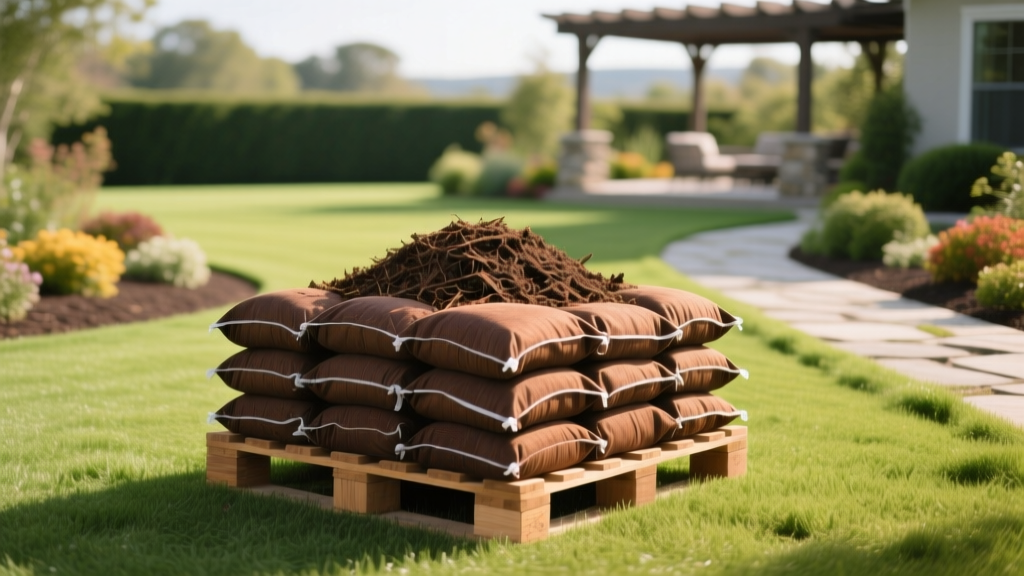
How Many Bags of Mulch on a Pallet? Coverage & Cost Guide
The Short Answer: Standard Pallet Configurations
When ordering mulch by the pallet, the total number of bags is dictated by the cubic-foot volume of each bag and the strict weight limits of standard shipping pallets. A standard Grocery Manufacturers Association (GMA) wooden pallet measures 48 by 40 inches and has a maximum dynamic load capacity of roughly 2,500 pounds.
Because mulch varies wildly in weight depending on its moisture content and base material, suppliers configure pallets to stay safely under this threshold while maximizing the physical footprint of the 48x40-inch deck. Here are the industry-standard pallet configurations you will encounter at landscape supply yards and big-box retailers:
| Bag Size (Volume) | Bags Per Pallet | Total Volume (Cu. Ft.) | Equivalent Cubic Yards | Avg. Pallet Weight |
|---|---|---|---|---|
| 1.5 Cu. Ft. (Rubber/Colorized) | 60 - 70 Bags | 90 - 105 Cu. Ft. | 3.3 - 3.8 Yards | 1,800 - 2,100 lbs |
| 2.0 Cu. Ft. (Standard Hardwood) | 50 Bags | 100 Cu. Ft. | 3.7 Yards | 2,000 - 2,400 lbs |
| 3.0 Cu. Ft. (Pine Bark/Cypress) | 40 - 45 Bags | 120 - 135 Cu. Ft. | 4.4 - 5.0 Yards | 2,100 - 2,450 lbs |
The most common configuration for standard double-shredded hardwood or cedar mulch is fifty 2-cubic-foot bags per pallet. This yields exactly 100 cubic feet of material, which translates to 3.7 cubic yards.
Calculating Coverage: Will One Pallet Be Enough?
To determine if a single pallet will cover your garden beds, you must calculate your total square footage and apply the target depth. According to the University of Minnesota Extension, a 2-to-3-inch layer is optimal for retaining soil moisture and suppressing weeds without suffocating plant roots or creating hydrophobic mats.
The Depth Factor and Area Math
Assuming you are purchasing a standard pallet of fifty 2-cubic-foot bags (100 cubic feet total), here is exactly how much area it will cover based on your application depth:
- At 2 inches deep (0.166 feet): 100 ÷ 0.166 = 602 square feet
- At 3 inches deep (0.25 feet): 100 ÷ 0.25 = 400 square feet
- At 4 inches deep (0.33 feet): 100 ÷ 0.33 = 303 square feet (Not recommended for most ornamental beds)
Pro-Tip on Shrinkage and Compaction: Bagged mulch is often compressed during the packaging process. When you slice open a 2-cubic-foot bag and fluff the material, it may yield slightly more volume. However, you must account for 5% to 10% material loss due to spillage, uneven terrain, and settling over the first few weeks. Always round your square footage requirements up by 10% when ordering.
Cost Breakdown: Bagged Pallet vs. Bulk Delivery
Deciding between a pallet of bags and a bulk dump-truck delivery involves more than just the base price of the wood. As of 2026, landscaping material costs and delivery surcharges have shifted, making the break-even point highly dependent on your property's accessibility.
| Cost Factor | Pallet of Bags (3.7 Yards) | Bulk Delivery (3.7 Yards) |
|---|---|---|
| Base Material Cost | $225 - $300 ($4.50-$6.00/bag) | $130 - $200 ($35-$55/yard) |
| Delivery Fee | $75 - $125 (Freight/Curbside) | $65 - $110 (Local Dump Truck) |
| Equipment Needed | Pallet jack or forklift to move | Wheelbarrow and pitchfork |
| Waste & Cleanup | 50 thick plastic bags to dispose of | None (Material dumped on driveway) |
| Pallet Deposit | $15 - $25 (Often refunded upon return) | N/A |
| Estimated Total | $315 - $450 | $195 - $310 |
Bulk delivery is almost always cheaper per cubic yard. However, pallets are superior for urban lots with narrow driveways, steep grades, or properties where a 10-ton dump truck cannot safely drop a 5,000-pound pile of loose mulch without damaging the asphalt or blocking the street.
Logistics: Weight Limits, Moisture, and Unloading
Ordering a pallet of mulch introduces heavy-freight logistics to a standard gardening project. Understanding these variables will prevent damaged driveways and ruined shipments.
The Moisture Weight Trap
Mulch is an organic sponge. A 2-cubic-foot bag of kiln-dried or aged hardwood mulch might weigh 20 pounds when bagged in dry conditions. However, if that same pallet sits in a supplier's yard during a heavy spring rainstorm, the bags can absorb water through micro-tears and UV-degraded plastic, pushing the weight to 35 or 40 pounds per bag.
Fifty bags at 40 pounds equals 2,000 pounds. Add the 45-pound wooden pallet, and you are at 2,045 pounds. This approaches the absolute safety limit for standard stringer pallets. If a supplier attempts to stack 60 bags of wet mulch, the pallet will likely suffer structural failure (broken bottom deck boards) during transit, resulting in a collapsed load on your driveway.
"Always inspect the pallet wrapping and bag integrity upon delivery. If the bottom layer of bags is bulging, leaking dark leachate, or the wooden pallet stringers are visibly cracked, refuse the shipment. The structural integrity of the pallet is compromised, and moving it with a standard pallet jack will cause the load to collapse." — Commercial Landscaping Freight Guidelines
Unloading Realities: Curbside vs. Driveway
Most residential pallet deliveries are strictly "curbside" or "end-of-driveway." Freight trucks equipped with liftgates will lower the 2,400-pound pallet to the ground, but the driver is not responsible for moving it to your backyard. You will need to rent or borrow a pallet jack to move it across flat concrete, or manually break down the pallet by tossing individual 25-pound bags into a wheelbarrow one by one.
Step-by-Step: Ordering and Receiving a Mulch Pallet
- Measure and Calculate: Map your beds and calculate the square footage. Multiply by your desired depth in feet (e.g., 0.25 for 3 inches) to get total cubic feet, then divide by 100 to determine how many standard pallets you need.
- Verify Access: Ensure your delivery location has a flat, paved surface capable of supporting a 3,000-pound point-load (the weight of the delivery truck's rear axle plus the pallet).
- Ask About the Pallet Deposit: Many regional suppliers charge a $15 to $25 deposit for the GMA wooden pallet. Ask if they offer a refund when you return the wood to the yard.
- Inspect Upon Arrival: Check the shrink wrap. It should be tight and intact to prevent the bags from sliding off during transit. Verify the bag count before the driver leaves.
- Plan for Plastic Disposal: Fifty 2-cubic-foot bags generate a massive volume of thick, non-recyclable LDPE plastic. Factor in the time required to slice, bundle, and transport this waste to your local municipal landfill, as most curbside recycling programs reject soil-contaminated mulch bags.
Frequently Asked Questions
Can I leave a mulch pallet on the grass?
No. A 2,400-pound pallet resting on a 13-square-foot footprint exerts immense ground pressure. Leaving it on your lawn for more than 24 hours will smother the grass, compress the soil structure, and kill the turf underneath. Always place pallets on a driveway, sidewalk, or plywood sheets.
Does a pallet of cedar mulch weigh the same as hardwood?
Cedar is generally lighter and less dense than hardwood. A pallet of cedar mulch may weigh 15% to 20% less than an identically sized pallet of double-shredded hardwood, assuming both have similar moisture content. This makes cedar pallets slightly easier to maneuver manually if you lack a pallet jack.
How long can bagged mulch sit on a pallet before going bad?
According to Cornell University Home Gardening research on organic mulches, bagged mulch can sit for months without degrading, provided it is kept out of direct, prolonged sunlight. UV rays will make the plastic bags brittle within a single season, leading to tears, moisture intrusion, and fungal growth inside the bags. Store pallets in a shaded area if you are not spreading the mulch immediately.

