
Gardening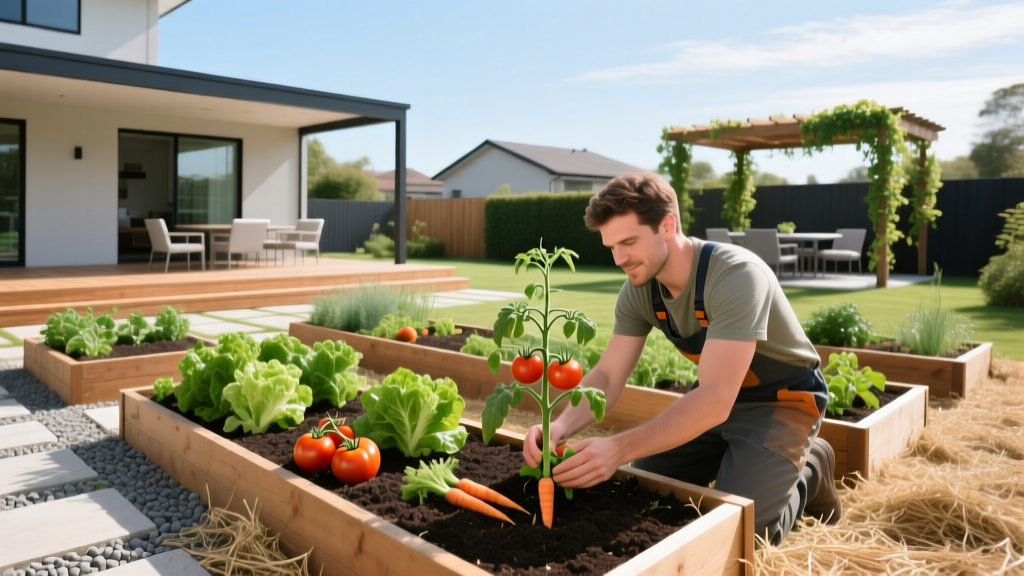
How to Plan Beautiful Vegetable Gardens: Beginner Layouts & Tips
Creating a productive food-growing space does not mean sacrificing curb appeal. When beginners set out to grow their own food, they often default to long, utilitarian rows that look more like a farm field than a backyard oasis. However, by borrowing design principles from ornamental landscaping, you can cultivate beautiful vegetable gardens that yield hundreds of pounds of fresh produce while serving as a stunning visual focal point.
This guide breaks down the exact dimensions, material costs, plant pairings, and soil recipes needed to transform a blank patch of grass into a high-yielding, visually striking kitchen garden.
The Potager Principle: Merging Aesthetics with Yield
The secret to beautiful vegetable gardens lies in the French potager (kitchen garden) tradition. Unlike traditional row cropping, a potager treats vegetables, herbs, and edible flowers as ornamental design elements. The goal is to blend color, texture, and form while maximizing harvest density.
Core Potager Design Rules
- Symmetry and Geometry: Use repeating shapes (squares, rectangles, or diamonds) to create visual order.
- Edging and Enclosure: Define the space with physical borders (woven willow, cedar, or stone) to separate the garden from the surrounding lawn.
- Year-Round Structure: Incorporate evergreen herbs (rosemary, thyme) and permanent hardscape elements (trellises, obelisks) so the garden looks intentional even in winter.
Choosing the Right Hardscape and Bed Dimensions
The physical structure of your garden dictates both its beauty and its functionality. For beginners, raised beds are the most reliable way to control soil quality, improve drainage, and establish clean geometric lines.
Optimal Bed Sizing
Stick to a maximum width of 4 feet. This allows you to reach the center of the bed from either side without stepping on the soil, which prevents compaction. Lengths of 8 feet or 10 feet are standard, but ensure your pathways are at least 36 inches wide. A 36-inch path is the exact minimum required to comfortably maneuver a standard garden wheelbarrow without crushing your crops.
Material Costs and Longevity (2026 Estimates)
| Material | Avg. Cost (4x8 ft Kit) | Lifespan | Aesthetic & Functional Notes |
|---|---|---|---|
| Untreated Western Red Cedar | $130 - $160 | 10 - 15 years | Weathers to a beautiful silvery-gray; naturally rot-resistant. |
| Galvanized Steel (VEVOR/Best Choice) | $80 - $110 | 20+ years | Modern farmhouse look. Can heat soil in extreme southern summers. |
| Composite (Recycled HDPE) | $200 - $250 | 25+ years | Zero maintenance, but lacks the natural warmth of real wood. |
For pathways, avoid bare dirt or wood chips that degrade quickly and harbor slugs. Instead, lay down heavy-duty woven landscape fabric and top it with 3/4-inch crushed gravel (roughly $45 per cubic yard in 2026). This provides excellent drainage, a satisfying crunch underfoot, and a clean visual contrast against the green foliage.
Plant Selection: The "Thriller, Filler, Spiller" Framework
Landscape designers use the "thriller, filler, spiller" method for ornamental containers, but this exact same framework is the key to designing beautiful vegetable gardens in raised beds. By categorizing your edibles by their growth habit and visual impact, you eliminate the chaotic, overgrown look that plagues beginner plots.
Designing Your Bed Layout
- Thrillers (The Focal Points): Tall, dramatic plants placed in the center or north end of the bed so they don't shade out smaller crops. Examples: Trellised indeterminate tomatoes, Romanesco broccoli, giant sunflowers, or Purple Majesty ornamental corn.
- Fillers (The Workhorses): Mid-height, bushy plants that provide mass and continuous harvest. Examples: Bright Lights Swiss Chard (for neon stem colors), Lacinato kale, bush zucchini, or globe artichokes.
- Spillers (The Edging): Low-growing, trailing plants that soften the hard edges of your raised beds. Examples: Trailing nasturtiums (edible flowers), creeping thyme, or alpine strawberries.
Companion Planting for Visual Contrast and Pest Control
Beauty in the garden is functional. Strategic companion planting creates striking color contrasts while confusing pests with diverse scent profiles. According to research from the University of Minnesota Extension, interplanting alliums (like garlic and bunching onions) among susceptible crops can help mask the scent of target plants from pests like aphids and carrot rust flies.
"A visually diverse garden is an ecologically resilient garden. Monocultures invite pest explosions, while polycultures create a habitat for predatory insects that naturally manage pest populations."
High-Contrast Pairings to Try:
- Orange Marigolds + Purple Basil + Green Zucchini: The warm orange and cool purple pop brilliantly against the broad, deep green zucchini leaves.
- Red Ruby Red Chard + Silver Thyme + Yellow Summer Squash: A masterclass in primary color blocking.
- Blue Borage + Orange Cherry Tomatoes: Borage attracts essential pollinators while its star-shaped blue flowers provide a rare color in the edible landscape.
Adding Vertical Elements and Focal Points
Flat gardens lack visual depth. To elevate your design, you must build upward. Vertical structures draw the eye, maximize square footage, and keep vining crops off the soil to prevent fungal diseases.
The Cattle Panel Trellis: The most cost-effective and durable vertical structure for beginners is a 16-foot galvanized cattle panel (typically $30-$35 at farm supply stores). Bend the panel into an archway and secure it to four T-posts driven 18 inches into the ground. Plant climbing crops like Tromboncino squash, pole beans, or cucumbers at the base. This creates a stunning, productive tunnel that serves as a major architectural focal point.
Wooden Obelisks: For a more formal, traditional potager look, place 6-foot wooden or metal obelisks in the four corners of your beds. Train scarlet runner beans or sweet peas up the obelisks to add height and vibrant color without taking up valuable ground-level square footage.
Soil Preparation: The Hidden Foundation
You cannot grow beautiful, vibrant plants in dead dirt. The University of Maryland Extension emphasizes that raised bed soil must be engineered for both drainage and moisture retention. While the classic "Mel's Mix" (1/3 peat moss, 1/3 vermiculite, 1/3 compost) was popular for decades, the environmental and financial costs of peat moss have shifted industry standards by 2026.
The Modern Beginner's Soil Recipe
Mix the following ingredients directly in your wheelbarrow before filling your beds:
- 40% High-Quality Topsoil: Provides the mineral base and structural weight.
- 40% Organic Compost: Use a blend of mushroom compost and composted cow manure for a diverse microbial profile.
- 10% Coco Coir: The sustainable, pH-neutral alternative to peat moss that holds up to 10 times its weight in water.
- 10% Coarse Pumice or Perlite: Ensures oxygen reaches the root zone and prevents the soil from compacting over time.
Pro Tip: Top the finished soil with a 2-inch layer of arborist wood chips or straw mulch. This suppresses weeds, retains moisture, and gives the garden a finished, manicured appearance.
Frequently Asked Questions
How much sunlight do beautiful vegetable gardens need?
Most fruiting crops (tomatoes, peppers, squash) require a minimum of 6 to 8 hours of direct, unfiltered sunlight daily. If your yard only receives 4 to 5 hours, pivot your design to a shade-tolerant edible garden featuring leafy greens (spinach, arugula), root vegetables (carrots, radishes), and woodland herbs (mint, parsley), which still offer lush, beautiful textures.
Should I use seeds or transplants for visual impact?
Use a combination. Direct-sow fast-growing, colorful crops like radishes, nasturtiums, and bush beans to fill gaps quickly. Purchase nursery transplants for slow-growing structural plants like kale, artichokes, and rosemary so they establish immediate height and presence in your garden layout.
How do I keep the garden looking good in late summer?
Mid-August is when many beginner gardens look tired and diseased. Combat this by practicing succession planting. As your early summer crops (like peas or early potatoes) finish, immediately pull them out, amend the soil with a half-inch of fresh compost, and plant a fast-growing fall crop like French breakfast radishes or rainbow carrots. This keeps the beds looking full and intentional right up to the first frost.
For more detailed pairing strategies, the Old Farmer's Almanac Companion Planting Guide offers an extensive database of which crops thrive together and which should be kept apart to prevent nutrient competition.

