
Gardening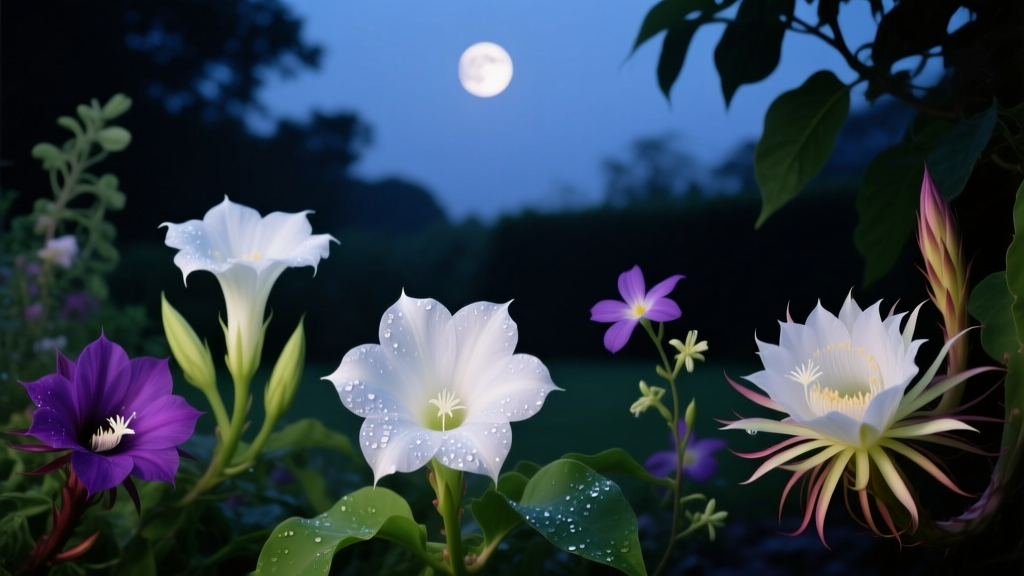
Best Night Blooming Flower Varieties for Beginner Moon Gardens
A moon garden transforms your landscape into a sensory sanctuary after the sun goes down. By strategically selecting a night blooming flower species, you can capture ambient moonlight, release heavy evening fragrances, and support vital nocturnal ecology. For beginners, the key to success lies in choosing reliable cultivars that do not require complex greenhouse starting or hyper-specific microclimates.
This guide breaks down the exact plant varieties, soil chemistry, and design frameworks you need to cultivate a thriving evening garden, moving beyond basic advice to provide actionable, expert-level planting protocols.
Top 5 Beginner-Friendly Night Blooming Flower Varieties
Not all evening bloomers are created equal. Some require staking, while others are prone to rot in humid climates. Below are five highly reliable species, complete with specific cultivar recommendations and hardiness data.
1. Moonflower (Ipomoea alba)
The undisputed centerpiece of any moon garden. Moonflowers are vigorous annual vines (perennial in Zones 9-11) that produce massive, 5-inch white trumpets. The buds unfurl rapidly at dusk, a process you can watch in real-time.
Cultivar to seek: Standard species seed or 'Alba'.
Spacing & Support: Plant 12 inches apart at the base of a sturdy trellis or cattle panel. They can reach 15 feet in a single season and require heavy structural support.
Bloom Window: Mid-summer to first frost.
2. Evening Primrose (Oenothera macrocarpa)
Unlike its aggressive, weedy cousins, the bigfruit evening primrose is a well-behaved, low-growing perennial native to the central US. It produces large, lemon-yellow, cup-shaped flowers that open in the late afternoon.
Cultivar to seek: 'Missouriensis' (often sold as Oenothera missouriensis).
Hardiness: Zones 4-8.
Soil Preference: Exceptionally drought-tolerant; thrives in poor, rocky, alkaline soils (pH 7.0-7.5) where other plants fail.
3. Flowering Tobacco (Nicotiana alata)
Prized for its intense, jasmine-like fragrance that peaks between 8 PM and midnight. The tubular flowers are highly attractive to sphinx moths.
Cultivar to seek: 'Perfume Deep Purple' (dark flowers appear black at night, reflecting moonlight beautifully) or 'Lime Green'.
Growth Habit: Compact, 18-24 inches tall. Ideal for lining pathways where the scent can be easily appreciated.
4. Four O'Clocks (Mirabilis jalapa)
A robust, bushy plant that reliably opens its trumpet-shaped flowers at exactly 4 PM, remaining open all night. They form deep, heavy taproots that allow them to survive severe drought once established.
Cultivar to seek: 'Limelight' (features striking variegated green and yellow foliage that brightens dark garden corners even before the blooms open).
Overwintering: In Zones 8 and below, dig up the tuberous roots after the first frost, store in dry peat moss at 50°F, and replant in spring.
5. Night-Blooming Jasmine (Cestrum nocturnum)
A tropical shrub that produces insignificant greenish-white flowers, but compensates with an overpowering, sweet perfume that can scent an entire yard.
Hardiness: Zones 8-11 (grow as a patio container plant in colder zones).
Pruning: Prune back by one-third in early spring to maintain a dense, 4-foot shrub habit.
⚠️ Toxicity Warning: Night-Blooming Jasmine (Cestrum nocturnum) and Flowering Tobacco (Nicotiana) contain toxic alkaloids. Keep these plants away from pets and small children, and always wash hands thoroughly after handling foliage.
Moon Garden Design Framework: Light, Scent, and Texture
Designing for nighttime visibility relies on the physics of light reflection. White flowers reflect up to 90% of available moonlight, while reds and purples absorb it, appearing as black voids in the dark. According to landscaping principles outlined by the Old Farmer's Almanac, maximizing high-albedo surfaces is critical for a successful moon garden.
To amplify the visual impact of your night blooming flower selections, underplant them with silver or variegated foliage. Silver leaves contain microscopic air pockets that scatter ambient light, acting as natural reflectors.
The Silver Foliage Companion Matrix
| Companion Plant | Mature Height | Foliage Reflectivity | Best Use in Moon Garden |
|---|---|---|---|
| Dusty Miller (Jacobaea maritima) | 12-18 inches | High (Silver-white) | Border edging, path lining |
| Lamb's Ear (Stachys byzantina 'Helen von Stein') | 12-15 inches | Medium-High (Fuzzy silver) | Groundcover beneath vines |
| Artemisia 'Powis Castle' | 24-36 inches | High (Lacy silver-grey) | Mid-ground structural filler |
Soil Preparation and Planting Protocol
Evening bloomers are highly susceptible to root rot and fungal pathogens due to the damp, cool conditions that occur after sunset. Proper soil preparation is non-negotiable.
- Test and Adjust pH: Most night bloomers (especially Moonflowers and Nicotiana) require a slightly acidic to neutral soil pH between 6.2 and 6.8. If your soil is above 7.2, incorporate elemental sulfur at a rate of 1 lb per 100 square feet to lower the pH.
- Optimize Drainage: Amend heavy clay soils with 3 inches of coarse horticultural sand and 2 inches of organic compost. Avoid using peat moss, which retains too much moisture for evening gardens.
- Fertilizer Selection: Do not use high-nitrogen fertilizers (like standard 10-10-10). Excess nitrogen promotes lush foliage at the expense of buds. Use a low-nitrogen, high-phosphorus blend (such as a 5-10-10 NPK ratio) applied at planting and again mid-season to stimulate heavy flowering.
- Strategic Spacing: Space plants 18 to 24 inches apart. This specific measurement allows for cross-breezes to dry foliage before midnight, drastically reducing the risk of Erysiphe cichoracearum (powdery mildew).
Troubleshooting Common Evening Bloomer Failures
When your night blooming flower fails to perform, it is usually tied to environmental stressors unique to the evening cycle. Use this diagnostic guide to correct issues quickly.
- Symptom: Buds form but turn yellow and drop before opening.
Cause: Heat stress or erratic watering during the critical bud-formation stage.
Fix: Apply a 2-inch layer of shredded hardwood mulch to insulate roots. Water deeply at the base (never overhead) in the early morning, providing 1 inch of water per week. - Symptom: Massive vegetative growth, lush green leaves, but zero flowers.
Cause: Nitrogen toxicity from over-fertilization or planting in overly rich, unamended soil.
Fix: Cease all fertilization. Leach the soil by watering heavily for three consecutive days to wash away excess soluble nitrogen. Switch to a bloom-booster liquid kelp extract. - Symptom: White, powdery residue on leaves; lower leaves yellowing and dying.
Cause: Powdery mildew exacerbated by poor nighttime airflow.
Fix: Prune out 20% of the interior stems to open the canopy. Apply a preventative spray of neem oil or potassium bicarbonate fungicide in the early evening, ensuring coverage on the undersides of leaves.
Attracting Nocturnal Pollinators
A moon garden is an ecological engine. The Xerces Society for Invertebrate Conservation emphasizes that nocturnal pollinators, particularly sphinx moths (like the Carolina sphinx moth, Manduca sexta) and nectar-feeding bats, are critical for local food webs but are frequently overlooked in garden planning.
To support these species, avoid using broad-spectrum insecticides or BT (Bacillus thuringiensis) sprays, which will decimate moth caterpillar populations. Instead, plant your fragrant night bloomers in large, concentrated drifts (groups of 3 or 5) rather than scattering single plants. This creates a stronger scent plume, making it easier for moths to locate your garden using their highly developed olfactory receptors.
Frequently Asked Questions
Do night blooming flowers require special moonlight to grow?
No. The term 'moon garden' refers to the human visual experience of the garden at night, not a botanical requirement. These plants rely on standard sunlight for photosynthesis during the day. Their nighttime blooming is an evolutionary adaptation to attract nocturnal pollinators, not a reaction to lunar cycles.
Can I grow a night blooming flower in containers?
Yes, container growing is highly recommended for tender perennials like Night-Blooming Jasmine or Four O'Clocks in colder climates. Use a minimum 15-gallon fabric grow bag filled with a well-draining mix of 60% potting soil, 20% perlite, and 20% pine bark fines to ensure the root zone dries out adequately between waterings.
Where can I verify specific plant hardiness and cultivar data?
For precise, science-backed cultivar data and regional hardiness verification, cross-reference your selections with the Missouri Botanical Garden Plant Finder database before purchasing.

