
Gardening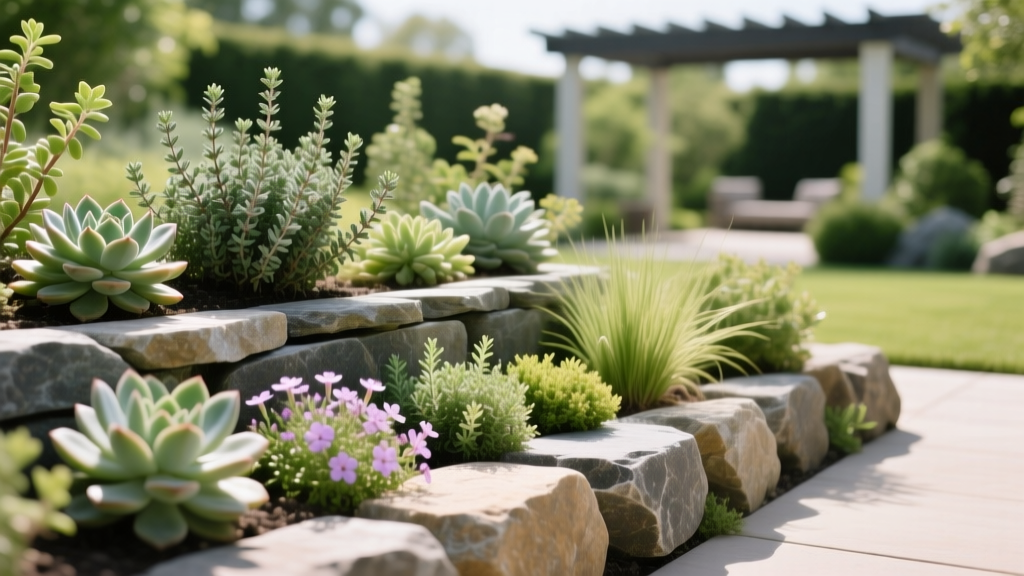
Best Rock Plants for Beginners: Selection and Care Guide
The Anatomy of a Successful Rock Garden
Rock plants—commonly referred to as alpines and succulents—are evolutionary marvels adapted to harsh, high-altitude, or arid environments. For beginners, the most critical paradigm shift is understanding that these plants die from kindness, not neglect. Overwatering, rich compost, and heavy mulches are the primary causes of failure in alpine cultivation. According to the Royal Horticultural Society (RHS), successful rock plant cultivation relies on mimicking their native scree and alpine habitats: exceptional drainage, low fertility, and maximum light exposure.
Before selecting your plants, you must map the microclimates of your rockery. A south-facing boulder absorbs and radiates heat, creating a localized zone that can be 10°F to 15°F warmer than the ambient air, accelerating evaporation. Conversely, the north-facing crevices retain moisture and offer respite from intense afternoon UV radiation. Matching the plant to the specific microclimate is the first step in ensuring long-term survival.
Top 6 Beginner-Friendly Rock Plants
When starting out, avoid highly sensitive alpine species that require precise humidity control. Instead, select vigorous, forgiving cultivars that establish quickly and tolerate minor watering errors. Below is a comparison matrix of the most reliable rock plants for novice gardeners.
| Common Name | Botanical Name | Mature Height | Spread | Zones | Microclimate Preference |
|---|---|---|---|---|---|
| Dragon's Blood Sedum | Sedum spurium 'Dragon's Blood' | 3-4 inches | 18 inches | 3-9 | South-facing, full sun, high heat |
| Hens and Chicks | Sempervivum tectorum | 4-6 inches | 12 inches | 3-8 | Rock crevices, shallow soil pockets |
| Creeping Thyme | Thymus serpyllum | 2-3 inches | 24 inches | 4-9 | Spilling over rock edges, full sun |
| Moss Phlox | Phlox subulata | 4-6 inches | 24 inches | 3-9 | Sunny slopes, well-drained ledges |
| False Rock Cress | Aubrieta deltoidea | 4-6 inches | 18 inches | 4-9 | South/West facing, alkaline soils |
| Peter Pan Saxifrage | Saxifraga 'Peter Pan' | 6-8 inches | 12 inches | 5-8 | North/East facing, partial shade |
Step-by-Step Soil Preparation (The 50/25/25 Rule)
Native garden soil, even if sandy, is too dense for rock plants. Their fine, hair-like root systems require oxygen as much as they require water. The RHS recommends a specialized gritty mix to prevent waterlogging. Do not use bagged 'garden soil' or 'potting mix' straight from the store, as these contain moisture-retaining peat and wetting agents that will rot alpine crowns.
The Ideal Alpine Soil Recipe
- 50% Native Topsoil or Loam: Provides baseline structure and trace minerals. Screen it through a 1/2-inch mesh to remove large clods and organic debris.
- 25% Coarse Horticultural Sand: Use builder's sand or horticultural sand. Never use play sand, which consists of fine, rounded particles that compact like concrete when wet, suffocating roots.
- 25% Fine Gravel (Pumice or Perlite): Use 1/4-inch to 3/8-inch pumice. Pumice is vastly superior to perlite because it is heavier (won't float to the surface during watering), porous (holds internal moisture while allowing external drainage), and does not break down over time.
⚠️ Warning: The pH Factor
Most alpines prefer a neutral to slightly alkaline pH (6.5 to 7.5). If your native soil is highly acidic (below 6.0), incorporate agricultural lime at a rate of 5 lbs per 100 square feet during soil mixing. Avoid using limestone rocks if your soil is already alkaline, as they will continuously leach calcium carbonate and spike the pH over time.
Planting Techniques and the Gravel Collar
The physical act of planting rock plants differs significantly from standard perennials. The most common beginner mistake is planting too deep or mulching with organic materials like wood chips.
The Planting Framework
- Dig the Hole: Excavate a hole exactly the depth of the root ball and twice as wide. Do not loosen the soil at the bottom of the hole; a firm base prevents the plant from sinking later.
- Position the Crown: Place the plant so the crown (where the stems meet the roots) sits 1/2 inch above the surrounding soil grade. This prevents water from pooling around the base.
- Backfill and Tamp: Fill the voids with your 50/25/25 soil mix. Water lightly to settle the soil, then add more mix if settling occurs.
- The Gravel Collar (Crucial Step): Top-dress the soil surface around the plant with a 1-inch layer of 3/8-inch pea gravel or crushed granite. This gravel mulch keeps the lower leaves and crown dry, reflects heat back up into the foliage, and suppresses weed seeds. Never let organic mulch touch the stems of a rock plant.
Spacing and Growth Habits
Rock plants are often sold in small 2-inch or 4-inch pots, tempting beginners to plant them close together for an 'instant' look. This guarantees poor air circulation and fungal diseases. Use the plant's mature spread to calculate spacing, but subtract 20% to allow them to knit together over a 2-year period.
- Mat-forming (Thyme, Phlox): Space at 75% of their listed mature spread. A plant with an 18-inch spread should be planted 13-14 inches apart.
- Clumping/Rosette (Sempervivum, Saxifrage): Space at 50% of their mature spread to allow room for offset 'chicks' or daughter rosettes to emerge without crowding the mother plant.
Common Failure Modes and Troubleshooting
Even with perfect soil, environmental factors can disrupt rock plant health. Use this diagnostic guide to identify and correct issues before they become fatal.
Symptom: Plant pushes upward, roots exposed in late winter
- Cause: Winter heave. The freeze-thaw cycle of the soil acts like a piston, pushing shallow-rooted plants out of the ground.
- Fix: Gently press the plant back into the soil as soon as the ground thaws in early spring. Add a fresh layer of gravel top-dressing to insulate the soil surface and moderate temperature fluctuations.
Symptom: Center of the plant turns brown and mushy
- Cause: Crown rot. Usually caused by organic mulch touching the stems, planting too deeply, or heavy clay soil retaining winter moisture.
- Fix: If caught early, scrape away the rot with a sterilized knife, remove any surrounding organic debris, and apply a dusting of sulfur powder. If the rot has reached the main taproot, the plant must be removed to prevent spreading fungal pathogens to neighboring alpines.
Symptom: Stems stretch out, become pale and leggy
- Cause: Etiolation due to insufficient light. Rock plants require a minimum of 6 hours of direct, unfiltered sunlight.
- Fix: Relocate the plant to a sunnier ledge or prune back overhanging deciduous branches. For heavily etiolated Sedums, cut the leggy stems back to the base in early spring; they will push out compact, sun-adapted growth from the crown.
Seasonal Maintenance Calendar
Maintaining a rock garden requires a light touch. Follow this seasonal framework to keep your alpine collection thriving year-round.
- Early Spring: Remove winter debris (fallen leaves) that may have smothered rosettes. Apply a single, light application of low-nitrogen, high-potassium fertilizer (such as a 5-10-10 formulation) at half the recommended rate to support flowering without promoting weak, sappy growth.
- Summer: Water only during prolonged droughts (more than 14 days without rain). When watering, apply directly to the soil beneath the gravel collar, avoiding overhead sprinklers which promote foliar fungal diseases.
- Autumn: Clean out dead foliage from mat-forming species. Divide overgrown Sempervivum clumps, replanting the offsets in fresh soil pockets.
- Winter: Avoid walking on the rock garden when the soil is frozen and wet, as this compacts the soil structure and damages dormant root systems.
By prioritizing drainage over fertility and respecting the specific microclimates of your rockery, you will establish a resilient, low-maintenance landscape that thrives for decades. For further reading on specialized alpine cultivation, consult the educational resources provided by the North American Rock Garden Society (NARGS).

