
Gardening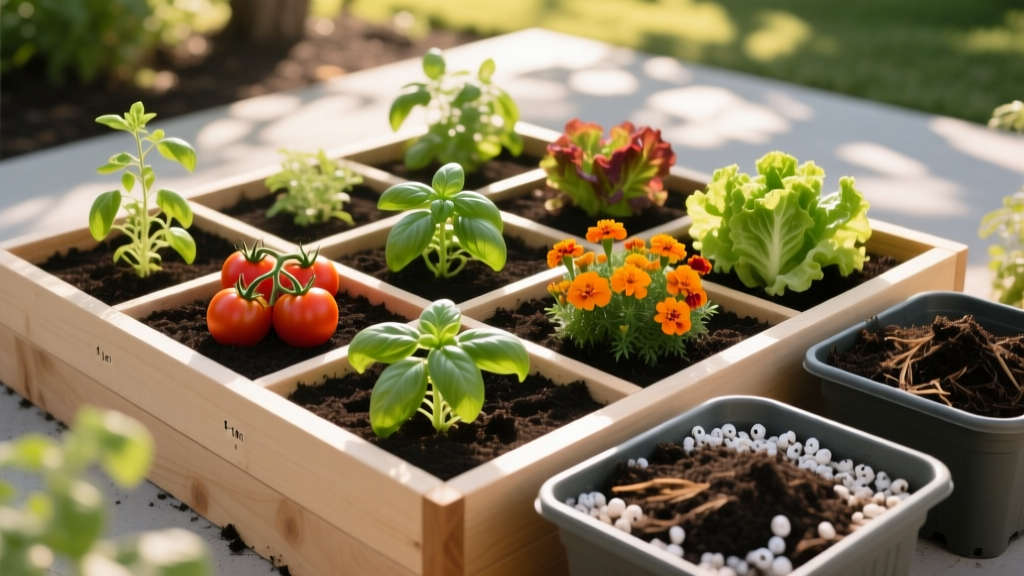
Sq Ft Gardening for Beginners: Bed Layouts and Soil Mixes
The Core Geometry: Building a 4x4 Foundation
Square foot gardening eliminates the wasted space, weed-choked pathways, and soil compaction inherent in traditional row cropping. By condensing your growing area into a highly managed 4x4-foot grid, you can yield 100% of a traditional garden's harvest in 20% of the space. The 4x4 dimension is not arbitrary; it is based on the average human arm's reach of two feet. This ensures you can access the center of the bed from any side without stepping on the soil, preserving the critical aeration and drainage of your engineered substrate.
Material Selection for Longevity
Avoid pressure-treated lumber (which can leach copper and arsenic into the soil) and raw pine (which rots within three years). Opt for 2-inch by 8-inch untreated Western Red Cedar or composite boards like Trex. For a 4x4 bed, you need four 4-foot boards and four 3-inch galvanized steel corner brackets. While cedar costs roughly $120-$150 for the lumber, it will last 10 to 15 years without chemical treatments.
Engineering the Substrate: Modern Soil Ratios
The success of sq ft gardening relies entirely on the soil structure. Because you are planting densely, native topsoil will compact and suffocate roots. The original methodology, developed by Mel Bartholomew, relies on a specific tripartite mix. However, modern horticultural science has updated this formula to address sustainability and moisture retention challenges.
According to University of Minnesota Extension guidelines, raised bed mixes must prioritize drainage while maintaining high water-holding capacity. While peat moss was the original standard, it is highly acidic and environmentally contentious. In 2026, buffered coco coir is the superior alternative, offering better rewetting capabilities and a neutral pH.
| Component | Volume Required | Function & Sourcing Specifics |
|---|---|---|
| Coarse Vermiculite | 5.3 cu ft | Retains water and keeps soil friable. Buy horticultural grade #3 or #4, never fine insulation grade. |
| Buffered Coco Coir | 5.3 cu ft | Replaces peat moss. Must be "buffered" (calcium-treated) so it does not strip nutrients from the soil. |
| Blended Compost | 5.3 cu ft | Provides nutrients. Blend at least 3 types (e.g., mushroom, worm castings, composted cow manure) for a complete micronutrient profile. |
Mix these ingredients thoroughly in a wheelbarrow or on a tarp before filling the bed. As noted by experts at the Square Foot Gardening Foundation, pre-moistening the coco coir and vermiculite with a hose during the mixing process is critical; dry vermiculite is hydrophobic and difficult to wet once inside the bed.
The Spacing Matrix: Maximizing the Grid
Once the bed is filled, install a physical grid. Do not use string or twine, which sags and rots within a single season. The most durable, low-profile solution is 1-inch wide by 1/8-inch thick aluminum flat stock, cut to 47-inch lengths and screwed into the bed rim. This creates 16 distinct one-foot squares.
Planting density is dictated by the mature footprint of the crop's root system and canopy. Refer to this decision matrix when planning your layout:
- 1 Plant Per Square (Large Canopy/Deep Root): Tomatoes (indeterminate, requires trellis), bell peppers, broccoli, cauliflower, cabbage, and zucchini.
- 4 Plants Per Square (Medium Footprint): Leaf lettuce, Swiss chard, kale, parsley, and determinate bush tomatoes.
- 9 Plants Per Square (Compact Clusters): Bush beans, peas, spinach, beets, and garlic. (Space these in a precise 3x3 mini-grid within the square).
- 16 Plants Per Square (Micro-Roots): Radishes, carrots, and onions. (Space these in a 4x4 mini-grid).
Pro-Tip: The Dibble Board Hack
For 9-per-square and 16-per-square crops, do not guess the spacing. Take a scrap piece of 12x12 plywood and glue wooden dowels or bottle caps in the exact 3x3 or 4x4 grid pattern. Press this "dibble board" into the loose soil to create perfectly spaced, uniform-depth planting holes in seconds.
Vertical Integration: Trellising the North Edge
Sq ft gardening heavily utilizes vertical space to accommodate vining crops without shading out smaller plants. Always place your trellis on the north side of the 4x4 bed. This ensures that tall, climbing plants do not cast a shadow over the sun-loving, low-growing crops in the southern squares.
For a robust trellis, avoid flimsy plastic netting. Drive two 6-foot T-posts or 4x4 wooden posts into the ground just outside the north edge of the bed, and secure a 5-foot by 10-foot concrete reinforcing wire panel (cattle panel) or heavy-duty nylon netting. This setup easily supports the weight of mature indeterminate tomatoes, pole beans, and cucumbers, effectively turning one square foot of soil into five square feet of growing canopy.
First-Year Budget and Sourcing Breakdown
Starting a sq ft garden requires an upfront investment in infrastructure, but the recurring costs are minimal. Below is a realistic 2026 cost breakdown for a single 4x4 bed setup, assuming you are sourcing materials from standard home improvement centers.
| Item | Estimated Cost | Notes |
|---|---|---|
| Cedar Lumber (4x4x8") | $110 - $140 | Untreated, naturally rot-resistant. |
| Corner Brackets & Screws | $25 | Galvanized steel to prevent rust. |
| Soil Amendments (Vermiculite/Coir) | $65 - $85 | Bulk bags are cheaper than small retail boxes. |
| Blended Compost (6-8 bags) | $40 - $60 | Mix varieties for nutrient diversity. |
| Aluminum Grid Stock & Trellis | $45 | Flat bar for grid, nylon net for trellis. |
| Total First-Year Investment | $285 - $355 | Subsequent years only require $20 for compost. |
Avoiding the "Year-Two Slump"
The most common failure mode for beginners occurs in the second season. After a successful first year, gardeners often replant without amending the soil, leading to stunted growth and nutrient lockout. Because sq ft gardening extracts a massive amount of biomass from a tiny volume of soil, nutrient replenishment must be precise.
The golden rule of maintenance is simple: Every time you harvest a square, add exactly one trowel (about one cup) of fresh, blended compost before replanting. Do not add more vermiculite or coir; the physical structure of the soil remains intact for years. Only the organic matter (compost) is consumed by the plants and soil microbes. By consistently topping off with compost, you maintain the exact 16-cubic-foot volume and ensure a continuous supply of slow-release micronutrients, eliminating the need for synthetic liquid fertilizers.
For deeper insights into long-term soil management and crop rotation within small spaces, consult the seasonal planting guides published by Fine Gardening, which offer excellent regional adjustments for soil temperatures and succession planting timelines.

