
Gardening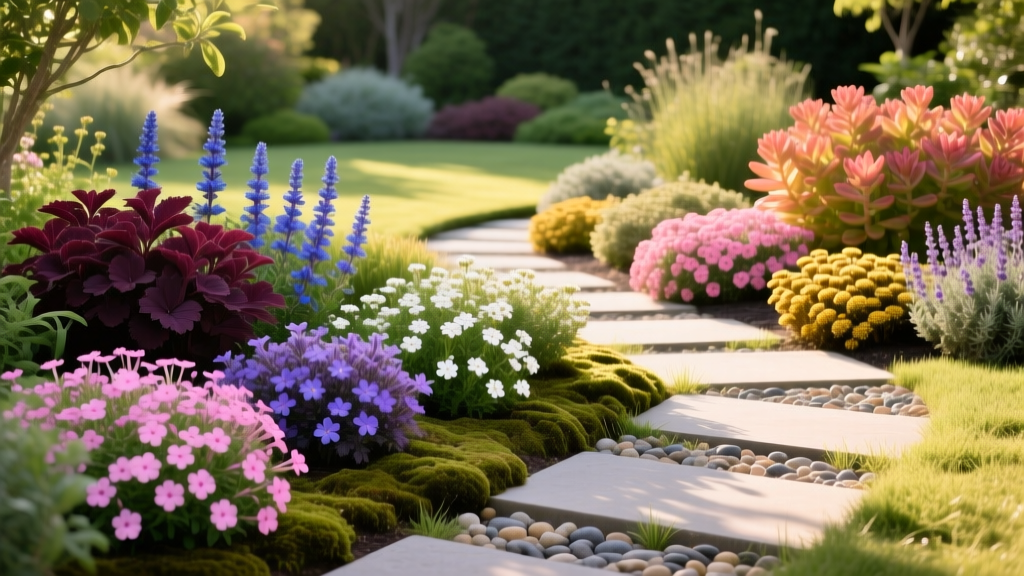
Best Flowering Ground Cover for Sunny and Shady Beginner Gardens
Why Replace Mulch With a Flowering Ground Cover?
Most beginner gardeners default to shredded hardwood mulch to suppress weeds and retain moisture. While effective short-term, mulch decomposes, fades, and requires annual replenishment. A living flowering ground cover provides a permanent, self-multiplying alternative that stabilizes soil, supports local pollinators, and eliminates the recurring cost and labor of mulching. According to the Xerces Society for Invertebrate Conservation, replacing sterile mulch beds with low-growing, nectar-rich flowering plants is one of the most impactful ways to support native bee populations in suburban landscapes.
The 5-Year Cost Breakdown: Mulch vs. Living Ground Cover
The initial investment for living plants is higher, but the long-term ROI heavily favors ground covers. Below is a cost comparison for a 100-square-foot garden bed over five years.
| Material | Year 1 Cost | Years 2-5 Cost | 5-Year Total | Labor Requirement |
|---|---|---|---|---|
| Hardwood Mulch (3 inches deep) | $60 - $80 | $150 - $200 (replenishing) | $210 - $280 | High (annual spreading) |
| Flowering Ground Cover (Plugs) | $140 - $200 | $0 (self-spreading) | $140 - $200 | Low (initial planting only) |
Note: Ground cover pricing assumes purchasing 70 to 100 nursery plugs at $1.50 to $2.50 each, depending on the cultivar and nursery source.
Top Sun-Loving Flowering Ground Cover Cultivars
Full-sun areas (6+ hours of direct sunlight) require drought-tolerant species that can handle intense UV exposure without scorching. Avoid high-water-demand plants in these zones to keep irrigation costs low.
1. Creeping Thyme (Thymus serpyllum 'Elfin')
- Hardiness Zones: 4-9
- Mature Height: 1 to 2 inches
- Spread Rate: 12 to 18 inches per year
- Soil Requirement: Well-draining, sandy or loamy soil. Fails in heavy, unamended clay.
'Elfin' is a dwarf cultivar that produces tiny, pale pink flowers in early summer. It is highly traffic-tolerant, making it an excellent choice for planting between stepping stones. Pro Tip: Do not fertilize creeping thyme. Excess nitrogen causes leggy, weak growth that is prone to fungal dieback in the center of the mat.
2. Stonecrop (Sedum spurium 'Dragon's Blood')
- Hardiness Zones: 3-8
- Mature Height: 4 to 6 inches
- Spread Rate: 18 to 24 inches per year
- Soil Requirement: Thrives in poor, rocky, or shallow soils with low organic matter.
This succulent ground cover features deep bronze-red foliage that intensifies in cooler autumn temperatures, topped with star-shaped pink flowers in late summer. Because it stores water in its leaves, 'Dragon's Blood' requires zero supplemental irrigation once established (usually 8 to 10 weeks post-planting). You can verify its specific regional adaptability and native status ranges via the USDA Plants Database.
Best Shade-Tolerant Flowering Ground Cover Varieties
Shaded areas beneath tree canopies or on the north side of structures present unique challenges: root competition from trees, lower evaporation rates, and reduced photosynthesis. The following cultivars are specifically selected to thrive in low-light environments.
1. Bugleweed (Ajuga reptans 'Burgundy Glow')
- Hardiness Zones: 3-10
- Mature Height: 4 to 6 inches (flower spikes reach 8 inches)
- Light Tolerance: Part shade to full shade
'Burgundy Glow' offers striking tri-color foliage (bronze, pink, and cream) that brightens dark garden corners, followed by dense spikes of blue flowers in spring. Edge Case Warning: Ajuga spreads via above-ground stolons (runners). If planted adjacent to a turfgrass lawn without a physical hardscape or metal edging barrier, it will aggressively invade the grass.
Warning: Avoid Invasive Shade Covers
Beginners are often sold English Ivy (Hedera helix) or Periwinkle (Vinca minor) at big-box stores for shade. Both are classified as highly invasive in many North American zones and can escape into local woodlands, strangling native saplings. Always verify a plant's invasive status with your local university extension office before purchasing.
Beginners are often sold English Ivy (Hedera helix) or Periwinkle (Vinca minor) at big-box stores for shade. Both are classified as highly invasive in many North American zones and can escape into local woodlands, strangling native saplings. Always verify a plant's invasive status with your local university extension office before purchasing.
2. Sweet Woodruff (Galium odoratum)
- Hardiness Zones: 4-8
- Mature Height: 8 to 12 inches
- Light Tolerance: Full shade to dappled sunlight
Sweet woodruff features whorls of bright green leaves and tiny, white, star-shaped flowers in late spring. When crushed or dried, the foliage releases a strong vanilla-like scent due to the presence of coumarin. It prefers consistently moist, humus-rich soil and will go dormant early if the soil dries out completely in mid-summer.
Step-by-Step Establishment Matrix
The most common reason ground covers fail is improper first-year establishment. Follow this exact sequence to ensure rapid coverage and weed suppression.
- Site Eradication (Weeks 1-3): Clear existing weeds. For heavy infestations, apply a non-selective herbicide or use solarization (covering the bed with 4-mil clear plastic for 3 weeks during peak summer heat). Do not skip this step; hand-pulling leaves root fragments that will outcompete young plugs.
- Soil Amendment (Week 4): Test drainage. Dig a 12-inch hole and fill it with water. If it drains slower than 1 inch per hour, incorporate 2 inches of coarse pine bark fines into the top 6 inches of soil to prevent crown rot.
- Staggered Grid Planting (Week 4): Plant plugs in a quincunx (staggered diamond) pattern rather than straight rows.
- For 1-year fill: Space plugs 8 inches apart (requires ~18 plugs per 10 sq ft).
- For 2-year fill (budget option): Space plugs 14 inches apart (requires ~7 plugs per 10 sq ft).
- Targeted Irrigation (Weeks 4-12): Water deeply twice a week for the first 60 days. Ground covers need to push roots deep into the subsoil before they can rely on natural rainfall.
Troubleshooting First-Year Failures
Even with perfect planting, environmental variables can cause issues. Here is how to diagnose and fix the two most common beginner mistakes.
Problem: Plugs are Turning Black at the Base and Dying
Cause: Crown rot, typically caused by planting the plug too deep (burying the crown) or applying mulch directly against the stems of succulent varieties like Sedum or Thyme.
Fix: Gently lift the affected plants. Replant them so the top of the root ball is 1/4 inch above the surrounding soil grade. Pull back any mulch to create a 2-inch bare-soil halo around the crown to promote air circulation.
Problem: Weeds are Choking Out the Young Ground Cover
Cause: Applying pre-emergent herbicides too early. While pre-emergents (like trifluralin) stop weed seeds, they also inhibit the root development of unestablished ground cover plugs.
Fix: Hand-weed the bed for the first 8 weeks. Only apply a granular pre-emergent after the plugs have firmly rooted and begun sending out lateral stolons. For organic gardens, use corn gluten meal at a rate of 20 lbs per 1,000 square feet in early spring to suppress weed germination without harming established roots.
Frequently Asked Questions
Can I walk on flowering ground cover?
Light foot traffic is tolerated by woody-stemmed varieties like Creeping Thyme and Mazus reptans. However, fleshy or hollow-stemmed plants like Ajuga, Sedum, and Sweet Woodruff will crush and rot if walked on repeatedly. For pathways, use stepping stones surrounded by the ground cover rather than walking directly on the plants.
How do I keep ground cover out of my lawn?
Install a physical barrier. A 4-inch deep, heavy-gauge steel landscape edging is the most effective method. Plastic edging often warps and allows aggressive runners (especially from Ajuga and Mint-family plants) to slip underneath into the turf.
Do I need to cut back flowering ground covers?
Most low-growing varieties require no pruning. However, if your ground cover (like Ajuga or Sweet Woodruff) develops unsightly brown, spent flower spikes in mid-summer, you can run a lawnmower with the deck set to its highest setting (usually 3.5 to 4 inches) over the bed once to neatly shear off the dead blooms and stimulate fresh foliage growth.

