
Gardening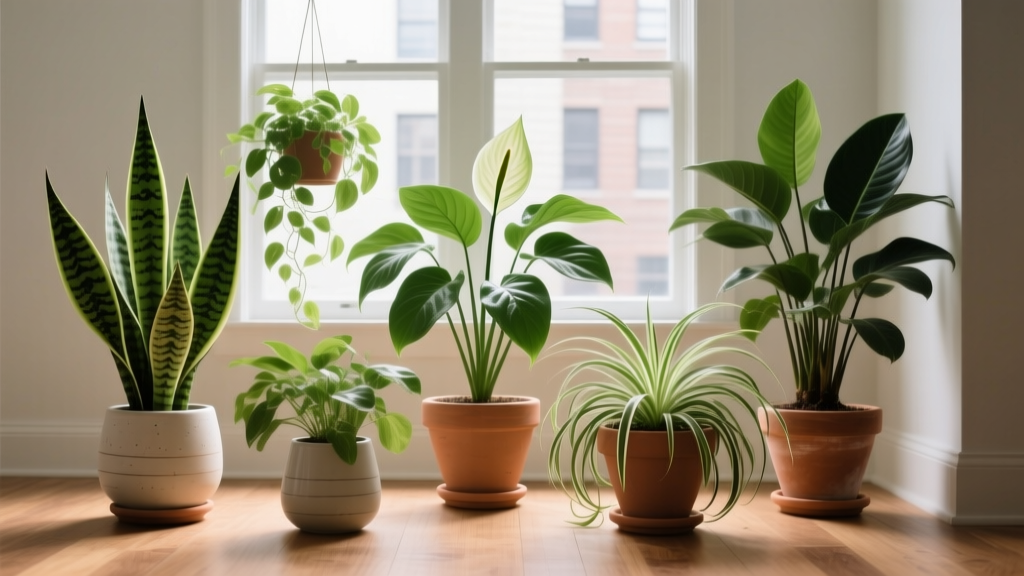
Best Inside Plants That Clean the Air for Beginner Gardeners
The Real Science of Phytoremediation Indoors
Many beginners purchase houseplants expecting them to act as standalone biological air purifiers. While the seminal 1989 NASA Clean Air Study proved that certain plants absorb volatile organic compounds (VOCs) like formaldehyde and benzene, modern environmental science requires a more nuanced approach. A comprehensive review published in the Journal of Exposure Science & Environmental Epidemiology clarified that matching the air exchange rate of a standard HVAC system would require between 10 and 1,000 plants per square meter.
However, this does not render indoor plants useless for air quality. Strategic placement of high-transpiration species creates localized microclimates that reduce airborne dust, increase ambient humidity by 5% to 15%, and measurably lower VOC concentrations in enclosed, poorly ventilated spaces. For beginner gardeners, the goal is to select resilient cultivars that offer these localized benefits without demanding expert-level horticultural maintenance.
Expert Insight: Plants do not just absorb VOCs through their leaves (stomata). The rhizosphere—the soil and root microbiome—actually performs the bulk of the biological degradation of airborne toxins. Keeping your soil healthy is just as important as keeping the foliage dust-free.
Top 5 Inside Plants That Clean the Air
Not all houseplants process toxins equally. Below are the most effective, beginner-friendly cultivars, categorized by their specific physiological strengths and exact care requirements.
1. Snake Plant (Sansevieria trifasciata 'Black Coral')
Unlike most plants that release oxygen during the day, the Snake Plant utilizes Crassulacean Acid Metabolism (CAM) photosynthesis. It opens its stomata at night to minimize water loss, absorbing CO2 and releasing oxygen while you sleep. The 'Black Coral' cultivar is preferred over the standard 'Laurentii' because its darker, thicker leaves are more resistant to the photobleaching that occurs in low-light interiors.
- Target VOCs: Formaldehyde, trichloroethylene, xylene.
- Light Requirement: 50 to 250 foot-candles (tolerates deep interior corners).
- Watering: Every 21-28 days. Allow the soil to reach 0% moisture at the root zone before watering.
- Failure Mode: Basal rot caused by overwatering. Use a gritty soil mix (50% pumice, 50% coco coir) to ensure rapid drainage.
2. Spider Plant (Chlorophytum comosum 'Vittatum')
The Spider Plant is a rapid grower that excels at pulling formaldehyde from the air—a common off-gas from particleboard furniture and synthetic carpets. It produces plantlets (spiders) that can be rooted in water or soil, allowing beginners to easily multiply their air-cleaning fleet.
- Target VOCs: Formaldehyde, carbon monoxide.
- Light Requirement: 200 to 400 foot-candles (bright, indirect light near an east-facing window).
- Watering: Every 7-10 days. Water when the top 2 inches of soil are dry.
- Failure Mode: Tip burn caused by fluoride and chlorine in tap water. Use distilled or rainwater to maintain leaf integrity.
3. Peace Lily (Spathiphyllum wallisii)
Peace Lilies are heavy transpirers, meaning they pull significant water through their roots and release it as vapor, acting as natural humidifiers. This makes them ideal for dry, climate-controlled offices or bedrooms. They are also one of the few low-light plants that produce flowers indoors.
- Target VOCs: Benzene, trichloroethylene, ammonia.
- Light Requirement: 100 to 200 foot-candles. Avoid direct sunlight, which scorches the leaves.
- Watering: Every 5-7 days. The plant will visibly droop when thirsty, providing a built-in visual watering indicator.
- Failure Mode: Spider mites thrive on Peace Lilies in low-humidity environments. Wipe leaves weekly with a damp microfiber cloth to remove dust and disrupt mite life cycles.
⚠️ Toxicity Warning for Pet Owners: While Peace Lilies and Pothos are excellent air purifiers, they contain insoluble calcium oxalate crystals. If you have cats or dogs that chew on foliage, swap these for the Spider Plant or Boston Fern, which are 100% non-toxic to pets.
4. Golden Pothos (Epipremnum aureum)
Often dubbed the "cubicle plant" for its indestructibility, Golden Pothos is a vigorous vining plant that tackles xylene and toluene. Its high leaf surface area-to-volume ratio makes it highly efficient at passive gas exchange.
- Target VOCs: Xylene, toluene, formaldehyde.
- Light Requirement: 75 to 300 foot-candles. Variegation will fade in light levels below 100 foot-candles.
- Watering: Every 10-14 days. Highly drought-tolerant.
- Failure Mode: Leggy growth with wide gaps between leaves (etiolation). Move closer to the light source or propagate the vine to encourage bushier growth.
5. Boston Fern (Nephrolepis exaltata 'Bostoniensis')
According to research highlighted by the Environmental Protection Agency (EPA), maintaining proper indoor humidity is crucial for respiratory health and reducing airborne particulate matter. The Boston Fern is a biological humidifier, transpiring heavily while simultaneously filtering formaldehyde.
- Target VOCs: Formaldehyde, xylene.
- Light Requirement: 150 to 300 foot-candles. Requires bright, filtered light.
- Watering: Every 3-5 days. Soil must remain consistently moist but never waterlogged.
- Failure Mode: Frond drop due to low humidity. Group ferns together to create a localized humidity dome, or place the pot on a pebble tray filled with water.
Comparison Matrix: Care and VOC Targets
| Plant Cultivar | Primary VOC Target | Light Needs (Foot-Candles) | Watering Frequency | Pet Safe? |
|---|---|---|---|---|
| Snake Plant 'Black Coral' | Formaldehyde, Xylene | 50 - 250 (Low to Bright) | 21-28 Days | No |
| Spider Plant 'Vittatum' | Formaldehyde, CO | 200 - 400 (Bright Indirect) | 7-10 Days | Yes |
| Peace Lily | Benzene, Ammonia | 100 - 200 (Medium) | 5-7 Days | No |
| Golden Pothos | Xylene, Toluene | 75 - 300 (Low to Bright) | 10-14 Days | No |
| Boston Fern | Formaldehyde | 150 - 300 (Bright Filtered) | 3-5 Days | Yes |
Maximizing Air Purification: The Breathing Zone Strategy
Because plants cannot replace mechanical ventilation, you must place them where they provide the most benefit. Horticulturalists recommend the "Breathing Zone" framework: positioning plants within 6 to 8 cubic feet of where your head rests while working or sleeping.
Step-by-Step Placement Guide
- Calculate Room Density: Aim for 1.5 to 2 medium-sized plants (in 6-to-8-inch pots) per 100 square feet of floor space to achieve measurable localized humidity and VOC reduction.
- Target the Desk: Place a Golden Pothos or Snake Plant on your work desk. The localized transpiration will reduce dry-eye symptoms associated with staring at monitors in climate-controlled rooms.
- Target the Bedroom: Utilize CAM-photosynthesis plants (Snake Plant) on your nightstand to slightly elevate nighttime oxygen levels and capture daytime off-gassing from synthetic mattresses.
- Elevate for Airflow: VOCs and airborne dust circulate with room thermals. Hanging a Boston Fern or Spider Plant near the ceiling captures rising warm air and particulates more effectively than plants trapped in stagnant floor-level corners.
Common Beginner Maintenance Mistakes
A dead plant cannot clean the air. Avoid these three critical errors that kill 90% of beginner houseplants:
- Using Garden Soil in Pots: Outdoor topsoil compacts in containers, suffocating the rhizosphere microbes responsible for VOC degradation. Always use a sterile, aerated indoor potting mix amended with 20% perlite or pumice.
- Fertilizing in Winter: Indoor light levels drop significantly from November to February. Applying a standard 10-10-10 fertilizer during this dormant period causes toxic salt buildup in the soil, leading to root burn. Switch to a diluted 3-1-2 liquid kelp fertilizer only during active spring/summer growth.
- Ignoring Leaf Dust: A layer of dust just 0.1mm thick can reduce a leaf's photosynthetic efficiency and gas exchange by up to 20%. Wipe the foliage of broadleaf plants (Peace Lily, Pothos) with a damp cloth every 14 days.
Frequently Asked Questions
Do I need a special grow light for these air-cleaning plants?
Not necessarily. If your space receives less than 50 foot-candles of ambient light (e.g., a basement or windowless office), you will need a full-spectrum LED grow light. Look for a fixture that outputs a PPFD (Photosynthetic Photon Flux Density) of at least 50 µmol/m²/s at the canopy level to sustain the Snake Plant or Pothos. For rooms with standard windows, ambient daylight is sufficient for the plants listed above.
How long does it take for a plant to clean the air in a room?
Phytoremediation is a continuous, slow process, not an instant fix. Research indicates it takes 24 to 48 hours for a cluster of plants to measurably reduce VOC concentrations in a sealed 10x10 room. For immediate removal of high VOC loads (like after painting or installing new flooring), rely on cross-ventilation and mechanical HEPA/carbon filtration, using plants for long-term maintenance.

