
Gardening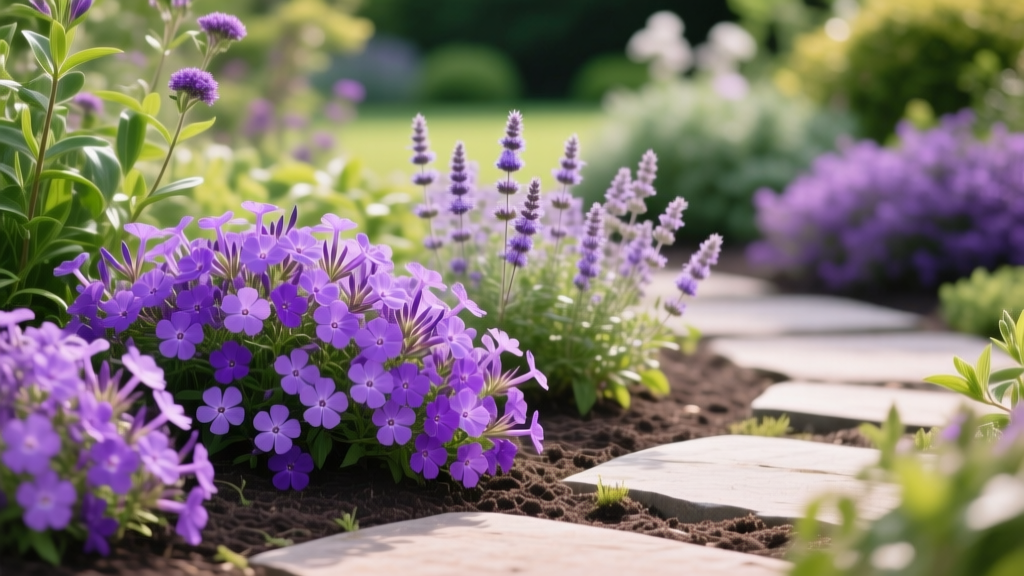
Best Purple Flowered Ground Cover Plants for Beginners
The Beginner’s Advantage: Why Purple Ground Covers?
Replacing bare soil or struggling lawn patches with a purple flowered ground cover is one of the highest-impact, lowest-maintenance decisions a beginner gardener can make. Unlike traditional turfgrass that demands weekly mowing, edging, and heavy nitrogen feeding, flowering ground covers suppress weeds, prevent soil erosion, and attract native pollinators. Purple blooms, in particular, offer a striking visual contrast against green foliage and hardscaping, while acting as a primary beacon for bees and butterflies.
According to the University of Minnesota Extension, establishing a dense ground cover mat can reduce landscape water usage by up to 40% compared to traditional Kentucky Bluegrass lawns, provided you select drought-tolerant cultivars suited to your USDA Hardiness Zone.
Top 5 Purple Flowered Ground Covers: A Comparison Matrix
Choosing the right plant depends entirely on your site's light exposure and foot traffic. Use this decision matrix to match your garden conditions with the correct species.
| Plant Species | Sun Requirement | Mature Height | Spread Rate | Foot Traffic Tolerance | USDA Zones |
|---|---|---|---|---|---|
| Creeping Phlox (Phlox subulata) | Full Sun (6+ hrs) | 4–6 inches | Moderate (1 ft/yr) | Low (Avoid stepping) | 3–9 |
| Creeping Thyme (Thymus serpyllum) | Full Sun to Part Shade | 2–4 inches | Fast (2 ft/yr) | High (Walkable) | 4–9 |
| Bugleweed (Ajuga reptans) | Part Shade to Full Shade | 4–6 inches | Very Fast (Runners) | Moderate | 3–10 |
| Periwinkle (Vinca minor) | Shade to Part Shade | 4–6 inches | Fast (Vining) | Low | 4–9 |
| Liriope (Liriope muscari) | Part Shade to Full Sun | 12–18 inches | Slow (Clumping) | Moderate | 5–10 |
Deep Dive: Top 3 Cultivars for Beginners
1. Creeping Phlox 'Emerald Blue' or 'Fort Hill'
Best for sunny slopes and rock gardens. Phlox subulata forms a dense, moss-like evergreen mat that erupts in star-shaped purple flowers in mid-spring. It requires sharp drainage; heavy clay will cause root rot. Plant in raised berms if your soil retains water.
2. Creeping Thyme 'Purple Creeping'
The only true walkable ground cover on this list. When crushed, it releases a pleasant herbal aroma. It thrives in poor, sandy soils and requires zero fertilizer once established. Expect to pay $2.00 to $4.50 per 3-inch plug in 2026 nursery markets.
3. Bugleweed 'Catlin's Giant' or 'Burgundy Glow'
Ideal for shaded areas under deciduous trees where grass refuses to grow. Ajuga spreads via above-ground stolons (runners), knitting together quickly. 'Catlin's Giant' features larger, bronze-purple leaves with deep blue-purple flower spikes.
Site Preparation: The 80/20 Rule of Ground Covers
Beginners often fail with ground covers because they skip soil preparation. The Missouri Botanical Garden emphasizes that 80% of a ground cover's long-term success is determined before the first plant goes into the dirt.
Pro Tip: Eradicate Weeds First
Do not plant ground covers into existing weeds. Apply a non-selective herbicide or use the solarization method (covering the area with clear 4-mil plastic for 4-6 weeks during peak summer heat) to kill weed seeds and rhizomes before planting.
Do not plant ground covers into existing weeds. Apply a non-selective herbicide or use the solarization method (covering the area with clear 4-mil plastic for 4-6 weeks during peak summer heat) to kill weed seeds and rhizomes before planting.
Soil Amendment Protocol
- Test the pH: Most purple ground covers prefer a slightly acidic to neutral pH (6.0 to 7.0). Use a digital soil meter or a local extension office soil test.
- Fix Drainage: If water pools for more than 2 hours after a heavy rain, till in 3 inches of coarse builder's sand and 2 inches of organic compost to the top 8 inches of soil.
- Level the Grade: Rake the area smooth, removing rocks larger than a golf ball to ensure the ground cover mats evenly.
Step-by-Step Planting Guide
Ground covers are typically sold in 3-inch plugs, 4-inch pots, or 1-gallon containers. For rapid coverage on a budget, buy 3-inch plugs and space them tightly.
- Digging: Dig holes exactly the depth of the root ball, but twice as wide. Never bury the crown (where the stems meet the roots) deeper than it was in the nursery pot, or the plant will suffocate.
- Spacing Matrix:
- Creeping Phlox: 12 to 15 inches apart.
- Creeping Thyme: 8 to 12 inches apart.
- Bugleweed (Ajuga): 12 inches apart (stolons will bridge the gap in one season).
- Watering In: Apply a starter fertilizer high in phosphorus (like a 5-10-5 NPK ratio) at a rate of 1 lb per 100 square feet to stimulate root growth. Water deeply immediately after planting.
Maintenance & Troubleshooting
Once established (usually after 12 to 18 months), these plants require minimal intervention. However, beginners should watch for these specific failure modes:
Warning: The Vinca Major Trap
When buying Periwinkle, always verify you are purchasing Vinca minor. Vinca major is highly invasive in many regions, escapes garden borders, and chokes out native woodland flora. Stick to Vinca minor 'Bowles' or 'Ralph Shugert' for controlled, non-invasive purple blooms.
Annual Pruning & Rejuvenation
Creeping Phlox and Thyme can become woody and sparse in the center after 3 or 4 years. In early spring, before new growth emerges, use a string trimmer on its highest setting or sharp garden shears to scalp the plants back by one-third. This forces dense, new lateral growth and prevents the mat from splitting open in the center.
Fungal Disease Management
Ajuga and Periwinkle are susceptible to powdery mildew and Southern blight in humid climates. Prevent this by strictly adhering to spacing guidelines to maximize airflow. If white fungal spots appear, treat with an organic copper-based fungicide or a potassium bicarbonate spray, applying in the early evening to avoid leaf burn.
Frequently Asked Questions
How fast will purple ground cover fill in a 10x10 foot area?
If planted at standard spacing (12 inches apart) in spring, fast spreaders like Ajuga and Creeping Thyme will form a solid, weed-suppressing mat in one to two growing seasons. Slower clumpers like Liriope may take three years to fully bridge the gaps.
Can I plant ground covers over landscape fabric?
No. Ground covers like Ajuga and Thyme rely on stolons or lateral roots to spread and knit together. Landscape fabric blocks this natural rooting process, starves the soil of organic matter, and ultimately leads to stunted, unhealthy plants. Use a 2-inch layer of organic mulch between new plugs instead; the mulch will decompose and feed the soil as the plants spread.
Do purple ground covers attract deer?
Creeping Thyme and Liriope are highly deer-resistant due to their strong herbal scent and tough, fibrous leaves. However, deer will occasionally browse the tender new spring shoots of Creeping Phlox and Ajuga in areas with high deer pressure. If deer are a known issue, prioritize Thyme or Liriope.

