
Gardening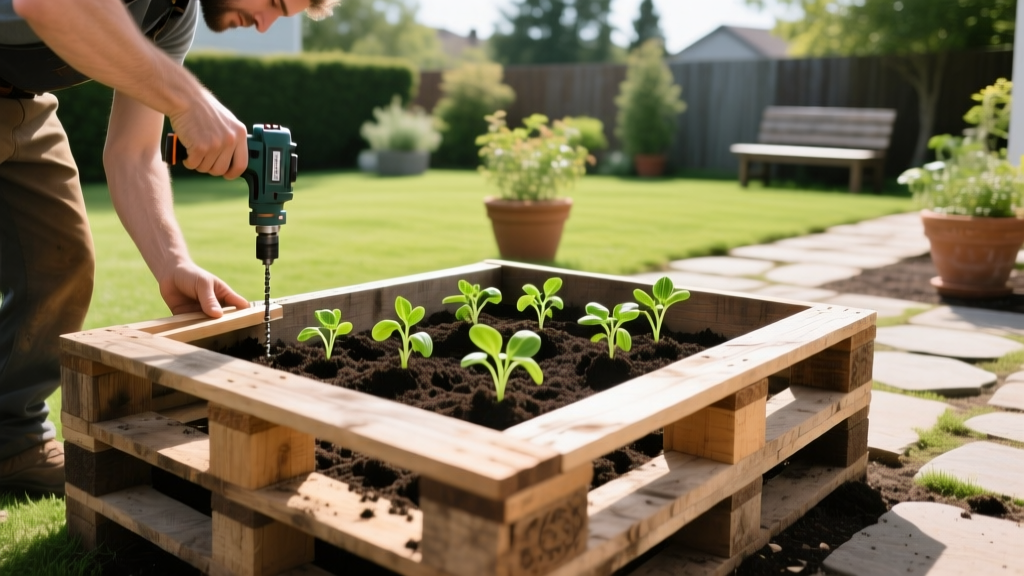
How to Build Raised Beds Using Reclaimed Garden Pallets
Building raised beds from reclaimed wood is one of the most cost-effective ways to start a vegetable garden, but sourcing the right materials requires strict attention to safety and structural integrity. Standard shipping pallets are engineered to hold static loads on warehouse racks, not to contain the immense lateral pressure of wet garden soil. When repurposing them for horticulture, you must navigate chemical treatments, hidden hardware, and wood bowing. This guide provides the exact framework for safely selecting, dismantling, and engineering raised beds using garden pallets.
Decoding Pallet Stamps: The Safety Imperative
Not all pallets are safe for growing food. International shipping regulations require wood packaging to be treated to prevent the spread of invasive pests. The International Plant Protection Convention (IPPC) mandates specific stamps on these materials. Before moving a single pallet to your yard, inspect the IPPC stamp on the center block.
- HT (Heat Treated): The wood was heated to a core temperature of 56°C for at least 30 minutes. This is completely safe for edible gardens.
- KD (Kiln Dried): Often paired with HT, indicating the wood was dried in a kiln to reduce moisture and prevent warping. Safe for food production.
- DB (Debarked): Simply means the bark was removed. This is a neutral stamp; check for HT or MB to determine chemical safety.
- MB (Methyl Bromide): A highly toxic pesticide used for fumigation. Never use MB-stamped pallets for any gardening application.
⚠️ Toxic Wood & Colored Pallet Warning
Avoid any pallet painted solid blue, red, or orange. These are typically rental pallets (like CHEP or PEP) that are heavily treated with harsh fungicides and are legally required to be returned to the supplier. Additionally, avoid pallets with a strong chemical odor or those sourced from industrial chemical plants, as spills can penetrate the porous wood grain.
Avoid any pallet painted solid blue, red, or orange. These are typically rental pallets (like CHEP or PEP) that are heavily treated with harsh fungicides and are legally required to be returned to the supplier. Additionally, avoid pallets with a strong chemical odor or those sourced from industrial chemical plants, as spills can penetrate the porous wood grain.
Essential Tools and Material Costs
Dismantling pallets with a pry bar is a beginner mistake that results in split slats and wasted time. The professional approach involves cutting through the fasteners. Below is the exact bill of materials for a standard 4x4 foot raised bed (12 inches deep), requiring two standard 40x48 inch pallets.
| Item | Specification | Est. Cost (2026) |
|---|---|---|
| Reclaimed Pallets | 2x 40x48" HT-stamped hardwood | $0.00 (Free) |
| Corner Posts | 4x4" Cedar or Pressure-Treated (8ft cut into quarters) | $18.50 |
| Fasteners | GRK RSS 3-1/8" Structural Torx Screws | $14.00 / box |
| Top Rails (Anti-Bow) | 2x4" Cedar boards (2x 8ft lengths) | $22.00 |
| Bed Liner | 6-mil Food-Grade HDPE Plastic Sheeting | $25.00 |
| Total Estimated Hardware Cost | $79.50 | |
Step-by-Step Construction and Structural Bracing
Pallet slats are typically only 1/2 to 5/8 of an inch thick. When saturated with water and pushed outward by 2,000 pounds of soil, unreinforced pallet wood will snap or bow severely within the first season. Follow this engineered assembly process to prevent structural failure.
Phase 1: Dismantling Without Damage
- Cut the Ends: Use a reciprocating saw equipped with a bi-metal demolition blade. Slide the blade flush between the pallet slat and the support block to slice the nails in half. This preserves the full length of the slat without splitting the wood grain.
- Extract the Nails: Use locking pliers (Vise-Grips) to twist and pull the severed nail shanks out of the slats. Leaving them in poses a severe laceration risk during assembly and future weeding.
- Dimension the Wood: Rip the slats to a uniform width if necessary, or sort them by thickness to ensure your bed walls sit flush.
Phase 2: Framing and Anti-Bow Engineering
- Anchor the Corners: Cut your 4x4 cedar posts to 14 inches (allowing 2 inches to sink into the ground for stability). Stand them in a 4x4 square.
- Attach the Slats: Screw the pallet slats horizontally into the 4x4 corner posts using the 3-1/8" GRK structural screws. Pre-drill holes near the ends of the pallet wood to prevent the dry, brittle reclaimed wood from splitting.
- Install the Top Rail (Critical): Once the walls are 12 inches high, screw 2x4 cedar top rails around the entire perimeter, bridging the corner posts. This top rail acts as a tension tie, completely eliminating the outward bowing that destroys standard pallet beds.
Pro-Tip: Hardware Selection
Do not use standard drywall screws or galvanized deck screws. The tannins and residual moisture in reclaimed oak or hardwood pallets will corrode standard zinc coatings within months, leading to black streaking and screw failure. GRK or FastenMaster structural screws with polymer or ceramic coatings are mandatory for longevity.
Do not use standard drywall screws or galvanized deck screws. The tannins and residual moisture in reclaimed oak or hardwood pallets will corrode standard zinc coatings within months, leading to black streaking and screw failure. GRK or FastenMaster structural screws with polymer or ceramic coatings are mandatory for longevity.
Liners, Soil Volume, and Filling Strategy
Because reclaimed garden pallets may have transported unknown goods, lining the bed is non-negotiable for edible crops. The EPA warns against the use of older treated woods near food sources, making a physical barrier essential even if you are certain your wood is HT-stamped.
Selecting the Right Liner
Avoid standard woven landscaping fabric; it is permeable and will allow water-soluble chemicals to leach into your soil matrix. Instead, line the interior walls and floor with 6-mil food-grade HDPE (High-Density Polyethylene) sheeting. Staple the HDPE to the interior walls, ensuring it overlaps at the seams, and puncture the bottom every 12 inches with a 1/4-inch drill bit to guarantee adequate drainage.
Calculating Soil Volume
A 4x4 foot bed that is 12 inches deep requires exactly 16 cubic feet of soil. Do not fill a raised bed with native topsoil or dirt dug from your yard; it will compact into an anaerobic brick, suffocating plant roots. Use a modified Mel's Mix ratio optimized for the drainage requirements of pallet beds:
- 33% Coarse Vermiculite: (approx. 5.3 cu ft) Retains moisture and keeps the soil matrix light.
- 33% Coco Coir: (approx. 5.3 cu ft) A sustainable alternative to peat moss that provides structure and aeration.
- 33% Blended Compost: (approx. 5.3 cu ft) Use a mix of at least three different compost types (e.g., cow manure, mushroom, and leaf mold) to ensure a broad spectrum of micronutrients.
Common Beginner Failure Modes
- Ignoring Ground Preparation: Placing a pallet bed directly over existing Bermuda grass or bindweed without smothering it first. Always lay down overlapping layers of plain brown corrugated cardboard beneath the bed before adding soil to block aggressive perennial weeds.
- Over-tightening Screws: Reclaimed pallet wood is often incredibly dense but brittle. Driving structural screws without a clutch setting or pre-drilling will strip the wood fibers, resulting in a weak joint that pulls apart when the soil settles.
- Planting Deep-Rooted Crops in Shallow Builds: If you only build a 6-inch deep pallet bed to save time, avoid planting tomatoes, carrots, or parsnips. Stick to shallow-rooted crops like lettuce, radishes, and bush beans, or commit to the full 12-to-18-inch depth required for deep taproots.
By prioritizing the HT stamp, engineering a top-rail bracing system, and utilizing an impermeable HDPE liner, you can safely transform industrial shipping waste into a high-yield, structurally sound vegetable garden that will outlast pre-fabricated canvas or plastic raised bed kits.

