
Gardening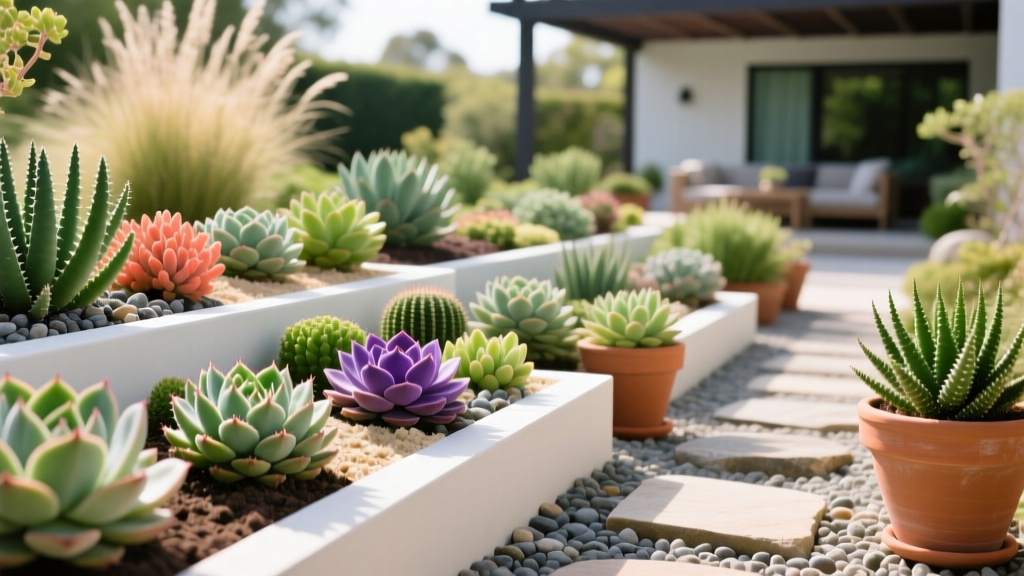
How to Build the Succulent Garden: Soil, Spacing, and Care Steps
Most succulent gardens fail within their first 18 months. The primary culprits are not neglect, but rather soil compaction, improper spacing, and fatal basal rot caused by moisture-trapping topsoil. Building the succulent garden requires treating the bed as a xeriscape engineering project rather than a standard flower bed. Success depends on manipulating soil porosity, understanding mature rosette geometry, and executing a strict establishment watering protocol.
Site Selection and Microclimate Mapping
Before purchasing plants, map your yard's solar exposure. Succulents require a minimum of six hours of direct, unfiltered sunlight daily to maintain compact growth and trigger stress-coloration (the vibrant reds, purples, and oranges seen in Echeveria and Sedum). According to the University of Florida IFAS Extension, inadequate light leads to etiolation, where plants stretch unnaturally and develop weak, water-filled cellular structures that collapse under their own weight.
Warning: Hardiness Zone Mismatches
Do not plant tender genera like Echeveria, Graptopetalum, or Aeonium in zones below 9a without a winterization plan. For zones 5 through 8, restrict your outdoor garden matrix to cold-hardy Sempervivum (Hens and Chicks), Agave parryi, and Opuntia (Prickly Pear) varieties, which can survive temperatures down to -20°F when kept completely dry during winter dormancy.
Engineering the Perfect Succulent Soil Matrix
Commercial 'cactus soils' sold at big-box stores often contain up to 70% peat moss or sedge peat. This organic material retains water for weeks, creating an anaerobic environment that breeds Phytophthora root rot. The optimal DIY soil matrix prioritizes macroporosity over water retention.
The 50/30/20 Volume Formula
- 50% Inorganic Drainage: Use 1/4-inch to 3/8-inch pumice, calcined clay (Turface MVP), or expanded shale. This creates permanent air pockets that prevent soil compaction over time.
- 30% Coarse Sand: Use horticultural sand or crushed granite (2-3mm particle size). Never use play sand or masonry sand, which are too fine and will cement the soil together.
- 20% Organic Matter: Use aged pine bark fines or screened coconut coir. This provides minimal moisture retention and slow-release nutrients without suffocating the roots.
If you prefer a commercial alternative, Bonsai Jack Succulent and Cactus Soil (Gritty Mix #111) remains the industry benchmark for pre-mixed inorganic blends in 2026. It consists entirely of calcined clay, pine bark, and Monto clay, retailing at approximately $32 for a 28-quart bag. While the upfront cost is higher than DIY mixing (which averages $0.45 per quart compared to the commercial $1.14 per quart), the guaranteed absence of moisture-retaining peat makes it a worthwhile investment for high-value specimen plants.
Step-by-Step Planting and Spacing Framework
Proper spacing dictates the long-term health of the succulent garden. Crowding plants restricts airflow, trapping humidity around the basal leaves and inviting fungal pathogens. Use the matrix below to calculate exact planting distances based on mature rosette width.
| Genus / Variety | Mature Width | Optimal Spacing | Max Root Depth |
|---|---|---|---|
| Echeveria 'Perle von Nürnberg' | 8 - 10 inches | 10 - 12 inches | 4 - 6 inches |
| Agave 'Blue Glow' | 18 - 24 inches | 24 - 30 inches | 8 - 12 inches |
| Sedum rupestre 'Angelina' | 12 - 24 inches (spreading) | 12 - 18 inches | 2 - 3 inches |
| Sempervivum 'Rubikon' | 4 - 6 inches | 6 - 8 inches | 2 - 4 inches |
The Planting Protocol
- Bare-Root the Plants: Remove all nursery soil from the roots. Nursery soil is designed for frequent greenhouse watering and will hold a water bubble inside your porous garden bed.
- Treat Root Damage: If any thick taproots break during cleaning, dust the cut ends with elemental sulfur powder to seal the wound and prevent fungal entry.
- Callous the Roots: Let the bare-rooted plants sit in dry shade for 24 to 48 hours. This allows the cut tissue to callous over before touching damp soil.
- Plant High: Set the root crown slightly above the surrounding soil grade. Succulents should never be buried deeper than their original soil line.
- Apply Top-Dressing: Cover the soil surface with a 1-inch layer of decomposed granite or crushed gravel. This prevents the basal leaves from touching moist soil, eliminating the primary vector for basal rot.
The First 30 Days: Watering and Establishment
The Penn State Extension notes that newly planted succulents lack the established capillary root networks required to pull water from deep soil layers. However, traditional daily watering will drown them. Follow this strict 30-day protocol:
- Days 1-7: Do not water. Allow the plant to experience mild moisture stress, which triggers the release of auxins (rooting hormones) and forces the plant to push out new capillary roots in search of water.
- Days 8-14: Apply a light misting directly to the soil surface (not the leaves) every three days. Use a pump sprayer to deliver roughly 2 ounces of water per square foot.
- Days 15-30: Transition to the 'soak and dry' method. Water deeply until moisture reaches a depth of 4 inches, then force the soil to dry out completely before the next watering. Use a wooden bamboo skewer inserted into the soil; if it comes out clean and dry, it is time to water. If soil clings to the wood, wait another 48 hours.
Troubleshooting Common Establishment Failures
Even with perfect soil, environmental variables can cause stress. Use this diagnostic guide to correct issues before they become fatal.
Diagnostic Matrix
- Symptom: Lower leaves turning translucent, yellow, and dropping easily.
Diagnosis: Overwatering / Early Root Rot.
Fix: Stop watering immediately. If the stem feels mushy, uproot the plant, cut away all rotting tissue with a sterilized blade, dust with sulfur, and re-root in 100% dry pumice. - Symptom: Leaves shriveling, wrinkling, and feeling papery.
Diagnosis: Underwatering / Desiccation.
Fix: The plant is consuming its own stored water. Perform a deep soak, ensuring the water penetrates the hydrophobic top layer of the soil. - Symptom: Plant stretching upward with wide gaps between leaves (Etiolation).
Diagnosis: Insufficient PAR (Photosynthetically Active Radiation).
Fix: Relocate to a site with 2 additional hours of direct sun. You can 'behead' the stretched stem, let it callous, and replant the rosette to reset the compact growth habit.
Building the succulent garden is an exercise in restraint and precision. By engineering a highly porous soil matrix, respecting mature spatial requirements, and forcing the roots to hunt for moisture during the establishment phase, you create a resilient, low-maintenance landscape that thrives for decades rather than seasons.

