
Gardening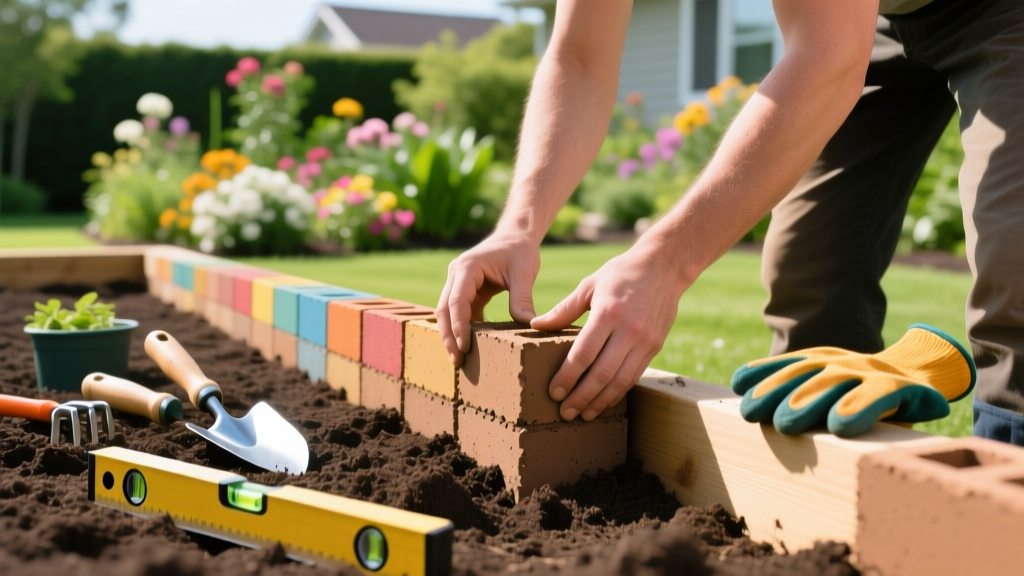
How to Build Raised Beds With Garden Blocks: Beginner Guide
Why Choose Garden Blocks Over Timber?
When constructing raised beds, most beginners default to rot-prone timber or expensive composite lumber. Concrete masonry units (CMUs)—commonly referred to as garden blocks or cinder blocks—offer a superior alternative for modular gardening. They require zero sawing, drilling, or complex joinery. Because they rely on gravity and interlocking geometry, garden blocks allow you to build, reconfigure, or dismantle a raised bed in a single afternoon.
Unlike untreated pine, which rots within three to five years, or railroad ties, which leach toxic creosote into your soil, modern concrete blocks are inert and structurally permanent. The hollow cores also provide built-in micro-climates for planting herbs or inserting trellis posts.
Pro Tip: Utilize the hollow cores of the top-course blocks to grow shallow-rooted herbs like thyme and oregano, or insert 1/2-inch PVC pipes to create instant hoop-house frames for frost protection.
Block Sizing, Types, and Cost Matrix
Selecting the right block profile dictates the stability and aesthetic of your raised bed. Below is a breakdown of the most common garden blocks available at major home improvement centers, along with current average pricing.
| Block Type | Dimensions (H x W x L) | Avg. Weight | Est. Price Per Unit | Best Use Case |
|---|---|---|---|---|
| Standard Hollow CMU | 8" x 8" x 16" | 38 lbs | $2.85 - $3.50 | Main structural walls (2-3 courses high) |
| Half-Height Hollow CMU | 4" x 8" x 16" | 18 lbs | $1.90 - $2.40 | Low-profile edging and single-course beds |
| Solid Cap Block | 4" x 8" x 16" | 24 lbs | $2.50 - $3.10 | Top course to seal cores and provide seating |
| Retaining Wall Block | 6" x 12" x 4" | 26 lbs | $4.00 - $5.50 | Curved beds and terraced sloped gardens |
Step-by-Step Assembly Framework
Building with garden blocks is forgiving, but skipping the base preparation will lead to frost heave and leaning walls in colder climates. Follow this exact sequence for a level, permanent installation.
Step 1: Trenching and Base Preparation
Outline your bed dimensions using string lines. Dig a trench 4 inches deep and 12 inches wide along the perimeter. Fill the trench with 3/4-inch crushed base rock (not smooth pea gravel, which rolls and shifts). Use a hand tamper to compact the gravel until it is completely rigid.
Step 2: Laying the Base Course
Place your first row of standard 8x8x16 CMUs directly onto the compacted gravel. The hollow cores should face upward. Check for level across the entire row using a 4-foot torpedo level. If a block sits too low, add a handful of base rock beneath it; if it sits too high, tap it down with a rubber mallet. Never use dirt or sand to shim blocks.
Step 3: Stacking and Pinning
For beds taller than one course (16 inches), you must offset the vertical joints by 8 inches (a running bond pattern). To prevent the blocks from shifting outward under the lateral pressure of wet soil, drive 24-inch lengths of 1/2-inch #4 rebar down through the hollow cores and into the soil below. Place rebar in every other core for standard beds, or in every core if you are building on a slight slope.
Warning: Do not use mortar to bind garden blocks for raised beds. Mortar traps hydrostatic pressure from wet soil, which will eventually crack the blocks during freeze-thaw cycles. Gravity and rebar pinning are sufficient.
The Soil Safety Debate: Are Concrete Blocks Toxic?
A persistent myth in gardening forums claims that concrete blocks leach heavy metals and fly ash into the soil. This confusion stems from historical "cinder blocks" manufactured in the mid-20th century, which utilized coal fly ash as a lightweight aggregate. Modern CMUs, however, are manufactured using Portland cement, sand, and crushed gravel.
According to research on urban soil safety and raised bed materials, modern concrete blocks do not pose a toxicity risk to edible gardens (Penn State Extension). However, concrete is highly alkaline and can slowly raise the pH of the soil immediately adjacent to the block walls over several years.
The Actionable Fix: To neutralize pH migration and extend the life of your blocks, coat the interior walls with a penetrating silane-siloxane water repellent (such as Foundation Armor SX5000). This breathable sealer prevents moisture from wicking through the concrete, locking in alkalinity and preventing white efflorescence staining on the exterior.
Soil Volume and Filling Guide
A standard 4-foot by 8-foot raised bed built two courses high (16 inches) requires approximately 1.6 cubic yards of soil. Do not fill the bed with native topsoil, which will compact and suffocate root systems.
For optimal drainage and nutrient retention, use a modified Mel's Mix ratio:
- 40% Coir or Peat Moss: For moisture retention and soil structure.
- 30% Coarse Vermiculite or Perlite: For aeration and drainage.
- 30% Blended Compost: Use at least three different sources (e.g., mushroom, cow manure, leaf mold) to ensure a broad spectrum of micronutrients.
Fill the hollow cores of the bottom course with cheap gravel or native dirt to save on expensive soil mix, as plant roots will not penetrate the narrow 5-inch voids effectively.
Troubleshooting Common Assembly Mistakes
| Symptom | Root Cause | Corrective Action |
|---|---|---|
| Blocks leaning outward after one season | Lateral soil pressure exceeding gravity; lack of rebar pinning. | Remove top soil, drive 24-inch rebar through cores, and backfill. |
| White, crusty powder on exterior walls | Efflorescence caused by water migrating through unsealed concrete. | Scrub with white vinegar, let dry, and apply silane-siloxane sealer. |
| Soil pH testing above 7.5 near edges | Alkaline lime leaching from unsealed concrete into the soil mix. | Line interior walls with heavy-duty landscaping fabric and apply elemental sulfur to soil. |
| Blocks sinking unevenly in spring | Frost heave due to placing blocks directly on native clay or dirt. | Lift blocks, excavate 4 inches deeper, and install compacted 3/4-inch crushed rock base. |
Frequently Asked Questions
Can I build a garden block raised bed on an existing concrete patio?
Yes, but drainage becomes your primary concern. If building on a solid concrete slab, do not use a gravel base beneath the blocks. Instead, use a construction adhesive (like Loctite PL Premium) to glue the bottom course directly to the patio. You must also drill 1/2-inch weep holes through the patio slab every 4 feet to allow excess water to escape, otherwise, your soil will become waterlogged and rot your plants.
How high can I safely stack garden blocks without mortar?
For freestanding raised beds holding saturated soil, the safe maximum height for dry-stacked, rebar-pinned CMUs is three courses (24 inches). Beyond 24 inches, the lateral hydrostatic pressure of wet soil requires engineered retaining wall blocks with interlocking lips or a mortared structural wall.
Do I need to line the inside of the blocks with plastic?
Avoid using solid plastic sheeting (like 6-mil polyethylene) against the blocks. While it stops alkaline leaching, it also traps moisture against the concrete, accelerating spalling in freezing weather, and prevents the soil from breathing. If you must line the bed to protect the soil pH, use a permeable geotextile landscape fabric stapled to the interior walls.

