
Gardening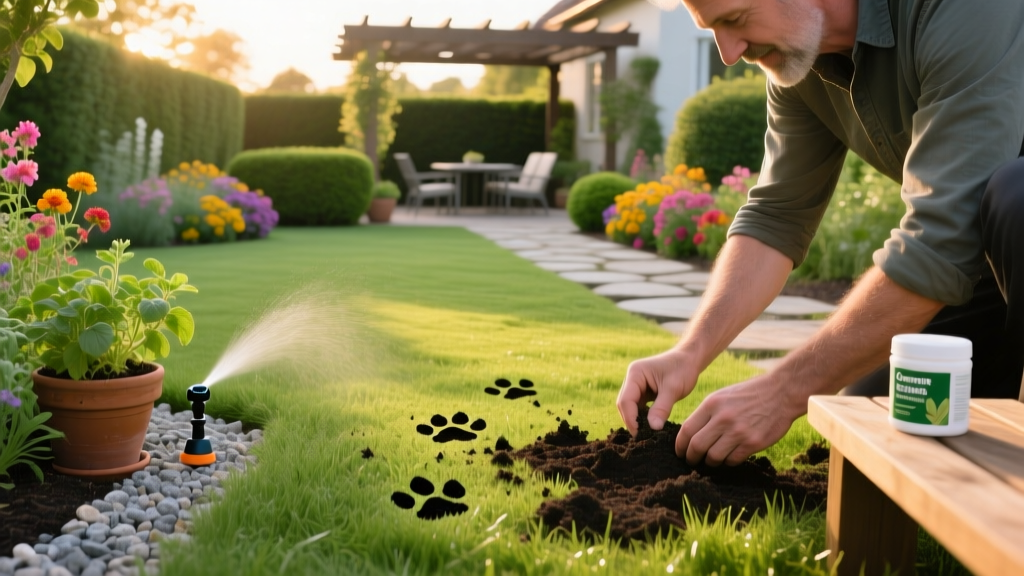
How to Keep Cats Out of Garden Soil: Diagnosis & 6 Proven Fixes
Diagnosing the Intrusion: Is It Actually Cats?
Before investing time and money into deterrents, you must accurately diagnose the pest. Homeowners frequently misattribute garden damage to cats when the actual culprits are raccoons, skunks, or squirrels. Feline digging behavior is highly specific. Cats are not foraging for grubs or burying nuts; they are seeking a comfortable, well-draining litter box.
Symptom Checklist: Feline vs. Other Pests
- Cat Damage: Shallow, wide depressions (3 to 5 inches across) in loose, freshly tilled soil. You will often find feces that are either entirely uncovered or very loosely buried with a few scratches of topsoil. Seedlings may be flattened but rarely eaten.
- Raccoon/Skunk Damage: Deep, conical holes (up to 8 inches deep) or large sections of torn-up sod. These animals are actively hunting for soil-dwelling grubs and will destroy root systems in the process.
- Squirrel/Chipmunk Damage: Small, precise holes (1 to 2 inches wide) often found near the base of plants or garden borders, used for caching seeds and nuts.
If your soil features shallow scraping and uncovered scat, you are dealing with a feline intrusion. According to the Royal Horticultural Society (RHS), domestic and feral cats are naturally drawn to the soft, dry, and finely particulate texture of freshly prepared garden beds.
Why Cats Target Cultivated Garden Beds
Understanding feline behavioral ecology is critical to solving the problem. Cats prefer to eliminate in substrates that allow them to easily dig a shallow depression, deposit waste, and cover it to mask their scent from predators and rivals. Hard-packed clay, heavily mulched areas, and dense groundcovers are naturally unappealing to them. However, the moment you rototill a bed for spring planting or add a 2-inch layer of fine compost, you are essentially rolling out a welcome mat. The soil is soft, drains quickly (keeping their paws dry), and holds odor well.
The Deterrent Matrix: Physical vs. Sensory Solutions
Not all deterrents are created equal. Sensory repellents (scents and tastes) degrade rapidly in outdoor environments, while physical barriers offer long-term reliability. Use the matrix below to select the right strategy for your specific garden layout.
| Deterrent Method | Mechanism of Action | Est. Cost (per 100 sq ft) | Efficacy Rating | Maintenance Level |
|---|---|---|---|---|
| Sub-Surface Hardware Cloth | Physical barrier prevents digging | $15 - $25 | 95% (High) | Low (Set and forget) |
| Motion-Activated Sprinkler | Startle response via water burst | $80 - $120 (Unit) | 90% (High) | Medium (Battery/winterizing) |
| Plastic Scat Mats | Tactile discomfort (harmless spikes) | $20 - $30 | 75% (Medium) | Low (Occasional cleaning) |
| Rose Pruning Mulch | Tactile pain/thorns | $0 (If pruned on-site) | 60% (Medium) | High (Decomposes, needs replacing) |
| Ultrasonic Repellents | High-frequency sound emission | $30 - $50 | 40% (Low) | Medium (Battery/solar alignment) |
Step-by-Step Implementation of Proven Fixes
1. Sub-Surface Hardware Cloth (The Permanent Fix)
For raised beds and permanent perennial borders, physical exclusion is the only 100% reliable method. Do not use standard poultry netting, which is too flimsy and degrades. Instead, purchase 19-gauge galvanized hardware cloth with a 1-inch hexagonal mesh.
- Cut the wire to fit the dimensions of your garden bed using aviation snips.
- Lay the wire flat over the soil surface.
- Secure the perimeter using 6-inch galvanized landscape staple pins, placed every 18 inches.
- For existing plants, cut small 'X' slits in the wire and fold the flaps down around the plant stem.
Plants will grow up through the 1-inch gaps without restriction, water will penetrate freely, but cats will find it impossible to dig. You can lightly cover the wire with a half-inch of bark mulch to hide it from view.
2. Motion-Activated Sprinklers (The Active Deterrent)
If you have large, open vegetable plots where laying wire is impractical, a motion-activated sprinkler is the most effective active deterrent. The Orbit 62100 Yard Enforcer (typically priced around $85 in 2026) is the industry standard. Its passive infrared (PIR) sensor detects animal heat signatures up to 40 feet away and triggers a 3-second burst of water. It uses only 2 to 3 cups of water per activation, meaning it won't waterlog your garden beds. Position the unit at the corner of your garden, aiming the sensor across the widest part of the bed. Remember to swap the 4 AA batteries every season and drain the unit before the first hard freeze to prevent the internal valve from cracking.
3. Texture Barriers: Scat Mats and Prunings
Cats have highly sensitive paw pads. Commercial plastic scat mats feature blunt, 3/4-inch flexible spikes that are entirely harmless but deeply uncomfortable to walk on. Lay these mats over bare soil in high-traffic feline zones. Alternatively, if you grow roses or brambles, save your pruned canes, chop them into 3-inch segments, and scatter them thickly over the soil surface. The thorns create an impassable tactile barrier that naturally biodegrades over the season.
⚠️ Warning: The Toxic Remedy Trap
Never use mothballs (naphthalene or paradichlorobenzene) as a garden repellent. Not only is outdoor use of mothballs a violation of federal pesticide laws in many regions, but they are also highly toxic to soil microbiology, groundwater, and local wildlife. Similarly, avoid dumping large quantities of coffee grounds. While often touted as a home remedy, coffee grounds can cause severe caffeine toxicity in dogs and cats if ingested while grooming their paws, and they can drastically lower your soil pH, harming brassicas and other alkaline-preferring vegetables.
Behavioral Redirection: The Decoy Garden Strategy
Sometimes, the best way to keep cats out of your garden is to give them a better alternative. Feline behavioral experts recommend creating a 'decoy garden' in a far corner of your yard, away from your primary growing areas.
- The Substrate: Build a small 3x3 foot wooden frame and fill it with fine-grained, washed play sand. Sand is vastly superior to garden soil for feline elimination, and they will naturally gravitate toward it.
- The Flora: Plant Nepeta cataria (Catnip) or Dactylis glomerata (Orchard grass) around the perimeter. According to the ASPCA, these plants are entirely non-toxic and provide a safe chewing alternative that keeps them away from your prized hostas and lilies.
- Maintenance: Use a small garden rake to keep the sand clean and loose. If the sand becomes compacted or soiled, cats will abandon it and return to your vegetable beds.
Troubleshooting: When Deterrents Fail
If you have implemented physical barriers and cats are still finding a way in, evaluate the following edge cases:
The 'Fence-Top' Highway
Cats rarely enter a garden by walking through the gate; they drop in from above. If your garden is enclosed by a 6-foot privacy fence, cats are likely walking the top rail and dropping directly into the beds. Install coyote rollers (spinning PVC tubes mounted on the fence top) or a 45-degree inward-angled wire overhang to prevent them from balancing on the fence line.
Sensory Habituation
If you are using ultrasonic repellents or scent-based granules, the cats have likely habituated to the stimulus. Felines are highly adaptable; if an ultrasonic device emits a sound but no physical consequence follows, they will quickly learn to ignore it. Always pair sensory deterrents with a physical consequence (like the motion sprinkler) to maintain efficacy.
'The most common mistake gardeners make is relying entirely on chemical repellents. Rain, irrigation, and UV degradation neutralize scent-based products within 48 hours. Physical exclusion via hardware cloth or active startle responses via water are the only sustainable, long-term solutions for feline intrusion.' — Integrated Pest Management Guidelines, University Extension Services
Protecting Your Pets and Local Wildlife
As you secure your garden, ensure that your deterrents do not create hazards for non-target animals. Avoid sharp chicken wire buried vertically (which can slice the paws of digging dogs), and ensure motion sprinklers are not aimed directly at public sidewalks where they might startle pedestrians. By combining sub-surface hardware cloth in your raised beds with a motion-activated sprinkler for open plots, you can reclaim your garden soil without harming the neighborhood felines.

