
Gardening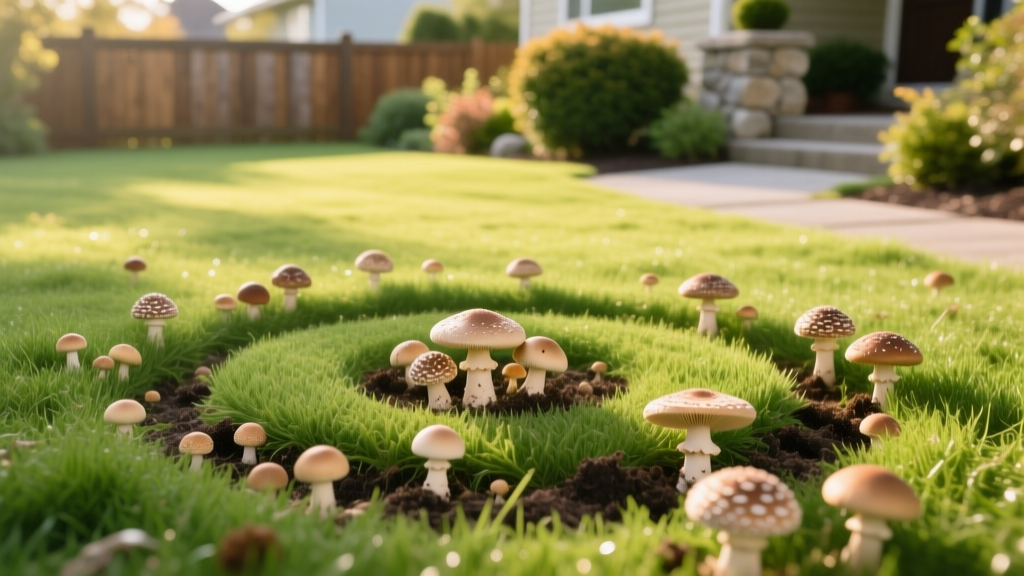
Lawn Fungi Explained: What Causes Mushrooms to Grow in Your Yard
The sudden appearance of mushrooms in an otherwise manicured lawn often triggers concern among homeowners. To understand what causes mushrooms to grow in your yard, you must look beneath the soil surface. The mushrooms you see are merely the temporary, reproductive fruiting bodies of a vast, subterranean fungal network known as mycelium. These organisms are not invading your lawn; they are already there, performing the essential ecological function of decomposing complex organic matter.
Fruiting occurs only when the mycelium has accumulated sufficient energy reserves and encounters a precise intersection of environmental triggers. By manipulating these specific soil and microclimate variables, you can effectively manage and suppress fungal fruiting without resorting to ineffective chemical treatments.
The Biology of Lawn Fungi: The Mycelial Network
Most mushrooms found in residential turf are saprophytic, meaning they feed on dead and decaying organic material. According to Penn State Extension, the primary food sources for these fungi include buried construction debris (like tree stumps and roots), excessive thatch layers, and decaying grass clippings. The mycelium secretes enzymes that break down lignin and cellulose—complex carbohydrates that bacteria cannot easily digest. When soil temperatures range between 60°F and 75°F and moisture levels peak, the mycelium produces mushrooms to release spores and propagate.
The 4 Primary Environmental Triggers
Mushrooms will not fruit unless four specific environmental conditions align. Altering even one of these variables can disrupt the fruiting cycle.
1. Soil Moisture and Drainage Deficits
Fungi require a soil field capacity exceeding 35% to initiate fruiting. Compacted soils with poor percolation rates trap water in the upper root zone, creating an ideal anaerobic environment for mycelial expansion. Clay-heavy soils are particularly prone to this issue, as their pore space restricts gravitational drainage.
2. Organic Matter Accumulation (Thatch)
A thatch layer exceeding 0.5 inches provides an insulated, moisture-retaining habitat for fungi. Furthermore, buried woody material from previous tree removals acts as a long-term carbon sink, feeding mycelial networks for decades until the wood is entirely mineralized.
3. Canopy Shade and Restricted Airflow
Overhanging tree canopies reduce solar radiation and restrict wind movement across the turf. This drastically lowers the evapotranspiration rate, keeping the turf canopy and topsoil damp for extended periods, which is a primary catalyst for spore germination and fruiting body development.
4. High Carbon-to-Nitrogen (C:N) Ratios
Decaying wood and heavy thatch possess a high C:N ratio (often 400:1). Fungi thrive in high-carbon environments. When soil nitrogen is depleted, fungi outcompete turfgrass for available nutrients, leading to both mushroom proliferation and localized grass yellowing.
Common Yard Mushroom Identification Matrix
Accurate identification helps determine whether a fungus is merely a cosmetic nuisance or a symptom of a deeper turf pathology. Below is a matrix of the most frequently encountered saprophytic lawn mushrooms.
| Species / Common Name | Visual Characteristics | Lawn Impact | Toxicity / Pet Risk |
|---|---|---|---|
| Fairy Ring (Marasmius oreades) | Dark green rings of accelerated grass growth, sometimes with a ring of small, tan mushrooms. | Can cause hydrophobic soil conditions, leading to localized turf dieback inside the ring. | Mildly toxic; gastrointestinal upset if ingested. |
| Inky Cap (Coprinopsis atramentaria) | White, bell-shaped caps that rapidly dissolve into a black, inky liquid as they mature. | Purely cosmetic; indicates high moisture and decaying buried wood. | Non-toxic, but causes severe reactions if consumed with alcohol. |
| Lawn Puffball (Lycoperdon perlatum) | Small, round, white spheres lacking a stem; releases brown spore dust when stepped on. | Cosmetic nuisance; thrives in heavily shaded, damp lawn areas. | Non-toxic when young and white inside; avoid if interior is brown. |
| Meadow Mushroom (Agaricus campestris) | Classic umbrella shape, white cap with pink-to-brown gills underneath. | Indicates healthy, organic-rich soil; often appears after heavy rains. | Edible, but easily confused with toxic lookalikes (e.g., Amanita). |
Actionable Management: Altering the Soil Microbiome
Attempting to kill mushrooms with surface-level fungicides is a fundamental misunderstanding of fungal biology. The University of California Statewide IPM Program explicitly notes that fungicides do not penetrate deeply enough to eradicate the mycelial network. Instead, you must alter the soil environment to make it inhospitable for fruiting.
Step 1: Deep Core Aeration
Rent a gas-powered core aerator to extract soil plugs exactly 3 inches deep, spaced 2 to 3 inches apart. This physically fractures compacted soil layers, increases oxygen diffusion into the root zone, and accelerates the drying of the topsoil. Perform this in early fall or spring when the turf is actively growing to ensure rapid hole recovery.
Step 2: Mechanical Thatch Reduction
If your thatch layer exceeds 0.5 inches, utilize a power dethatcher (vertical mower). Set the blades to penetrate 1/4 inch into the soil surface to rip out the dead organic mat. Rake and remove all debris. This eliminates the primary moisture-retaining blanket that shelters the mycelium.
Step 3: Nitrogen Balancing to Shift the C:N Ratio
To accelerate the decomposition of buried wood without triggering mushroom fruiting, you must lower the soil's Carbon-to-Nitrogen ratio. Apply a high-nitrogen, low-phosphorus fertilizer (such as a 29-0-4 formulation) at a rate of 1 pound of actual nitrogen per 1,000 square feet. The influx of nitrogen stimulates soil bacteria, which outcompete the fungi and break down the woody carbon sources much faster, depriving the mycelium of its long-term food supply.
⚠️ The Fungicide Myth
Do not waste money on broad-spectrum chemical fungicides like Daconil or Heritage SC for saprophytic lawn mushrooms. These products are engineered to target pathogenic fungi (like Brown Patch or Dollar Spot) that attack living grass tissue. They will not kill decomposing mycelium buried 4 inches deep, and repeated applications will harm the beneficial soil biology required for a healthy lawn.
When to Call a Professional vs. When to Ignore
Not every fungal outbreak requires intervention. Use this decision framework to determine your next steps:
- Ignore and Mow: If the mushrooms are scattered, appear only after heavy autumn rains, and your turf remains dense and green, they are a sign of a biologically active, healthy soil food web. Simply mow them down or kick them over to prevent spore dispersal.
- Intervene Locally: If mushrooms are concentrated in a specific 5-foot radius, probe the soil with a screwdriver. You will likely hit buried construction debris or an old root ball. Dig out the area to a depth of 12 inches, remove the decaying wood, and backfill with fresh topsoil and grass seed.
- Seek Professional Remediation: If you observe Armillaria (Oak Root Fungus) characterized by honey-colored mushrooms at the base of trees and thick, shoestring-like black rhizomorphs under the bark, this is a lethal pathogen, not a beneficial decomposer. Consult a certified arborist immediately, as it will kill living trees and shrubs.
Understanding the biological drivers behind lawn fungi transforms them from a mysterious nuisance into a readable indicator of your soil's physical and chemical health. By managing moisture, reducing thatch, and balancing soil nitrogen, you dictate the terms of your lawn's microbiome. For further reading on managing complex turfgrass diseases and fungal networks, the Royal Horticultural Society provides extensive guidelines on identifying and living with symbiotic lawn organisms.

