
Gardening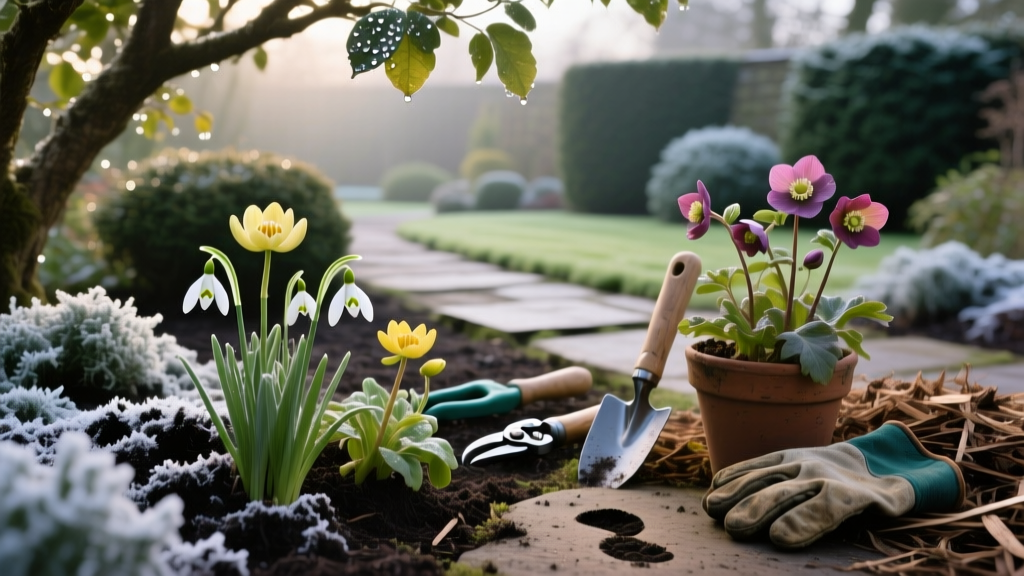
Cold Weather Flowers: Solutions for Frost Pockets and Shade
Diagnosing Your Winter Microclimate Problems
Most gardening failures in late fall and early spring are not caused by the plant's hardiness zone rating, but by unaddressed microclimates. A plant rated for USDA Zone 5 might easily survive a Zone 5 winter on a flat, open plain, but it will die in a Zone 5 frost pocket where localized temperatures plunge 8°F below the regional average. When selecting cold weather flowers, you must first diagnose the specific mechanical and thermal stresses of your site.
Microclimate Diagnostic Checklist:
- Frost Pockets: Low-lying depressions or areas blocked by solid fences where cold, dense air drains and pools overnight.
- Wind Corridors: Narrow gaps between structures or rows of trees that accelerate winter winds, causing rapid foliage desiccation.
- Evergreen Canopy Shade: Zones beneath conifers where winter sunlight is blocked, soil is highly acidic, and root competition is fierce.
According to the Royal Horticultural Society (RHS), frost pockets can delay local spring conditions by up to two weeks compared to surrounding elevated terrain. Understanding these thermal sinks is the first step to selecting the right botanical problem-solvers.
Problem 1: The Frost Pocket (Cold Air Drainage Basins)
Cold air is heavier than warm air. On clear, still winter nights, it flows downhill like water, pooling in any topographical depression or against solid barriers like retaining walls. In these basins, late-season frosts can destroy early bloomers. To solve this, you need cold weather flowers with exceptional cellular antifreeze properties and low-growing habits that sit below the harshest wind shears.
Top Cultivars for Frost Pockets
1. Pansy (Viola × wittrockiana 'Matrix Blue Frost'): The Matrix series is specifically bred for extreme cold tolerance. Unlike standard pansies that turn to mush at 26°F, the Matrix series can withstand hard freezes down to 20°F and will bounce back once the sun hits them. Plant them in tight 8-inch spacings to create a thermal mass effect.
2. Lenten Rose (Helleborus × hybridus 'Ice N' Roses Red'): Hellebores are the ultimate frost pocket survivors. The 'Ice N' Roses' series features outward-facing blooms on sturdy, dark stems that resist snapping under ice loads. As noted by UW-Madison Extension, Hellebores thrive in the cool, moist conditions typical of low-lying areas, provided the soil is not completely waterlogged.
| Cultivar | Hardiness Zone | Freeze Tolerance Threshold | Bloom Trigger Temp |
|---|---|---|---|
| Matrix Blue Frost Pansy | 4b - 9 | 20°F (-6°C) | 45°F (7°C) |
| Ice N' Roses Red Hellebore | 5a - 9 | -10°F (-23°C) | 38°F (3°C) |
| Winter Snow Heath (Erica) | 5 - 8 | -15°F (-26°C) | 40°F (4°C) |
Problem 2: Exposed Winter Wind Corridors
Wind corridors accelerate the evaporation of moisture from plant tissues. When the ground is frozen, roots cannot replace this lost water, leading to fatal winter desiccation (winter burn). Cold weather flowers planted in these zones must have specialized foliage—either waxy cuticles, needle-like leaves, or the ability to remain completely dormant underground until the winds die down in late spring.
Botanical Solutions for High-Wind Zones
Winter Heath (Erica carnea 'Winter Snow'): This low-profile evergreen shrub produces masses of white, bell-shaped flowers from January through March. Its needle-like leaves have a minimal surface area, drastically reducing wind-driven transpiration. Plant 'Winter Snow' in masses along the edges of driveways or between buildings. Cost averages $12-$18 per 1-gallon container.
Siberian Squill (Scilla siberica): For areas where even low shrubs are battered by wind, rely on geophytes (bulbs). Siberian Squill remains entirely underground during the worst winter winds, pushing up 4-inch blue flower spikes only in early spring when wind speeds typically moderate. Plant bulbs 3 inches deep and 2 inches apart in early autumn.
Problem 3: Dense Shade Under Evergreen Canopies
Gardening under pine, spruce, or fir trees presents a triad of challenges: near-zero winter sunlight, highly acidic soil, and intense root competition for moisture. Most standard shade plants fail here because they require dappled winter light to maintain their basal rosettes. You need cold weather flowers that have evolved in the understory of boreal forests.
Conquering the Conifer Understory
Snowdrops (Galanthus nivalis): Snowdrops possess a remarkable biological adaptation called thermogenesis. The plant can generate its own cellular heat, allowing the flower tip to melt through crusted snow and frozen topsoil to reach the surface. According to RHS plant profiles, Galanthus thrives in the acidic, humus-rich soil found beneath conifers.
Winter Aconite (Eranthis hyemalis): This tuberous perennial produces bright yellow, buttercup-like flowers surrounded by a green ruff. It completes its entire life cycle before evergreen canopies fully shade the ground in late spring.
Warning: Root Competition Planting Protocol
Do not attempt to dig large, deep holes under mature evergreens; you will sever critical structural roots. Instead, use a narrow soil auger or a sharp dibber to plant small, bare-root or plug-sized snowdrops and aconites between the major roots. Top-dress the planting zone with 1 inch of composted pine bark to buffer moisture loss without suffocating the tree roots.
Soil Mechanics: Preventing Frost Heave in Cold Beds
The most common mechanical failure of cold weather flowers is frost heave. During winter, soil undergoes repeated freeze-thaw cycles. When water in the soil freezes, it expands, pushing shallow-rooted plants upward and exposing their crowns to lethal freezing air. Once the soil thaws, the plant is left stranded on the surface, its roots severed from the soil profile.
Step-by-Step Frost Heave Prevention
- Plant 1 Inch Deeper: When installing cold-weather perennials like Hellebores in the fall, set the crown exactly 1 inch below the surrounding soil grade. This provides a thermal buffer against surface heaving.
- Amend with Expanded Shale: If your site has heavy clay that retains winter water, mix 20% expanded shale or perlite into the backfill. This creates macro-pores that allow water to drain away before it can freeze and expand.
- Apply the Right Mulch: Avoid whole leaves or fine sawdust, which mat down and trap ice. Apply a 2-to-3-inch layer of coarse, shredded hardwood mulch. The coarse texture traps insulating air pockets while allowing the soil to breathe.
- Avoid Fall Nitrogen: Do not apply nitrogen-heavy fertilizers after August. Nitrogen promotes soft, succulent late-season growth that lacks the lignin required to withstand frost heave and freezing winds.
Troubleshooting Cold Weather Flower Damage
My Pansies Look Completely Flat and Black After a Freeze
Diagnosis: This is a normal physiological response in Matrix and Sorbet pansy varieties. The plant pulls water out of its cells and into the intercellular spaces to prevent intracellular ice crystals from rupturing the cell walls. Action: Do nothing. Do not prune or pull them. As soon as the morning sun warms the air above 32°F, the plants will reabsorb the water and stand back up within hours.
My Hellebore Leaves Have Brown, Crispy Patches in February
Diagnosis: Winter windburn or sunscald on frozen foliage. The leaves are losing moisture to the wind, but the roots cannot pull water from the frozen ground to replace it. Action: Leave the damaged leaves in place; they protect the developing flower buds at the crown. Once the plant finishes blooming in early spring, cut the old, damaged foliage completely to the ground to make way for fresh, disease-free leaves.

