
Gardening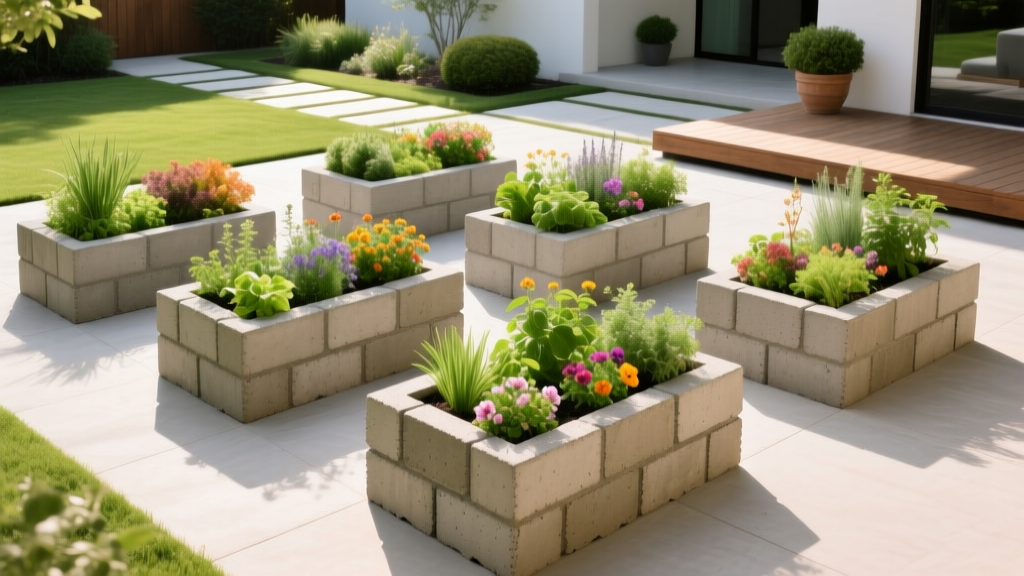
5 Practical Concrete Block Garden Ideas for Raised Beds
The Hidden Chemistry of Concrete Blocks in Gardens
Before stacking your first block, you must understand the material. Standard concrete masonry units (CMUs) are highly alkaline. Fresh concrete has a pH between 12 and 13, and while it cures and carbonates over time, it continues to leach calcium hydroxide into adjacent soil. For brassicas (cabbage, broccoli) that thrive in slightly alkaline conditions, this is a benefit. For acid-loving plants like blueberries, azaleas, or potatoes, it will cause severe nutrient lockout and chlorosis.
5 Practical Concrete Block Garden Ideas
Here are five highly functional layouts that leverage the modular nature of CMUs, moving beyond the standard rectangular box.
1. The 2-Tier Dry-Stack Vegetable Bed (4x8 Footprint)
The classic workhorse of the garden. A two-tier stack (16 inches high) provides enough depth for deep-rooting crops like carrots and tomatoes without requiring mortar. The hollow cores can be filled with soil and planted with compact herbs like thyme or trailing nasturtiums, maximizing your yield per square foot. By driving 3-foot lengths of #4 (1/2-inch) rebar through the cores and into the ground every 32 inches, you lock the structure against frost heave and hydrostatic pressure.
2. The Staggered Herb Spiral
Herb spirals create distinct microclimates in a small footprint. By dry-stacking blocks in a decreasing spiral pattern, you create a 3-foot-tall structure. The top of the spiral drains rapidly and receives maximum sun (ideal for rosemary and lavender), while the bottom retains moisture and sits in partial shade (perfect for parsley and cilantro). The staggered joints of the concrete blocks provide natural crevices for beneficial insects and ground beetles to overwinter.
3. The Keyhole Garden for Accessibility
Standard 4x8 beds require reaching 4 feet into the center, which strains the lower back. A keyhole design uses concrete blocks to form a U-shape or horseshoe with a 2-foot-wide path cut into the center. This ensures no planting area is more than 2 feet from your standing position. CMUs are perfect for this because their 16-inch nominal length allows you to easily calculate the curve radius without cutting blocks.
4. Vertical Succulent & Strawberry Tower
Instead of laying blocks horizontally, stand them vertically on a stable, gravel-packed base. Stack them with the hollow cores aligned, offsetting each layer by 8 inches to create a staggered staircase effect. Fill the central column with a fast-draining cactus mix or lightweight strawberry potting blend. The offset holes become individual planting pockets. A single 5-block tower yields 10 planting pockets while occupying less than 1.5 square feet of patio space.
5. Tiered Retaining Wall Border
For sloped yards, use CMUs to build a terraced retaining garden border. Unlike freestanding raised beds, retaining walls must handle lateral earth pressure. Step the blocks back into the slope by 1 inch for every 8 inches of height (a 1:8 batter). Fill the cores with crushed gravel rather than soil to improve drainage and lower the center of gravity, preventing the wall from bowing outward during spring thaws.
2026 Material Cost & Specification Matrix
Pricing fluctuates based on regional supply chains, but here is the baseline cost matrix for a standard 4x8-foot, 2-tier dry-stack bed in 2026.
| Material | Specification | Quantity Needed | Est. Unit Cost | Total Cost |
|---|---|---|---|---|
| Standard CMU Block | 8x8x16 (Nominal), 38 lbs | 40 blocks | $2.85 | $114.00 |
| Concrete Capstone | 2x8x16 Solid Top | 12 caps | $3.95 | $47.40 |
| Steel Rebar | #4 (1/2-inch), 36-inch length | 10 pins | $4.50 | $45.00 |
| HDPE Liner | 6-mil thickness, 10x15 ft roll | 1 roll | $22.00 | $22.00 |
| Base Gravel | 3/4-inch crushed angular stone | 4 cubic feet | $6.00/bag | $24.00 |
| Total Hardscape Material Cost (Excluding Soil) | $252.40 | |||
Step-by-Step: Building a Dry-Stack 4x8 Raised Bed
According to the University of Minnesota Extension, proper base preparation is the single biggest factor in preventing raised bed failure. Do not skip the gravel trench.
- Excavate the Trench: Dig a trench 4 inches deep and 10 inches wide along your 4x8 perimeter. This depth is critical for anchoring below the frost line in moderate climates and preventing weed intrusion.
- Lay the Gravel Base: Fill the trench with 3/4-inch crushed angular gravel (never use round pea gravel, which rolls and shifts). Tamp it down with a hand tamper until it is perfectly level. Use a 4-foot carpenter's level to verify.
- Set the First Course: Lay your first layer of CMUs directly on the gravel. The actual dimensions of a nominal 8x8x16 block are 15 5/8" x 7 5/8" x 7 5/8". Butt them tightly together; do not leave gaps for mortar in a dry-stack build.
- Install the Liner: Staple 6-mil HDPE plastic to the interior walls of the first course, allowing it to drape across the bottom soil. This protects the soil from alkaline leaching and keeps moisture from migrating through the porous concrete, which causes spalling in freeze-thaw cycles.
- Stack and Pin: Lay the second course, staggering the vertical joints by 8 inches (a running bond pattern). Every 32 inches, drop a 36-inch piece of #4 rebar through the hollow core, driving it 20 inches into the subgrade below the gravel.
- Cap and Fill: Apply a bead of polyurethane construction adhesive to the top course and press the solid capstones into place. Fill the bed with your chosen soil mix.
Soil Volume & Mix Calculator
A 4x8-foot bed that is 16 inches high (two blocks) requires exactly 42.6 cubic feet of soil (4 x 8 x 1.33 feet). Do not use native topsoil from your yard; it will compact into a hardpan inside the raised bed, destroying drainage.
The Optimal 2026 Soil Recipe for CMU Beds:
- 50% High-Quality Topsoil: Provides mineral structure and bulk.
- 30% Finished Compost: Supplies slow-release nutrients and microbial life.
- 10% Coarse Horticultural Sand: Prevents compaction and improves drainage.
- 10% Pine Bark Fines: Adds long-term aeration and slowly breaks down to feed fungi.
Common Mistakes & Troubleshooting
Bulging Walls: If your 3-tier or higher walls begin to bow outward, you have hydrostatic pressure buildup. The soil inside is retaining too much water. Fix this by drilling 1/2-inch weep holes through the bottom course of blocks every 24 inches and backfilling the interior edge with 3 inches of coarse gravel before adding soil.
White Crusting (Efflorescence): You may notice a white, powdery substance on the exterior of your blocks. This is efflorescence—water-soluble salts migrating through the porous concrete and crystallizing on the surface. While harmless to the structure, it is unsightly. Scrub it off with a stiff bristle brush and a 50/50 solution of white vinegar and water, then apply a breathable siloxane masonry sealer to the exterior faces to block future moisture ingress.
Thermal Shock to Roots: Concrete absorbs and radiates heat rapidly. In peak summer, the interior soil temperature against the block walls can be 10°F to 15°F hotter than the center of the bed. To protect sensitive roots, plant heat-tolerant crops (like peppers and bush beans) near the edges, and keep delicate lettuces and spinach in the cooler center of the bed.
For more information on the environmental impact of masonry materials, refer to the EPA's guidelines on coal ash and concrete byproducts. By understanding both the structural and chemical properties of CMUs, you can build concrete block garden features that are durable, safe, and highly productive for decades.

