
Gardening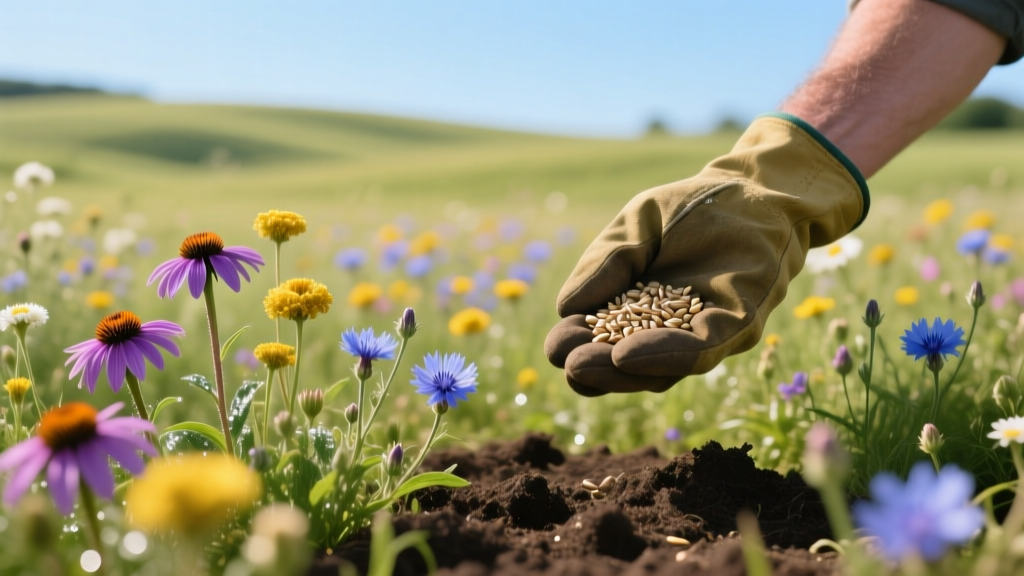
How to Create a Wildflower Meadow from Scratch: Beginner's Guide
Why Replace Turfgrass with a Native Meadow?
Transitioning from a traditional turfgrass lawn to a native wildflower meadow is one of the most impactful ecological decisions a homeowner can make. Traditional lawns demand constant mowing, chemical fertilizers, and massive irrigation. According to the Environmental Protection Agency (EPA), outdoor water use accounts for nearly 30% of total residential water consumption, with a significant portion wasted on maintaining non-native turf.
A properly established wildflower meadow reduces water usage by up to 80% after the first year, eliminates the need for synthetic fertilizers, and provides critical foraging habitat. The Xerces Society for Invertebrate Conservation notes that native meadows support specialized native bees and Lepidoptera species that cannot survive in standard garden beds or turf environments.
Information Gain: Do not confuse a 'wildflower meadow' with a 'pollinator seed bomb' kit. True meadows require 70-80% native grasses (like Little Bluestem or Switchgrass) to 20-30% wildflowers. The grasses provide the structural root matrix that outcompetes invasive weeds and supports the wildflowers. Seed mixes lacking native grasses will fail by year three.
Phase 1: Site Selection and Sunlight Mapping
Before purchasing seed, you must audit your site. Wildflower meadows are not suitable for deep shade or heavily compacted, constantly wet soil. Most native meadow species require a minimum of six to eight hours of direct, unfiltered sunlight daily.
- Full Sun Zones (8+ hours): Ideal for prairie-style mixes featuring Echinacea purpurea (Purple Coneflower), Asclepias tuberosa (Butterfly Weed), and Rudbeckia hirta (Black-Eyed Susan).
- Partial Sun Zones (4-6 hours): Requires a specialized woodland-edge or savanna mix featuring Aquilegia canadensis (Wild Columbine) and Elymus virginicus (Virginia Wildrye).
- Slope Considerations: If your site has a grade steeper than 15%, you must use erosion control netting (jute or coir) post-sowing to prevent seed washout during heavy spring rains.
Phase 2: Turf Removal and Soil Preparation
This is where 90% of beginner meadow projects fail. You cannot simply scatter seed over an existing lawn or rototill the grass under. Tilling brings thousands of dormant weed seeds to the surface, guaranteeing a nightmare of competition. You must completely eradicate existing vegetation using one of two primary methods.
Method A: Soil Solarization (Low Cost, High Patience)
Solarization uses the sun's heat to cook existing turf and weed seeds in the top two inches of soil. This process requires six to eight weeks of hot, sunny weather, making it ideal to start in early June for a fall sowing.
- Mow the existing lawn as short as your mower allows (scalp it down to 1 inch).
- Water the area deeply to activate soil microbes and encourage weed seed germination.
- Cover the area with 6-mil clear, UV-resistant polyethylene plastic. Do not use black plastic; clear plastic traps and magnifies solar radiation, reaching soil temperatures of 140°F, which is required to kill pathogenic fungi and weed seeds.
- Bury the edges of the plastic in a 4-inch trench to create an airtight seal.
- Leave undisturbed for 6-8 weeks. Remove plastic right before sowing.
Method B: Mechanical Sod Cutting (High Cost, Immediate Results)
If you need to plant immediately, rent a gas-powered sod cutter. These machines slice the turf off at the root line. Expect to pay $150 to $200 per day for a rental in 2026. You will need to dispose of the heavy sod rolls, which can be composted upside down in a remote corner of your property over the next 12 months.
Phase 3: Choosing and Sowing the Right Seed Mix
When sourcing seed, avoid generic 'wildflower mixes' sold at big-box hardware stores, which are often padded with cheap, non-native fillers like Bachelor's Buttons or annual Rye. Source your seed from specialized native nurseries like Prairie Moon Nursery or American Meadows, which provide regional ecotype seeds adapted to your specific hardiness zone and local rainfall patterns.
| Seed Type | Avg. Cost (per 1,000 sq ft) | Pros | Cons |
|---|---|---|---|
| Regional Pre-Mixed Blend | $15 - $25 | Balanced grass-to-flower ratio; beginner-friendly | Less control over specific species inclusion |
| Custom Single-Species Mix | $30 - $50 | Tailored to exact soil/moisture conditions | Requires deep botanical knowledge to balance |
| Live Plugs (32-cell trays) | $80 - $120 | Instant establishment; bypasses seedling weed competition | Extremely labor-intensive to plant; high cost |
The Carrier Method for Even Sowing
Native wildflower seeds are incredibly tiny; some species contain over 1,000,000 seeds per pound. Broadcasting them directly leads to severe clumping and bare patches. The standard sowing rate is 1/4 to 1/2 pound of seed per 1,000 square feet.
To achieve even distribution, use the Carrier Method:
- Mix your seed with a carrier material like damp sand, vermiculite, or fine sawdust at a 1:4 ratio (1 part seed to 4 parts carrier).
- Divide the mixture in half.
- Broadcast the first half walking in horizontal rows across the site.
- Broadcast the second half walking in vertical rows, creating a cross-hatch pattern.
- Rent a lightweight lawn roller (fill it only 1/4 full of water for weight) and roll the entire area. This ensures critical seed-to-soil contact without burying the light-dependent seeds too deeply.
Warning: Never cover native meadow seeds with topsoil or straw. Most native prairie wildflowers require light to trigger germination. Burying them under even a quarter-inch of soil will result in a 90% failure rate. If you must protect against erosion, use a sterile, weed-free straw alternative like Excelsior (wood wool) mats.
Phase 4: Year-One Maintenance and the 'High Mow'
The first year of a wildflower meadow is entirely dedicated to root development and weed suppression. You will likely see very few flowers bloom in year one. Instead, you will see a chaotic mix of native seedlings and aggressive annual weeds.
The National Wildlife Federation emphasizes that patience during the first growing season is critical for long-term meadow resilience. To manage weeds without killing your slow-growing native perennials, use the 'High Mow' technique:
- Set your mower deck to its highest possible setting (usually 6 to 8 inches).
- Mow the meadow whenever annual weeds (like ragweed, foxtail, or pigweed) reach 10 to 12 inches in height.
- The high mower blade will decapitate the fast-growing annual weeds, preventing them from shading out the sun and dropping new weed seeds.
- Because native perennial seedlings grow low to the ground in a basal rosette during their first year, the 6-inch mower clearance will pass safely over them without damage.
Frequently Asked Questions
Do I need to water the meadow after sowing?
Yes, during the first 4 to 6 weeks post-sowing, you must keep the top inch of soil consistently moist to trigger germination. Water lightly every morning if there is no rain. Once the seedlings reach 3 inches in height, taper off watering to encourage deep taproot growth. By year two, the meadow should survive entirely on natural rainfall.
What if invasive species like Johnson Grass or Canada Thistle appear?
Broadleaf herbicides will kill your native wildflowers. For isolated invasive patches, use a targeted cut-and-paint method: cut the invasive stem 2 inches above the soil line and immediately paint the fresh cut with a 20% glyphosate solution using a foam brush. This prevents the chemical from drifting onto desirable native plants.
When should I mow the meadow in the fall?
Delay your final annual mow until late February or early March of the following year. Leaving the dead, standing plant material through the winter provides crucial overwintering habitat for native bees, ladybugs, and birds that feed on the remaining seed heads. When you do mow in early spring, cut it down to 4 inches and leave the clippings on site to decompose.

