
Gardening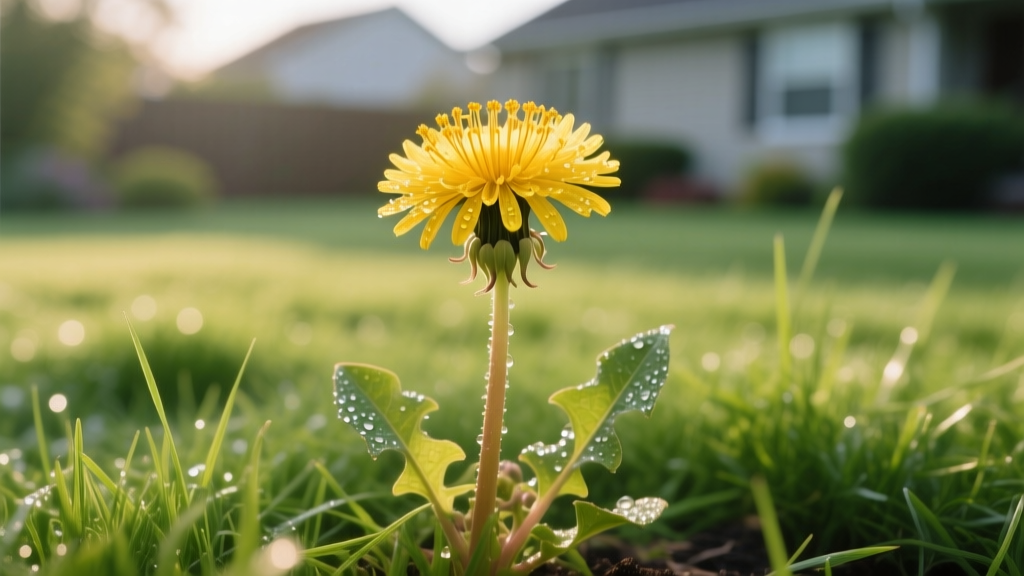
Dandelion Flower Benefits: Harvest Before You Spot-Treat the Weed
The Paradox: Weed Control Meets Botanical Harvesting
For most homeowners, Taraxacum officinale is a persistent broadleaf weed that disrupts turfgrass uniformity. However, lawn care and foraging intersect uniquely with this species. Before you reach for a systemic herbicide, understanding the dandelion flower benefits can transform a routine weeding chore into a valuable botanical harvest. Dandelion blooms are rich in polyphenols, lutein, and beta-carotene, making them highly sought after for culinary jellies, fritters, and herbal tinctures.
The challenge lies in timing and chemical safety. You cannot harvest flowers from a lawn that has been recently treated with 2,4-D, dicamba, or glyphosate. The optimal lawn management strategy for 2026 involves a dual-phase approach: aggressively harvest the floral resources first, then execute a precision spot-treatment on the remaining taproots to prevent regrowth and seed dispersal.
Nutritional and Phytochemical Profile of the Blooms
While the taproot is famous for inulin and the leaves for potassium, the yellow petals (corollas) contain a distinct phytochemical matrix. According to clinical reviews published by Mount Sinai, dandelion flowers possess significant antioxidant properties that outpace many cultivated garden vegetables.
| Compound | Concentration (per 100g fresh petals) | Primary Benefit |
|---|---|---|
| Lutein & Zeaxanthin | 12.5 - 15.0 mg | Macular health and blue-light filtration |
| Beta-carotene | 3.2 - 4.8 mg | Vitamin A synthesis and cellular repair |
| Chicoric Acid | High (variable) | Anti-inflammatory and metabolic support |
| Quercetin | 1.5 - 2.0 mg | Histamine regulation and vascular health |
The Harvest-Then-Treat Protocol
To capitalize on dandelion flower benefits without sacrificing your turfgrass, follow this strict chronological protocol. This ensures zero chemical cross-contamination while maximizing weed eradication efficacy.
Phase 1: Safe Foraging and Floral Extraction
Harvesting must occur on lawns that have been chemical-free for at least 12 months. If you are unsure of your lawn's chemical history, skip the harvest and proceed directly to Phase 2.
- Timing: Harvest between 8:00 AM and 10:00 AM. Turgor pressure in the peduncle (stem) is highest at this time, making the snap clean and preventing the release of bitter milky latex into the petals.
- Technique: Pinch the stem exactly 1/4 inch below the green calyx (the leafy base of the flower head). Snap upward. Do not pull from the base, as this will uproot the plant prematurely and introduce soil-borne fungi to your harvest.
- Processing: Immediately separate the yellow petals from the green calyx. The green bracts contain high levels of sesquiterpene lactones, which impart a harsh, bitter flavor to culinary applications.
⚠ Herbicide Residue Warning: Never consume dandelion flowers from public parks, road medians, or commercial properties. The Environmental Protection Agency (EPA) strictly advises against foraging in areas where municipal broadleaf herbicides (like SpeedZone or Trimec) are routinely applied, as systemic residues remain in the plant tissue for weeks.
Phase 2: Precision Taproot Spot-Treatment
Once the flowers are harvested, the plant will attempt to push out secondary blooms within 48 to 72 hours. You must eradicate the taproot immediately. Broadcast spraying is inefficient and damages surrounding turfgrass. Instead, use targeted spot-treatment.
According to turfgrass research from the University of Minnesota Extension, dandelion taproots can regenerate from fragments as small as one inch left in the soil. Therefore, surface-level disruption is insufficient.
Recommended Spot-Treatment Products (2026 Formulations)
- Ortho GroundClear Super Weed & Grass Killer (Pelargonic Acid): Ideal for organic gardeners. Apply 2 mL directly into the hollow crown of the severed stem. It acts as a contact desiccant. Cost: ~$18.99 per gallon. Note: Requires 2-3 applications for mature taproots.
- Roundup Precision Weed Killer Gel (Glyphosate 2%): The most effective conventional option for deep taproots. The gel formulation prevents drip-off onto surrounding Kentucky Bluegrass or Fescue. Apply a pea-sized drop directly into the center of the cut crown. Cost: ~$11.48 per 2.5 oz tube (treats up to 400 individual weeds).
- Bayer Advanced Brush Killer Plus (Triclopyr): Best for mixed broadleaf infestations. Use a wick applicator to paint the remaining stem tissue. Cost: ~$22.00 per 32 oz concentrate.
Culinary Application: Dandelion Petal Jelly
To utilize your harvested petals, dandelion jelly is the most popular preparation. It yields a bright yellow, honey-flavored spread. Here is the precise formulation for a standard water-bath canning batch:
- 4 cups tightly packed yellow dandelion petals (no green parts)
- 4 cups boiling water (steep petals for 12 hours in the refrigerator)
- 2 tablespoons fresh lemon juice (critical for pectin activation; pH must be below 4.6)
- 4 cups granulated cane sugar
- 1 box (1.75 oz) powdered fruit pectin (e.g., Sure-Jell)
Strain the infused water through a fine-mesh sieve, discarding the spent petals. Bring the liquid, lemon juice, and pectin to a rolling boil. Stir in the sugar, return to a hard boil for exactly 60 seconds, and process in sterilized half-pint jars for 10 minutes.
Decision Matrix: When to Harvest vs. When to Immediately Treat
Not every dandelion warrants a harvest. Use this framework to decide your approach based on the plant's current growth stage and your lawn's condition.
| Plant Condition | Recommended Action | Rationale |
|---|---|---|
| Flower is fully open, bright yellow, petals upright. | Harvest, then spot-treat. | Peak phytochemical concentration and optimal culinary flavor. |
| Flower is closed (evening or overcast day). | Do not harvest; spot-treat immediately. | Closed blooms trap moisture and harbor earwigs; poor extraction yield. |
| Flower has transitioned to a white seed head (pappus). | Bag the seed head, snap off, then spot-treat. | Prevents dispersal of up to 2,000 wind-borne seeds per head; no culinary value. |
| Plant is in rosette stage (leaves only, no bloom). | Spot-treat immediately. | No floral benefits available; eradicate before it diverts energy to bolting. |
Frequently Asked Questions
Can I harvest dandelion flowers if I used a pre-emergent herbicide like Prodiamine in early spring?
Pre-emergent herbicides like Prodiamine (Dimension) target seed germination in the soil profile and are not systemically translocated into the floral tissue of established, mature dandelions. However, as a strict safety baseline, you should only harvest from lawns that have been managed with organic or omri-listed fertilizers for a minimum of one full growing season to eliminate any risk of synthetic chemical ingestion.
Why did my dandelion jelly turn dark brown instead of bright yellow?
This is a common failure mode caused by two factors: failing to remove the green calyx bracts (which oxidize rapidly and turn the liquid murky), or boiling the sugar-pectin mixture for longer than the required 60 seconds. Over-boiling caramelizes the sugars and degrades the delicate yellow flavonoids. Use a digital candy thermometer to ensure your rolling boil stays at 218°F (103°C).
Will snapping the flower off kill the dandelion naturally?
No. The Taraxacum officinale taproot stores massive amounts of carbohydrates. Decapitating the flower merely triggers a hormonal response (reducing auxin dominance) that causes the crown to push out three to five secondary flower stalks within days. Mechanical removal of the bloom must always be followed by chemical spot-treatment or deep mechanical extraction (using a dedicated weed puller tool that reaches at least 6 inches into the soil) to achieve permanent eradication.

