
Gardening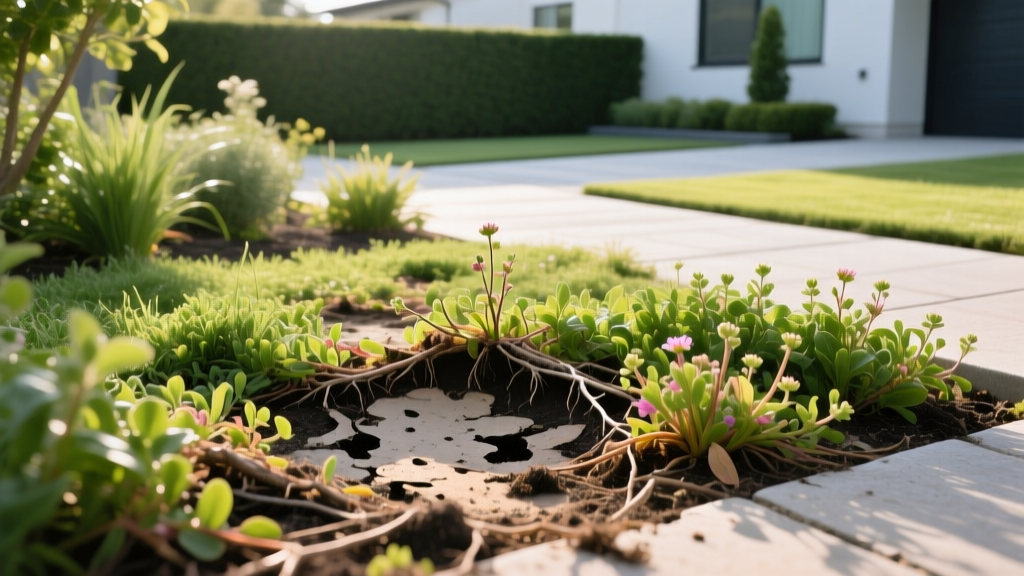
Diagnosing A Failing Ground Cover Perennial: Bare Spots And Fixes
The "Donut Effect": Diagnosing Central Dieback
Ground cover perennials are frequently marketed as "plant and forget" landscape solutions, but mat-forming species routinely develop a phenomenon known as the donut effect. This occurs when the outer edges of the planting remain vigorous and green, while the central crown dies back, leaving an unsightly bare patch. This is exceptionally common in woody or semi-woody creeping species like Thymus serpyllum (Creeping Thyme) and Sedum spurium (Stonecrop).
Root Causes: Crown Rot and Soil Compaction
The primary culprit for central dieback is a combination of soil compaction and crown rot. As the ground cover perennial matures, the dense canopy prevents rain and irrigation from penetrating the soil directly beneath the center of the plant. Instead, water runs off the foliage to the outer edges. Simultaneously, the aging central stems become woody, lose their ability to root into the soil, and eventually suffocate.
Expert Fix: Do not attempt to simply overseed or plug the dead center with new plants; they will fail due to the compacted, hydrophobic soil. Instead, use a 1/2-inch manual soil corer to punch aeration holes 4 inches deep directly into the bare zone. Top-dress the entire area with 1/4 inch of screened compost to introduce microbial activity and improve water infiltration.
According to the NC State Extension Plant Database, dividing the mother plant every three to four years is critical for maintaining vigor. Use a sharp Hori-Hori knife to cut out the dead central core entirely, effectively turning the donut back into a ring, and backfill the void with a 50/50 mix of native soil and coarse perlite to ensure sharp drainage.
Containment Breaches: Managing Rhizomatous Spread
While bare spots are frustrating, the opposite problem—an aggressive ground cover perennial escaping its designated bed—can cause severe ecological and maintenance headaches. Species that spread via underground rhizomes or above-ground stolons, such as Ajuga reptans (Bugleweed), Liriope muscari (Lilyturf), and Vinca minor (Periwinkle), will readily invade adjacent turfgrass or perennial borders if left unchecked.
Standard landscape fabric is entirely ineffective against rhizomatous spread; the roots will simply penetrate the woven geotextile and emerge on the other side. To permanently contain these species, you must install a physical subsurface barrier.
HDPE Barrier Installation Specifications
- Material: High-Density Polyethylene (HDPE) plastic, minimum 60 mil thickness.
- Depth: Trench must be excavated to exactly 10 inches deep. Most aggressive rhizomes operate in the top 6-8 inches of soil.
- Above-Grade Lip: Leave 1.5 to 2 inches of the barrier exposed above the soil line. This prevents surface-running stolons from bridging the barrier.
- Backfill: Mix excavated soil with 10% masonry sand before backfilling to prevent settling and water pooling against the barrier.
For established plantings where trenching is impossible without severing critical root systems, implement a biannual mechanical edging protocol. Use a flat, sharp nursery spade to cut a 6-inch deep V-trench along the border in early spring (post-frost) and late autumn (pre-dormancy). The University of Minnesota Extension recommends this mechanical severing as the most cost-effective alternative to hardscape edging for mature beds.
Leggy Growth and Bloom Failure
When a ground cover perennial produces excessive, floppy vegetative growth but fails to flower, the issue is almost always a nitrogen imbalance. Homeowners frequently apply standard lawn fertilizers (high in nitrogen, such as a 32-0-4 NPK ratio) to adjacent turf, which leaches into the ground cover bed. High nitrogen forces the plant to prioritize stem and leaf elongation over reproductive bud formation.
Corrective Pruning and Fertilization Protocol
- Shearing: Immediately after the first flush of spring growth, shear the foliage back by exactly 30% using manual hedge shears or a string trimmer (set to the highest guard). This forces lateral branching and denser growth.
- Phosphorus Boost: Apply a 0-10-10 (Zero Nitrogen, High Phosphorus, High Potassium) granular fertilizer at a rate of 2 lbs per 1,000 square feet. Phosphorus stimulates root and flower development without encouraging leggy stems.
- Irrigation Adjustment: Reduce watering frequency. Many ground covers, particularly Mediterranean natives like creeping rosemary or thyme, produce more intense blooms when subjected to mild drought stress.
Winter Desiccation and Frost Heave
Broadleaf evergreen ground covers like Vinca minor and Euonymus fortunei often emerge from winter looking scorched, brown, and dead. This is rarely actual winter kill; it is winter desiccation. Because the leaves remain on the plant, they continue to transpire moisture on sunny, windy winter days when the ground is frozen and roots cannot uptake replacement water.
Furthermore, in regions with fluctuating freeze-thaw cycles, shallow-rooted ground covers are prone to frost heave, where the soil expands and literally pushes the plant's root crown above the soil line, exposing it to freezing air.
Winterization Strategy: Apply an anti-desiccant spray (such as a pine oil emulsion like Wilt-Pruf) at a 1:10 dilution rate in late November. Critical Rule: Only apply when ambient temperatures are above 40°F and no freezing precipitation is expected for 24 hours. To combat frost heave, apply a 2-inch layer of shredded hardwood mulch in late autumn to insulate the soil and regulate temperature fluctuations.
Diagnostic Matrix: Symptom to Solution
Use this decision matrix to quickly identify the failure mode of your specific planting and apply the correct remediation.
| Visual Symptom | Probable Cause | Exact Solution |
|---|---|---|
| Yellowing leaves with green veins | Iron chlorosis (high soil pH) | Apply chelated iron (EDDHA form) at 3 oz per 100 sq ft; test soil pH. |
| White powdery residue on foliage | Powdery mildew (poor air circulation) | Thin canopy by 20%; apply potassium bicarbonate fungicide. |
| Scalloped leaf edges, missing tissue | Black vine weevil feeding | Apply beneficial nematodes (Heterorhabditis bacteriophora) in late summer. |
| Mushy, black stems at soil line | Southern blight / Crown rot | Remove infected plants; solarize soil; replant with resistant species. |
2026 Remediation and Establishment Costs
Budgeting for ground cover rehabilitation requires accurate material and labor estimates. As of 2026, professional-grade HDPE root barriers cost between $1.80 and $2.60 per linear foot for materials alone. If hiring a landscape contractor to trench and install, expect labor rates of $4.50 to $7.00 per linear foot, depending on soil composition (heavy clay requires rock-bar labor and increases costs by roughly 30%).
For soil remediation, bulk screened compost averages $35 to $55 per cubic yard delivered. A single cubic yard will top-dress approximately 1,000 square feet of ground cover at the recommended 1/4-inch depth. When sourcing replacement plugs to fill in bare patches, buy 72-cell trays of Sedum or Thymus from wholesale growers rather than retail 4-inch pots. Wholesale plugs cost $0.85 to $1.20 per plant, whereas retail 4-inch pots run $4.50 to $6.00 each. Plant plugs on 8-inch centers for a rapid, cost-effective fill that will knit together into a solid mat within one growing season.
Successful management of a ground cover perennial requires shifting from a passive mindset to an active maintenance schedule. By diagnosing the specific physiological or environmental failure—whether it is hydrophobic soil, nitrogen overload, or rhizomatous escape—you can implement targeted, permanent solutions that restore the aesthetic and functional value of the landscape.
For further reading on species selection and regional adaptability, consult the Penn State Extension Groundcover Landscaping guidelines, which provide extensive data on drought tolerance and hardiness zones for over fifty common perennial varieties.

