
Gardening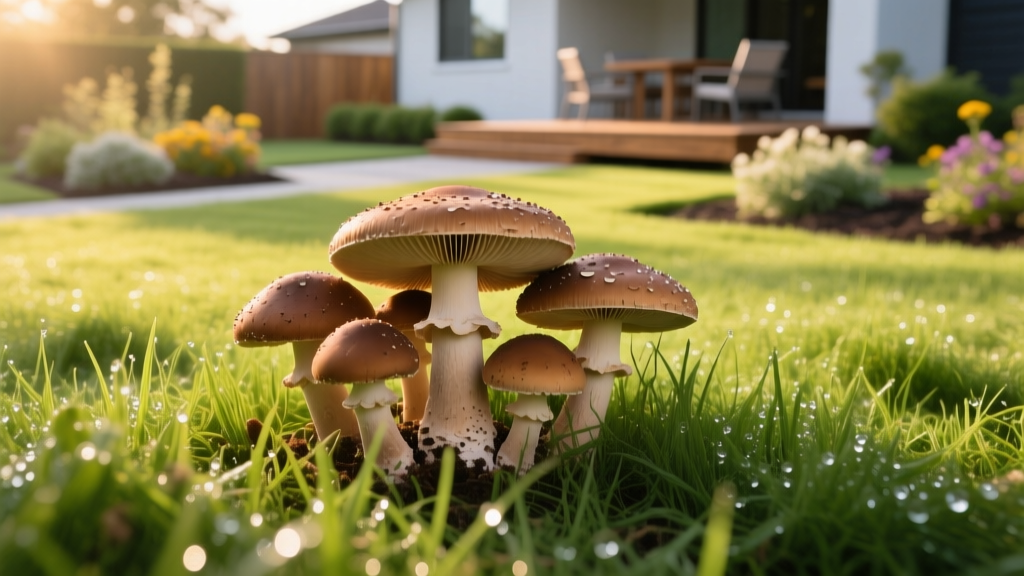
Large Brown Mushrooms in Lawn: Diagnosis & Rescue Fixes
The Symptom: Identifying Large Brown Mushrooms in Your Turf
Finding large brown mushrooms in lawn environments is a primary indicator of subsurface biological activity. Unlike foliar fungal diseases that attack living grass blades (such as Brown Patch or Dollar Spot), the fungi producing large brown fruiting bodies are primarily saprophytic. They do not parasitize living turf; instead, they consume dead organic matter. However, their presence signals an imbalance in your soil ecosystem—specifically, excessive moisture, thick thatch layers, or buried woody debris.
Before initiating a rescue protocol, you must identify the specific fungal profile, as management strategies differ between harmless saprophytes and destructive fairy ring pathogens.
Common Large Brown Mushroom Profiles
| Fungal Type | Cap Size & Appearance | Turf Impact | Toxicity Risk |
|---|---|---|---|
| Agaricus campestris (Meadow Mushroom) | 3–6 inches, smooth brown to tan cap, pink-to-brown gills | None (feeds on surface thatch) | Edible, but easily confused with toxic lookalikes |
| Chlorophyllum rhacodes (Shaggy Parasol) | 4–10 inches, shaggy brown scales on white background | None (feeds on buried wood/roots) | Mildly toxic to dogs and humans if ingested raw |
| Fairy Ring Fungi (e.g., Marasmius oreades) | 2–5 inches, tan to light brown, often in arcs or circles | Severe: Creates hydrophobic soil, killing grass in rings | Highly toxic; causes severe gastrointestinal distress |
Root Cause Analysis: Why Are They Fruiting Now?
Mushrooms are merely the reproductive structures (fruiting bodies) of a massive underground mycelial network. They fruit when three conditions intersect: high humidity, moderate temperatures (60°F–75°F), and an abundant food source. If you are seeing large brown mushrooms in lawn areas, one of the following root causes is present:
- Excessive Thatch Accumulation: A thatch layer exceeding 0.5 inches (for cool-season grasses) or 0.25 inches (for warm-season grasses) acts as a sponge, retaining moisture and providing a direct carbon food source for Agaricus species.
- Buried Construction Debris: Stumps, roots, or lumber left behind during home construction or landscaping slowly decay over 5 to 15 years, feeding massive Chlorophyllum networks.
- Chronic Overwatering: Irrigation schedules that apply water too frequently prevent the topsoil from drying out, triggering mycelial fruiting.
- Hydrophobic Soil (Fairy Rings): The mycelium of fairy ring fungi coats soil particles with a waxy substance, repelling water and causing localized drought stress in the turf above.
Diagnostic Field Test: The Water Droplet Penetration Test
To determine if your mushrooms are linked to a destructive fairy ring, pluck a mushroom and examine the soil directly beneath it. Place a single drop of water on the exposed soil. If the water beads up and refuses to absorb for more than 60 seconds, the soil has become hydrophobic—a definitive sign of a fairy ring. If it absorbs instantly, you are dealing with standard saprophytic thatch decomposition.
Step-by-Step Rescue Protocol
Eradicating the visible mushrooms is only a temporary cosmetic fix. To permanently suppress fruiting, you must alter the subsurface environment to starve the mycelium and accelerate the decomposition of its food source. Follow this three-phase rescue plan.
Phase 1: Immediate Physical Removal & Safety
If you have pets or small children, immediate removal is critical to prevent accidental ingestion of toxic species like the Shaggy Parasol.
- Mow and Bag: Set your mower deck to 2.5 inches and mow the affected area. Use the bagging attachment to capture the shredded mushroom caps and spores. Do not mulch them back into the turf.
- Hand-Pull Remaining Stipes: Wear nitrile gloves and twist the remaining stems (stipes) out of the ground. Dispose of all fungal material in sealed municipal waste bags, not your compost bin, as home compost piles rarely reach the 145°F required to kill fungal spores.
Phase 2: Environmental Correction (Air and Moisture)
You must break the moisture retention cycle that triggers fruiting.
- Adjust Irrigation to 'Cycle and Soak': Stop daily watering. Switch to a cycle-and-soak method, applying 0.5 inches of water per zone, twice a morning, only 2 days a week. This forces the top 1 inch of soil to dry out between cycles, suppressing surface mycelium while driving grassroots deeper.
- Core Aeration: Rent a walk-behind hollow-tine core aerator. Make two perpendicular passes over the affected area, extracting 3/4-inch diameter plugs that are 3 to 4 inches deep. This physically fractures the mycelial mat, introduces oxygen (which inhibits certain anaerobic decay processes), and relieves soil compaction. Leave the plugs on the lawn to dry and shatter.
- Power Dethatching: If your thatch layer measures over 0.75 inches with a trowel, rent a vertical power rake (dethatcher). Set the blades to penetrate 1/4 inch into the soil surface to rip out the dead organic matter harboring the fungi.
Phase 3: Accelerating Organic Breakdown
The most effective way to eliminate the fungal food source is to stimulate indigenous soil bacteria to outcompete and consume the decaying wood and thatch faster than the fungi can.
Expert Insight: Bacteria require high nitrogen levels to break down high-carbon materials like wood and thatch. By temporarily spiking the nitrogen, you shift the biological advantage away from the fungi.
Apply a fast-release nitrogen source, such as Ammonium Sulfate (21-0-0), at a rate of 1.0 lb of actual nitrogen per 1,000 square feet. For a standard 5,000 sq ft lawn, this requires roughly 23 lbs of Ammonium Sulfate. Water it in immediately with 0.25 inches of irrigation. Repeat this application once every 4 weeks during the active growing season until the mushrooms cease fruiting. According to turfgrass pathology guidelines from Penn State Extension, this bacterial stimulation is the most reliable long-term cultural control for saprophytic mushrooms.
The Fungicide Myth: Save Your Money
A common mistake homeowners make is purchasing expensive broad-spectrum fungicides like Scotts DiseaseEx (active ingredients: azoxystrobin and propiconazole) or professional-grade Syngenta Headway. In 2026, a bag of professional fungicide can cost between $60 and $90. Do not waste your money on chemical fungicides for large brown mushrooms.
These chemicals are designed to combat parasitic Ascomycete and Basidiomycete diseases that attack living leaf tissue (like Summer Patch or Rust). They are largely ineffective against the deep, protected, saprophytic mycelial networks that produce large brown mushrooms. The mycelium is often buried 2 to 6 inches deep, insulated by thatch and soil, rendering surface-applied contact or even systemic fungicides useless. Furthermore, as noted by the University of Minnesota Extension, even when dealing with destructive fairy rings, chemical suppression is notoriously inconsistent and rarely provides a permanent cure compared to cultural and mechanical interventions.
Frequently Asked Questions
Will the mushrooms eventually go away on their own?
Yes, but it may take years. Saprophytic mushrooms will continue to fruit every spring and autumn until their specific food source (a buried root, a piece of lumber, or a thick thatch layer) is 100% decomposed. Without intervention like aeration and nitrogen stimulation, a buried stump can feed a mushroom colony for up to a decade.
Are large brown mushrooms killing my grass?
In 90% of cases, no. Species like Agaricus and Chlorophyllum are actually beneficial decomposers that recycle nutrients back into the soil. The grass around them often looks darker green due to the nitrogen released during decomposition. The only exception is fairy ring fungi, which kill grass by creating hydrophobic (water-repelling) soil conditions and releasing toxic hydrogen cyanide gas in high concentrations.
Can I use dish soap to kill the mushrooms?
Drenching the soil with a mixture of water and dish soap (surfactant) is a popular internet myth. While a surfactant can help water penetrate hydrophobic fairy ring soils, the soap itself does not kill the mycelium. In fact, applying high concentrations of dish soap will strip the waxy cuticle off your grass blades, causing severe phytotoxicity and turf burn. Stick to mechanical aeration and wetting agents specifically formulated for turfgrass, such as Aqua-Aid or Cascade Plus.

