
Gardening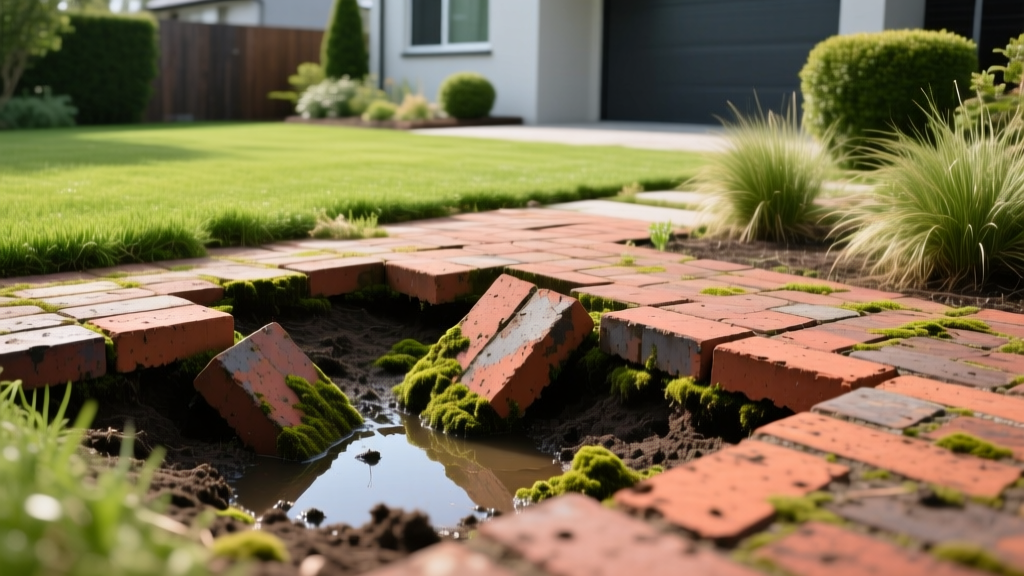
Troubleshooting Shifting, Sinking, and Stained Gardening Bricks
Gardening bricks provide durable, clean lines for raised beds, pathways, and landscape edging. However, exposure to freeze-thaw cycles, hydrostatic pressure, and soil biology inevitably leads to structural and aesthetic failures. Diagnosing the exact cause of brick displacement or staining is critical; applying a superficial fix to a foundational drainage issue will only result in repeated failure.
Problem 1: Frost Heave and Shifting Edges
Diagnosis: Bricks are pushed upward unevenly, creating a jagged, trip-hazard profile along pathways or raised bed borders, typically noticed in early spring.
Root Cause: Frost heave occurs when moisture in the underlying soil freezes and expands, forming ice lenses that lift the bricks. This happens when bricks are laid directly on native topsoil or a base that does not extend below the local frost line.
Solution: You must reconstruct the base to accommodate thermal expansion. Excavate the trench to a depth below your regional frost line (e.g., 32 inches in USDA Zone 5, or 12 inches in Zone 8). Install a 4-to-6-inch base layer of 3/4-inch crushed angular gravel (meeting ASTM D2940 specifications) and compact it in 2-inch lifts using a mechanical plate compactor. Top this with a 1-inch bedding layer of coarse, sharp concrete sand. The angular gravel interlocks to resist movement, while the sand bedding allows for precise leveling of the gardening bricks without retaining the moisture that causes ice lenses.
Problem 2: Efflorescence (White Powdery Stains)
Diagnosis: A white, powdery, or crystalline crust forms on the surface of the bricks, often concentrated near the soil line or in low-lying garden beds.
Root Cause: Efflorescence is the migration of water-soluble salts (like calcium sulfate or magnesium sulfate) to the brick surface. As moisture evaporates, the salts are left behind and crystallize. According to the Brick Industry Association, this is a natural occurrence in clay and concrete masonry, exacerbated by excessive soil moisture and poor drainage behind the brick edging.
⚠️ Warning: Do Not Use Water or Wire Brushes Initially
Scrubbing efflorescence with water or a wire brush drives the salts back into the brick pores or scratches the fired clay face. Always start with a dry, stiff-bristle nylon brush.
Solution: For light deposits, dry-brushing and allowing natural weathering to dissolve the salts over a few weeks is sufficient. For severe, stubborn crystallization, apply a commercial efflorescence cleaner specifically formulated for masonry, such as PROSOCO Sure Klean® VanaTrol®. If using a diluted muriatic acid solution (1 part acid to 10 parts water), pre-wet the bricks with clean water to prevent the acid from penetrating the pores, apply the solution, agitate gently, and rinse thoroughly. Always neutralize the surrounding garden soil with agricultural lime afterward to prevent acid burn on nearby plant roots.
Problem 3: Joint Erosion and Weed Intrusion
Diagnosis: The sand between the bricks has washed away, leaving deep voids where weeds (like spurge or crabgrass) and ants have established colonies.
Root Cause: Standard masonry sand lacks binding agents. Heavy rainfall, irrigation runoff, and the natural expansion of weed roots displace the loose sand over time.
Solution: Remove the compromised sand using a shop vacuum or a specialized joint-raking tool. Replace it with a high-quality polymeric sand. The Interlocking Concrete Pavement Institute (ICPI) recommends polymeric sand for its ability to bind together when activated with water, creating a flexible, impermeable barrier that resists washouts and inhibits weed germination.
Jointing Material Comparison Matrix
| Material | Weed Resistance | Washout Risk | Cost per 50lb Bag | Best Application |
|---|---|---|---|---|
| Standard Masonry Sand | Poor | High | $4 - $8 | Temporary fixes, dry-laid patios |
| Polymeric Sand (e.g., Gator Dust) | Excellent | Very Low | $35 - $55 | Pathways, raised bed edging |
| Type N Mortar Mix | Excellent | None | $15 - $25 | Permanent retaining walls (rigid) |
Problem 4: Hydrostatic Pressure and Bulging Retaining Walls
Diagnosis: Gardening bricks used for tiered raised beds or short retaining walls are bowing outward, leaning, or collapsing entirely after heavy rain events.
Root Cause: Hydrostatic pressure builds up when water becomes trapped in the soil behind the wall. The sheer weight of the saturated soil pushes against the bricks, overcoming their structural mass.
Solution: You must install a French drain system behind the brick face. Excavate the soil directly behind the wall. Lay a 4-inch perforated corrugated drain pipe wrapped in non-woven geotextile landscape fabric at the base of the excavation. Backfill the space between the pipe and the bricks with 3/4-inch clear, washed gravel (no fines). The gravel acts as a free-draining void that channels water into the pipe, relieving the lateral pressure on the gardening bricks. Ensure the drain pipe daylighted at the end of the wall or tied into a dry well.
Sourcing Replacements: ASTM Standards Matter
When replacing damaged or spalled bricks, do not simply buy whatever is cheapest at the local hardware store. You must verify the ASTM (American Society for Testing and Materials) rating to ensure longevity in ground-contact applications.
- ASTM C902 (Standard Specification for Pedestrian and Light Traffic Paving Brick): These bricks are fired at higher temperatures, resulting in high compressive strength and low water absorption. They are rated for freeze-thaw durability and are the only type you should use for flat-laid garden paths or edging. Expect to pay $0.80 to $1.50 per brick.
- ASTM C62 (Standard Specification for Building Brick): These are intended for vertical structural walls (like house facades) protected by roof overhangs. If used flat on the ground in a garden, they will absorb moisture, freeze, and spall (flake apart) within 2 to 3 seasons. They cost $0.40 to $0.70 each but are a false economy for landscaping.
Frequently Asked Questions
Can I use reclaimed or salvaged gardening bricks for my vegetable beds?
Yes, but inspect them closely for structural integrity. Reclaimed bricks often have hidden micro-fractures from previous freeze-thaw cycles. Tap two bricks together; a clear, high-pitched ring indicates good structural health, while a dull thud means the brick is compromised and will crumble under soil pressure. Additionally, avoid using bricks salvaged from industrial sites or old chimneys, as they may contain heavy metals or creosote that can leach into your vegetable soil.
Why is my polymeric sand turning white and hazy after activation?
This is known as "polymeric haze" and occurs when excess sand dust is left on the surface of the bricks before the binding agent is activated with water. To prevent this, sweep the bricks meticulously and use a leaf blower to remove all surface dust before misting. If haze has already formed, it will typically weather away after 3 to 5 heavy rainfalls, or you can remove it using a specialized haze remover chemical.
Do I need to mortar my gardening bricks for a 12-inch raised bed?
No. For a raised bed under 16 inches (typically two to three courses of standard bricks), a dry-laid installation with a compacted gravel base and polymeric sand joints is sufficient and actually preferred. Dry-laid bricks can flex slightly with minor soil settling without cracking, whereas a rigid mortared wall will crack if the underlying soil shifts even a fraction of an inch.

