
Gardening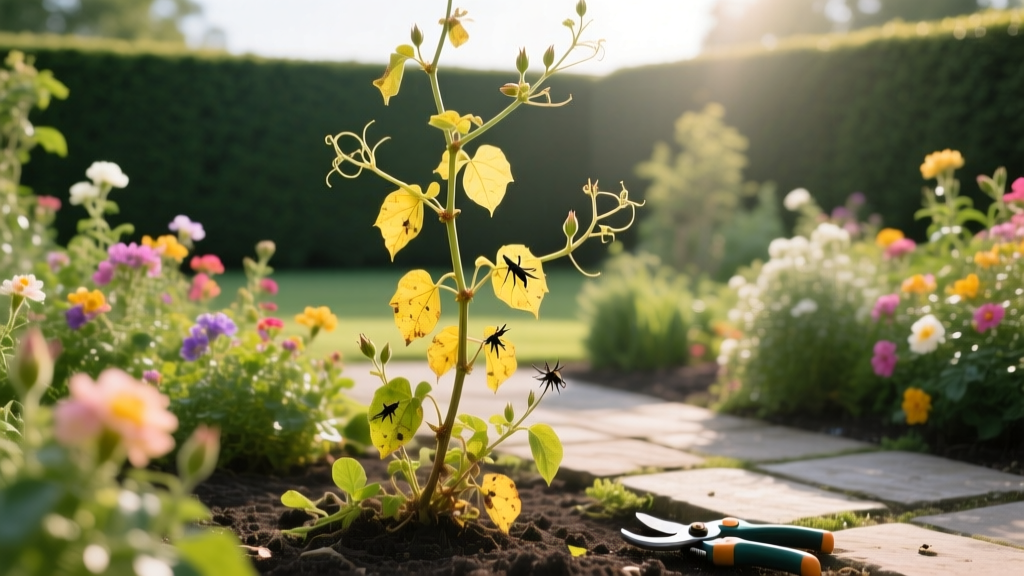
Why Perennial Flowering Vines Fail to Bloom: Diagnosis & Fixes
The Frustration of Barren Vines
Investing in perennial flowering vines like Wisteria sinensis, Clematis, or Hydrangea petiolaris (climbing hydrangea) is a long-term landscaping strategy. However, a common and deeply frustrating problem arises when these vines produce vigorous, lush green foliage but absolutely zero flowers. Homeowners often assume the plant is defective or the soil is poor, leading to over-fertilization and further bloom suppression. Diagnosing a non-blooming perennial vine requires a systematic elimination of physiological, environmental, and maintenance variables. Below is a comprehensive diagnostic framework to identify the exact failure point and implement targeted corrections.
Rapid Diagnostic Decision Tree
- Is the vine under 3 years old? → Likely juvenile phase or establishment shock. Action: Wait and optimize soil.
- Did you prune in late winter or early spring? → You likely severed old-wood flower buds. Action: Adjust pruning group schedule.
- Is the vine near a heavily fertilized lawn? → Nitrogen runoff is suppressing reproductive growth. Action: Switch to high-phosphorus amendments.
- Does the vine receive less than 6 hours of direct sun? → Insufficient photosynthetic radiation for bud initiation. Action: Relocate or thin overhead canopy.
The Juvenile Phase Trap: Age and Establishment
Perennial vines allocate their initial energy budgets almost entirely to root expansion and structural vascular development. If your vine is young, it may simply be biologically incapable of flowering. This is particularly acute with Wisteria. According to the University of Wisconsin-Madison Extension, wisteria grown from seed can remain in a juvenile, non-flowering state for 7 to 15 years. Conversely, grafted wisteria or those propagated from hardwood cuttings of mature wood will typically bloom within 1 to 3 years.
Clematis follows a well-known horticultural adage: the first year they sleep (root establishment), the second year they creep (vegetative growth), and the third year they leap (profuse blooming). If you planted a 1-gallon nursery Clematis last spring, a lack of blooms this year is a normal physiological baseline, not a failure. Climbing hydrangeas (Hydrangea anomala subsp. petiolaris) are even slower, often requiring 2 to 4 full growing seasons to establish the extensive aerial root system necessary to support floral panicles.
Pruning Blunders: Severing Next Year's Flowers
The most frequent cause of bloom failure in mature perennial flowering vines is improper pruning timing. Vines are categorized into distinct pruning groups based on whether they flower on 'old wood' (last season's growth) or 'new wood' (current season's growth). Pruning an old-wood bloomer in late winter removes the dormant floral buds, guaranteeing a green, flowerless summer.
The Royal Horticultural Society (RHS) classifies Clematis—and by extension, many similar flowering vines—into three primary pruning groups. Misidentifying your vine's group is the fastest way to eliminate its blooms.
| Pruning Group | Bloom Time & Wood Type | Common Vine Examples | Correct Pruning Protocol |
|---|---|---|---|
| Group 1 | Early spring; blooms strictly on old wood. | Clematis montana, Clematis alpina, Evergreen clematis. | Do not prune in winter. Prune immediately after flowering finishes to shape and control size. |
| Group 2 | Early summer on old wood; late summer on new wood. | Large-flowered hybrids like 'Nelly Moser' and 'The President'. | Light prune in late winter: remove dead wood and cut weak stems back to strong buds. Do not cut back hard. |
| Group 3 | Late summer; blooms strictly on new wood. | Clematis viticella, 'Jackmanii', Clematis texensis. | Hard prune in late winter (Feb/March). Cut all stems down to 12-18 inches above the soil line. |
For woody vines like wisteria, the University of Minnesota Extension recommends a strict summer pruning regimen to force the plant to transition from vegetative growth to reproductive bud formation. In July, cut back all new, whippy lateral shoots to 5 or 6 leaves. This restricts sap flow to the tips and encourages the base of those shoots to swell into flower buds for the following spring.
Nutrient Imbalances: The Nitrogen Trap
Perennial flowering vines are highly susceptible to nitrogen toxicity, usually not from direct application, but from lawn fertilizer runoff. If your vine is planted in a bed adjacent to a turfgrass lawn that receives regular applications of high-nitrogen synthetic fertilizers (e.g., 30-0-3 or 24-4-12), the vine's root system will absorb the excess nitrogen.
High nitrogen levels trigger aggressive vegetative growth—resulting in massive, dark green leaves and rapid stem elongation—at the direct expense of floral initiation. The plant essentially decides it has the resources to grow larger rather than reproduce. To correct this, you must alter the soil's macronutrient ratio to favor phosphorus, which drives root and flower development.
Corrective Fertilization Protocol
- Cease Nitrogen Applications: Stop applying lawn fertilizer within a 5-foot radius of the vine's root zone.
- Apply Superphosphate or Bone Meal: In early spring, as buds begin to swell, apply a high-phosphorus amendment. Espoma Bone Meal (4-12-0 NPK) is an excellent organic choice. Apply 1 to 2 cups evenly around the drip line of the vine and water deeply.
- Check Soil pH: Phosphorus becomes chemically locked up and unavailable to plant roots if the soil pH is too acidic or too alkaline. Clematis requires a slightly alkaline to neutral pH (6.8 to 7.2). If your soil test shows a pH below 6.5, apply pelletized garden lime at a rate of 5 lbs per 100 square feet to raise the pH and unlock existing soil phosphorus.
Light Deficits and Microclimate Failures
While the old gardening adage for Clematis suggests they need 'their head in the sun and their feet in the shade,' this is a drastic oversimplification that often leads to planting errors. The 'shade the feet' concept merely refers to keeping the root zone cool and moist via mulch, not depriving the lower stems of light.
In reality, almost all perennial flowering vines require a minimum of 6 hours of direct, unfiltered sunlight to initiate the hormonal shifts required for blooming. Wisteria and climbing roses demand 8 or more hours. If your vine is planted on a north-facing wall or beneath the dense canopy of a mature deciduous tree, it will survive but will not flower. If relocating the vine is impossible, you must aggressively thin the overhead tree canopy to allow dappled sunlight to penetrate, or paint the backing wall white to reflect ambient light onto the vine's foliage.
Root Rot and Vascular Wilt: The Silent Killers
Sometimes a vine fails to bloom because it is actively fighting a systemic pathogen, diverting all energy into survival rather than reproduction. Clematis wilt, caused by the fungus Phoma clematidina, is a primary culprit. It strikes suddenly in mid-summer, causing entire stems to blacken, collapse, and die. While the plant may resprout from the base, it will not bloom that season.
To mitigate this, ensure your vine is planted with the crown (the point where stems meet roots) buried 2 to 3 inches deeper than it was in the nursery pot. This depth encourages the development of latent underground buds that can rapidly replace wilted top growth. For heavy clay soils that retain water, Phytophthora root rot will similarly stunt the vine. Amend the planting hole with 30% composted pine bark by volume to increase drainage and oxygen availability to the root zone, which is critical for the nutrient uptake required for flowering.
Your Weekend Recovery Action Plan
If your perennial flowering vine is mature (3+ years) and still barren, execute this diagnostic recovery plan immediately:
- Step 1: Verify the Species and Pruning Group. Identify the exact cultivar. If it blooms on old wood, put your pruning shears away until the flowers fade.
- Step 2: Conduct a Soil Test. Use a university extension soil test kit to verify pH and phosphorus levels. Adjust pH to the 6.5-7.0 range if necessary.
- Step 3: Audit the Light. Track direct sunlight hours over a full day. If under 6 hours, prune surrounding tree branches to open the canopy.
- Step 4: Apply Phosphorus. Top-dress the root zone with bone meal or a 5-10-10 granular fertilizer in early spring before bud break.
- Step 5: Summer Prune Wisteria. If dealing with wisteria, aggressively cut back summer vegetative whips to 5 leaves in July to force bud set.
By shifting your focus from general plant health to the specific physiological triggers of floral initiation—light accumulation, carbohydrate partitioning, and precise pruning timing—you can force even the most stubborn perennial flowering vines to transition from a vegetative state into a profuse, blooming display.

