
Gardening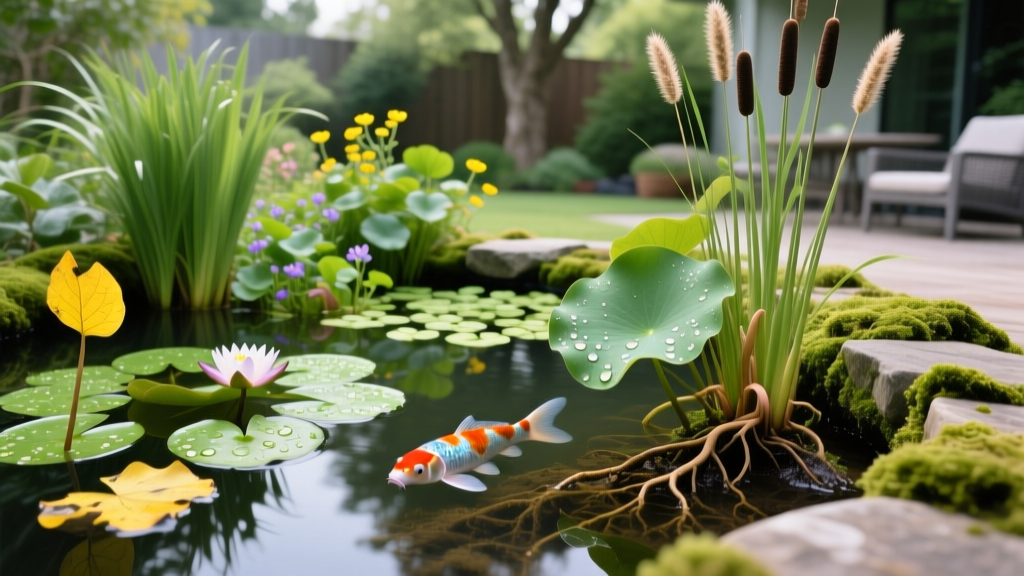
Diagnosing Failing Plants That Live in the Freshwater Biome at Home
The Freshwater Biome in Your Backyard: Why Transitions Fail
Integrating plants that live in the freshwater biome into a residential water garden or pond requires more than simply dropping them into water. These species have evolved highly specialized physiological adaptations—such as aerenchyma tissue for oxygen transport and floating stomata for gas exchange—that make them incredibly sensitive to abrupt environmental shifts. When marginal, submerged, or floating macrophytes fail in a captive environment, the root cause is almost always a mismatch between the pond's water chemistry, light attenuation, or substrate composition and the plant's native biological requirements.
According to the University of Minnesota Extension, the most common cause of freshwater plant mortality in home ponds is improper planting depth combined with anaerobic soil conditions. Diagnosing these failures early requires understanding the specific symptoms of aquatic plant stress, which often mimic terrestrial plant diseases but require entirely different remediation protocols.
Diagnostic Matrix: Identifying Water Garden Plant Stress
Use the following diagnostic matrix to quickly identify the primary stressor affecting your freshwater biome plants. Match the visual symptom to the corresponding physiological cause and apply the targeted solution.
| Visual Symptom | Probable Physiological Cause | Targeted Solution |
|---|---|---|
| Submerged leaves turning translucent and melting | Light deprivation (Low PAR) or sudden temperature spike | Relocate to shallower depth; ensure water clarity for >50 µmol/m²/s PAR |
| Marginal plant crowns turning black and mushy | Submersion of the crown; anaerobic substrate rot | Replant with crown 1-2 inches above waterline; cap soil with pea gravel |
| Yellowing leaf margins on floating plants | Iron deficiency or high pH locking out micronutrients | Apply chelated iron liquid; buffer water to lower pH below 7.5 |
| White, crusty scaling on submerged stems | Hard water calcium carbonate precipitation | Reduce GH (General Hardness) below 150 ppm; avoid limestone features |
| Rapid leaf drop and stunted root growth | pH crash due to depleted KH (Carbonate Hardness) | Add sodium bicarbonate to stabilize KH between 3 and 8 dKH |
Submerged Oxygenators: Solving the 'Melting' Phenomenon
Submerged plants like Wild Celery (Vallisneria americana) and Anacharis (Elodea canadensis) are the biological engines of a freshwater biome pond. When these plants begin to 'melt'—a process where leaves become gelatinous and disintegrate—it is rarely a pathogen. It is a physiological collapse driven by light attenuation or mineral scaling.
The Hard Water Scaling Issue
Many homeowners incorporate limestone rocks or concrete waterfalls into their pond designs. These materials continuously leach calcium carbonate into the water. When General Hardness (GH) exceeds 150 ppm, calcium precipitates onto the leaves of submerged plants, forming a white, crusty barrier. This barrier blocks Photosynthetically Active Radiation (PAR) and physically prevents the leaves from absorbing dissolved CO2 and nutrients. To fix this, remove calcareous rocks, perform a 40% water change with reverse osmosis (RO) or soft tap water, and target a GH of 80-120 ppm.
Light Attenuation Fixes
Submerged plants require significantly more light than terrestrial plants because water absorbs and scatters photons. If your pond is deeper than 24 inches and lacks aeration, suspended organic particulates will reduce light penetration. Maintain submerged oxygenators in depths no greater than 18 inches in unfiltered ponds, or 36 inches in ponds equipped with UV clarifiers and mechanical skimmers that maintain high water clarity.
Marginal & Emergent Plants: Combating Crown Rot
Marginal plants, such as Broadleaf Arrowhead (Sagittaria latifolia) and Pickerelweed (Pontederia cordata), inhabit the transitional zones of the freshwater biome. The most frequent and fatal mistake homeowners make is planting them too deep. While their roots must remain submerged, their crowns (the point where the stem meets the roots) must remain exposed to atmospheric oxygen.
WARNING: The Potting Soil Hazard
Never use standard terrestrial potting soil, bagged topsoil, or garden compost for freshwater biome plants. These mixes contain peat moss, perlite, and vermiculite, which will immediately float to the surface, fouling your pond and clogging filtration systems. Furthermore, the high organic matter content rapidly depletes dissolved oxygen in the water column as it decomposes, triggering anaerobic bacteria that cause fatal crown rot.
The Correct Substrate Protocol
To prevent rot and anchor plants securely, use a heavy aquatic planting mix consisting of 60% heavy clay loam and 40% coarse silica sand. Place the plant in the aquatic basket so the crown sits exactly 1 inch above the soil line. After backfilling, cap the top 1.5 inches of the soil with 3/8-inch pea gravel. This gravel cap prevents koi and goldfish from excavating the soil, locks out anaerobic gas pockets, and keeps the soil from clouding the water.
Floating Macrophytes: Managing Surface Chokeholds
Floating plants like Water Lettuce (Pistia stratiotes) and native Water Lilies (Nymphaea odorata) provide essential shade, reducing water temperatures and outcompeting suspended algae for nutrients. However, their aggressive vegetative reproduction can lead to a surface chokehold.
The 60% Canopy Rule
A healthy freshwater biome pond requires a balance between surface coverage and open water for gas exchange. If floating plants cover more than 60% of the surface area, the pond's dissolved oxygen levels will plummet at night due to plant respiration, leading to fish kills and the death of submerged oxygenators. Implement a strict mechanical thinning protocol: use a pond skimmer net to remove 20% of the floating biomass every two weeks during peak summer growth. Compost the removed biomass; do not discard it in natural waterways.
Water Chemistry & pH Buffering Framework
The invisible killer of freshwater biome plants is an unstable pH. Biological filtration and plant respiration continuously produce carbonic acid, which drives pH down. If the water's Carbonate Hardness (KH)—its buffering capacity—drops below 3 dKH, the pH will crash rapidly, often falling below 5.5 overnight. At this acidity level, plant cell walls degrade, and nutrient uptake halts entirely.
- Testing Frequency: Test KH weekly during the spring and summer growing seasons using a liquid drop test kit (avoid unreliable paper strips).
- Buffering Action: If KH falls below 4 dKH, dissolve 1 teaspoon of pure sodium bicarbonate (baking soda) per 50 gallons of pond water. Add it slowly over 24 hours to prevent osmotic shock to the plants.
- Target Range: Maintain a stable KH between 5 and 8 dKH, which will naturally lock the pH into the ideal 7.0 to 7.8 range for most freshwater macrophytes.
Substrate Fertilization: Feeding the Root Zone
Unlike terrestrial gardens, you cannot broadcast granular fertilizer across a water garden without triggering a catastrophic cyanobacteria (blue-green algae) bloom. Plants that live in the freshwater biome must be fed directly at the root zone using specialized, slow-release aquatic fertilizer tablets.
Use a formulation with an NPK ratio of 10-6-8, specifically designed for aquatic use (such as API Pond Plant Fertilizer Tablets). Push the tablets deep into the heavy clay substrate, at least 3 inches away from the plant's main crown, using a planting wand or your fingers. Apply one tablet per gallon of soil volume every 4 to 6 weeks from late spring until early autumn. Cease fertilization when water temperatures drop below 60°F, as the plants enter dormancy and unabsorbed nutrients will leach into the water column.
Expert Sourcing & Invasive Species Prevention
When sourcing plants for your freshwater biome, strict adherence to regional ecological guidelines is mandatory. Many popular water garden plants are highly invasive and can devastate local watersheds if they escape via floodwaters or waterfowl. The Michigan Sea Grant and similar regional authorities maintain strict lists of prohibited aquatic species.
For example, Water Hyacinth (Eichhornia crassipes) and Giant Salvinia (Salvinia molesta) are illegal to possess or transport in numerous U.S. states due to their ability to double their biomass in just two weeks, completely suffocating native ecosystems. Always source plants from certified aquatic nurseries that propagate stock locally, and never transfer plants or water from a natural body of water into your backyard pond, as this introduces destructive pathogens and invasive hitchhikers like Zebra Mussels or New Zealand Mudsnails.

