
Gardening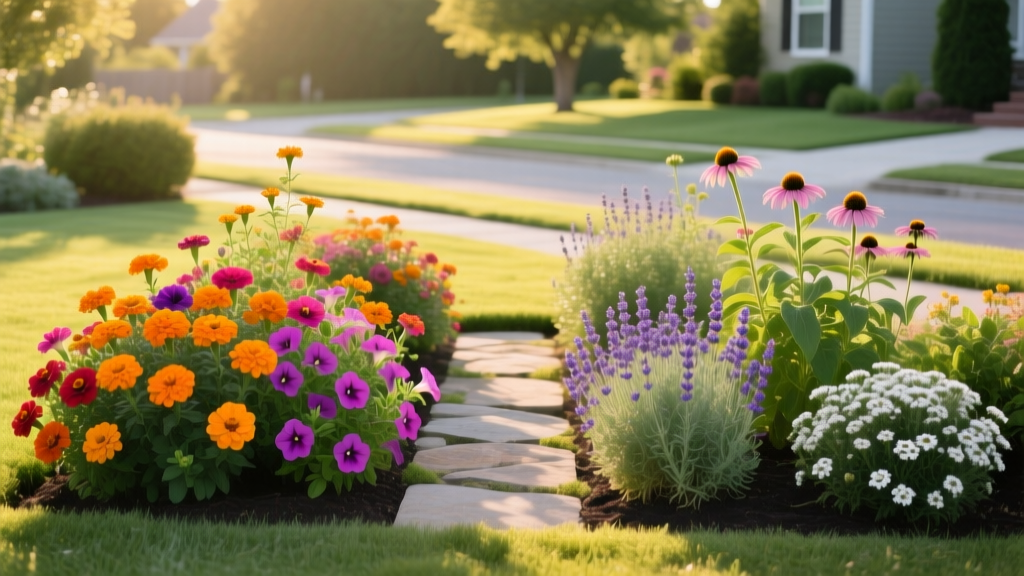
Annuals vs Perennials: Solving Bare Spots and Bloom Gaps
The Root Cause of Garden Bed Failures: Lifecycle Mismatch
When garden beds fail to thrive, homeowners often blame poor soil, inadequate watering, or pest pressure. However, the most common underlying cause of chronic garden failure—characterized by mid-summer bloom gaps, bare winter spots, and escalating maintenance costs—is a fundamental lifecycle mismatch. Understanding the structural differences in the debate of annuals vs perennials is not merely an aesthetic choice; it is a landscape engineering decision that dictates root depth, soil ecology, and long-term labor requirements.
Annuals complete their lifecycle in one growing season, directing all energy into rapid vegetative growth and prolific seed production. Perennials invest heavily in complex root systems and crown development to survive dormancy, often sacrificing first-year top growth for long-term resilience. Misdeploying these plant types for specific microclimates leads to predictable failure modes. According to horticultural research from the University of Minnesota Extension, selecting plants based solely on nursery bloom color rather than their lifecycle survival strategies results in a 40% higher replacement rate in residential garden beds.
Symptom Checker: Diagnosing Annual vs Perennial Misuse
Before ripping out underperforming plants, diagnose the specific failure pattern. Use this matrix to identify whether your garden's symptoms point to an annual or perennial misuse.
| Garden Symptom | Probable Cause | Lifecycle Correction Strategy |
|---|---|---|
| Color vanishes entirely by late July | Heat stress on cool-season annuals (e.g., Pansies, Snapdragons) | Replace with heat-tolerant perennials like Echinacea purpurea 'PowWow Wild Berry' or late-blooming annuals like Zinnia elegans. |
| Bare spots appear after winter thaw | Frost heave pushing shallow roots out of soil; incorrect hardiness zone | Switch to deep-rooted native perennials; avoid planting shallow-rooted perennials in heavy clay without drainage amendments. |
| Weeds overwhelm beds every May | Frequent spring tilling and soil disturbance to replant annuals | Establish dense perennial groundcovers (e.g., Geranium macrorrhizum) to shade out weed seeds and eliminate tilling. |
| Plants flop over after heavy rain | Over-fertilized annuals or shade-seeking perennials in full sun | Use structural perennial grasses (e.g., Panicum virgatum) as anchors; reduce nitrogen on annuals to prevent weak, leggy stems. |
Symptom 1: The "August Gap" and Mid-Summer Bloom Collapse
A frequent complaint is the "August Gap," where garden beds look vibrant in June but turn brown and exhausted by late summer. This occurs when gardeners rely heavily on spring-blooming perennials (like Dictamnus albus or Aquilegia) without interplanting late-season performers. The solution is not to abandon perennials, but to integrate heat-hardy annuals as temporary infill. Sowing a fast-maturing annual like Cosmos bipinnatus 'Sensation' in early June provides a structural canopy that masks the fading foliage of early perennials while delivering continuous color through the first autumn frost.
Symptom 2: Chronic Weed Infestations from Spring Tilling
Annual beds require the soil to be turned every spring to remove old roots and incorporate compost. This mechanical disturbance brings dormant weed seeds to the surface, triggering massive germination events. If your primary garden problem is relentless weeding, transitioning to a perennial-dominant architecture solves the issue. Once a perennial matrix establishes, the soil remains undisturbed. As noted by the Old Farmer's Almanac, undisturbed perennial beds can reduce weeding labor by up to 75% after the third year of establishment.
The Financial Diagnosis: 5-Year Cost Projection
Many homeowners choose annuals assuming they are cheaper. While the initial purchase price of a 6-pack of annual plugs ($4.50 to $6.00) is lower than a #1 container perennial ($14.00 to $22.00), the cumulative cost of soil amendments, water, and labor heavily skews the long-term economics. Below is a realistic 5-year financial projection for maintaining a 100-square-foot garden bed.
| Cost Category | 100% Annual Bed (5 Years) | 100% Perennial Bed (5 Years) |
|---|---|---|
| Initial Plant Material | $120 (Replaced Yearly = $600) | $450 (One-time purchase) |
| Soil Amendments & Compost | $150 (Heavy yearly top-dressing) | $80 (Initial amendment + light top-dress) |
| Water Usage (Summer) | $250 (High volume, shallow roots) | $90 (Deep, infrequent watering after Yr 1) |
| Labor (Valued at $25/hr) | $1,250 (50 hrs replanting/tilling) | $375 (15 hrs dividing/mulching) |
| Total 5-Year Cost | $2,250 | $995 |
Data synthesized from regional nursery pricing and municipal water rates for standard residential zones. Labor estimates reflect average homeowner maintenance times.
Advanced Troubleshooting: When Perennials Fail to Return
Perennials are marketed as "plant once, enjoy forever," but they frequently fail to return in spring. Diagnosing this specific failure requires looking at winter soil mechanics rather than summer care.
Frost Heave and the "Wet Feet" Winter Kill
The leading cause of perennial winter death is not extreme cold; it is the freeze-thaw cycle combined with poor drainage. When heavy clay soil absorbs autumn rain and freezes, it expands, pushing the perennial's crown above the soil line (frost heave). Once exposed, the crown desiccates and dies. Furthermore, perennials sitting in saturated winter soil suffer from anaerobic root rot ("wet feet").
Diagnostic Fix for Winter Kill: If your perennials are dying over winter, do not simply buy more cold-hardy varieties. Fix the soil structure. Excavate the planting hole and amend the native clay with 30% expanded shale or pumice by volume. Unlike peat moss, which holds moisture, expanded shale creates permanent air pockets that drain excess winter water while preventing severe soil compaction.
The Danger of Premature Mulching
Another common error is applying heavy winter mulch too early. According to guidance from Gardeners Path, piling leaf mold or bark over perennial crowns before the ground freezes traps heat, delaying dormancy and encouraging crown rot. The correct protocol is to wait until the soil temperature consistently drops below 40°F (4°C) and the ground has experienced its first hard freeze before applying a 2-inch layer of shredded hardwood mulch.
The 70/30 Structural Framework for Sustainable Garden Beds
To eliminate the boom-and-bust cycle of garden maintenance, professional landscape designers utilize a strict lifecycle ratio. For a resilient, low-maintenance, and continuously colorful garden bed, adopt the 70/30 framework:
- 70% Structural Perennials: Dedicate the majority of your bed space to deep-rooted, long-lived perennials and ornamental grasses. These form the "bones" of the garden. Select cultivars like Salvia nemorosa 'Caradonna' for rigid vertical structure, and Amsonia hubrichtii for late-season textural foliage. These plants suppress weeds, sequester carbon, and require division only every 4 to 6 years.
- 30% Infill Annuals: Reserve the remaining 30% of the bed—specifically the front edges and gaps between maturing perennials—for annuals. Use these to manipulate seasonal color palettes without committing to permanent placements. Direct-sow fast annuals like Nigella damascena (Love-in-a-mist) or plant pre-started Pentas lanceolata to provide nectar for pollinators while your slower-maturing perennials fill in their designated space.
By treating the annuals vs perennials decision as a calculated ratio rather than a binary choice, you engineer a garden ecosystem that self-regulates. The perennials provide ecological stability and financial savings, while the annuals offer the flexibility to adapt to changing aesthetic preferences and mask the natural dormancy cycles of the perennial matrix. This targeted approach transforms failing, high-maintenance garden beds into resilient, thriving landscapes.

