
Gardening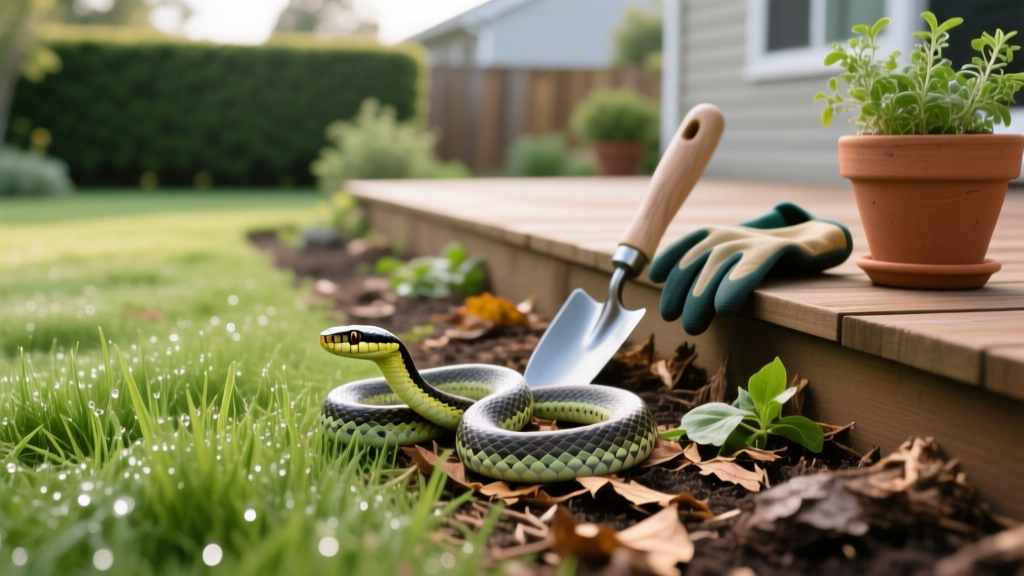
Garden Snakes Diagnosis: Identifying and Managing Backyard Reptiles
Symptom Checker: Diagnosing Garden Snake Activity
Finding a snake in the garden triggers an immediate fight-or-flight response for many homeowners. However, treating all garden snakes as pests is a diagnostic error that can disrupt your yard's ecological balance. Before applying any deterrents, you must accurately diagnose the extent of the activity and identify the species involved. Most garden snakes are highly beneficial predators that consume slugs, grubs, and rodents.
Use the following diagnostic matrix to interpret the physical evidence left behind in your garden beds, lawn margins, and foundation perimeters.
| Observed Symptom | Diagnostic Indicator | Recommended Action |
|---|---|---|
| Translucent, tubular shed skins near rocks or logs | Active molting site; indicates a healthy, growing snake population. | Identify species. If non-venomous, leave habitat undisturbed. |
| S-shaped tracks in loose soil or mud | Recent transit; snakes are moving between hunting and basking zones. | Check for rodent burrows nearby; address the food source. |
| Missing ground-nesting bird eggs or small poultry | Rat snake or corn snake foraging activity. | Install 1/4-inch hardware cloth around coops and nesting boxes. |
| Thick, dark droppings with white uric acid caps and hair/bone fragments | Active feeding zone for larger rat snakes or garter snakes. | Tolerance. This indicates the snake is actively removing rodents. |
Species Identification: The Triage Protocol
Accurate identification dictates your management strategy. Misidentifying a harmless species as venomous leads to unnecessary eradication, while failing to recognize a venomous species poses a safety risk.
Category A: Beneficial Predators (Retain and Protect)
- Eastern Garter Snake (Thamnophis sirtalis): Typically 18-26 inches long with three longitudinal stripes. They are the primary consumers of garden slugs, earthworms, and small amphibians. They are non-venomous and harmless to humans.
- Rat Snakes (Pantherophis spp.): Can grow 4-6 feet long. Excellent climbers that patrol rafters, sheds, and trees for mice and rats. They are constrictors and pose zero threat to humans or pets.
- Corn Snakes (Pantherophis guttatus): Recognizable by their reddish-orange coloration and checkerboard underbellies. Highly effective at controlling mouse populations in compost areas and outbuildings.
Category B: Nuisance Species (Modify Habitat)
Water snakes (Nerodia spp.) are non-venomous but can be highly defensive and aggressive if cornered near garden ponds. They emit a foul musk when threatened. Management requires altering the pond's edge vegetation rather than direct confrontation.
Category C: Venomous Threats (Exclude or Call Professionals)
In North America, venomous species like the Copperhead (Agkistrodon contortrix) and various Rattlesnakes (Crotalus spp.) require immediate exclusion. Diagnostic markers: Look for heat-sensing loreal pits between the eye and nostril, vertically elliptical (cat-like) pupils, and a distinct, spade-shaped head that is much wider than the neck. Non-venomous garden snakes typically have round pupils and heads that blend smoothly into their necks.
Root Cause Analysis: Why Are They in Your Yard?
Snakes do not randomly infest a property; they are drawn by specific environmental variables. The presence of garden snakes is almost always a secondary symptom of a primary attractant: Food + Shelter = Snakes.
Warning: The Mulch Trap
Applying more than 3 inches of organic wood mulch creates a perfect microclimate for snakes. It retains moisture, harbors slugs (food for garter snakes), and provides thermal cover. If you are experiencing high snake traffic in your garden beds, your mulch layer is likely too thick.
Applying more than 3 inches of organic wood mulch creates a perfect microclimate for snakes. It retains moisture, harbors slugs (food for garter snakes), and provides thermal cover. If you are experiencing high snake traffic in your garden beds, your mulch layer is likely too thick.
Primary Attractants to Audit:
- Rodent Populations: A single mouse burrow system can sustain a family of rat snakes. If you have mice, you will have snakes.
- Open Compost Systems: Traditional 3-bin wooden compost systems attract rodents seeking food scraps and warmth, which in turn attracts snake predators.
- Foundation Debris: Stacked firewood, corrugated metal sheets, and dense ivy against the home's foundation provide critical overwintering and basking habitats.
- Water Sources: Birdbaths placed directly on the ground, leaking irrigation valves, and unmaintained koi ponds draw both prey and predators.
Targeted Solutions: Humane Exclusion and Habitat Modification
If you have determined that snake traffic is unacceptable or poses a risk, implement these physical and environmental modifications. According to wildlife experts at the University of Minnesota Extension, physical exclusion is the only scientifically proven, long-term solution for keeping snakes out of specific garden zones.
Step 1: Install Physical Exclusion Barriers
Chemical repellents are largely ineffective. Instead, construct a physical barrier around high-value areas like children's play zones, vegetable gardens, or home foundations.
- Material: Use 1/4-inch (0.6 cm) galvanized hardware cloth. Standard chicken wire (1-inch mesh) is useless, as small garter and corn snakes will pass right through it.
- Installation Depth: Bury the bottom edge of the mesh at least 4 inches into the soil to prevent burrowing underneath.
- The 30-Degree Rule: Angle the fence outward at a 30-degree slope. Snakes are poor climbers on overhanging surfaces and will turn back rather than navigate the incline.
- Cost Estimate: A 10-foot roll of 1/4-inch hardware cloth costs approximately $25-$35 at major home improvement centers.
Step 2: Starve the Food Web
Eliminate the prey to eliminate the predator. Transition from open compost piles to fully enclosed, tumbling compost bins with locking latches. Seal all gaps larger than 1/4 inch in your shed, garage, and home foundation using expanding polyurethane foam and copper mesh stuffing to evict rodents.
Step 3: Modify Garden Microclimates
Rake back mulch to a maximum depth of 2 inches in garden beds. Maintain a strict 12-inch clear, vegetation-free perimeter around your home's foundation, exposing bare soil or gravel. This removes the thermal cover snakes rely on to hide from aerial predators like hawks.
Ineffective Treatments to Avoid
The pest control market is saturated with 'snake repellents' that fail under peer-reviewed scrutiny. The Humane Society of the United States explicitly warns against using toxic or unproven methods that harm the local ecosystem without solving the problem.
- Mothballs (Naphthalene): Highly toxic to soil biology, pets, and children. They dissolve in rain, contaminating groundwater, and do not deter snakes.
- Ultrasonic Repellers: Snakes lack external ears and are deaf to airborne sounds. They sense ground vibrations, making solar-powered ultrasonic spikes entirely useless.
- Sulfur and Lime: While these may slightly irritate a snake's belly scales, they wash away after a single rainstorm and alter your soil pH, potentially damaging your garden plants.
Escalation Protocol: When to Call Wildlife Control
Do not attempt to trap or relocate venomous species yourself. Improper handling of Copperheads or Rattlesnakes results in thousands of emergency room visits annually. You must escalate to a licensed wildlife control operator (WCO) under the following conditions:
- A venomous species is identified within 50 feet of a high-traffic area (patios, playsets, pool decks).
- Snakes are actively entering the interior of the home through foundation cracks or HVAC returns.
- You have identified a communal overwintering den (hibernaculum) on your property.
Professional snake removal and exclusion services typically range from $150 to $350 for an initial site visit and trap-setting, with full foundation exclusion projects costing between $1,200 and $3,000 depending on the linear footage of the property. Always verify that the operator holds a state-issued wildlife nuisance control license, as many general pest control companies are not legally permitted to handle protected reptile species.

