
Gardening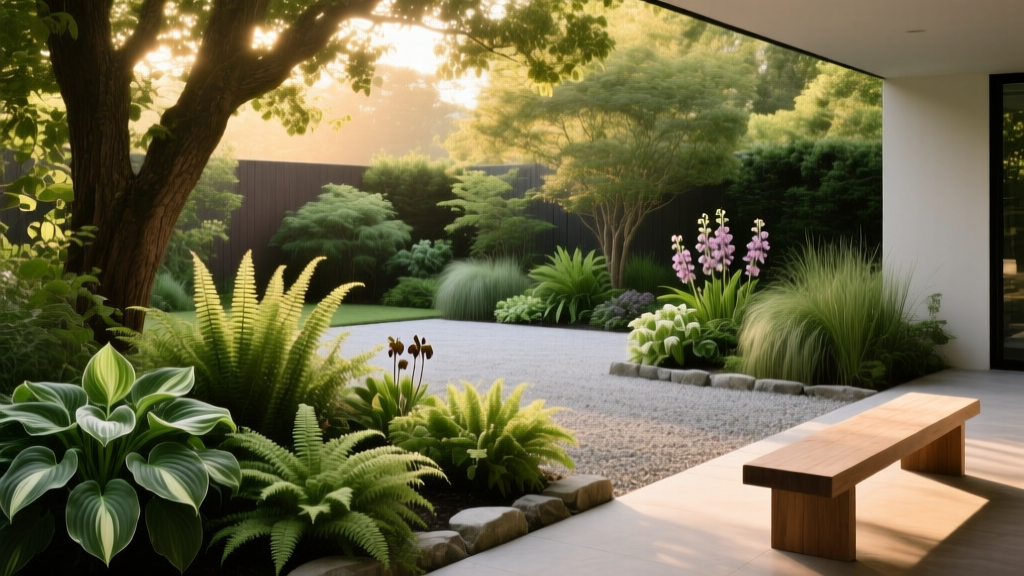
Solving Deep Shade: Plants That Don't Need Sun Outdoor for Bare Yards
Diagnosing the 'Dead Zone': Why Standard Landscapes Fail in Deep Shade
Homeowners frequently misdiagnose bare, muddy patches under mature trees or along north-facing masonry walls as 'poor soil.' In reality, the failure of standard turfgrass and sun-loving perennials in these zones is a predictable ecological mismatch. Finding the right plants that don't need sun outdoor requires shifting from a sunlight-dependent mindset to a shade-adapted framework. Deep shade environments—defined as areas receiving fewer than two hours of direct sunlight or registering below 500 foot-candles (approx. 5,000 lux) for most of the day—present three distinct physiological hurdles: severe light deprivation, aggressive root competition for water, and altered soil microbiomes.
According to Clemson University Extension, the canopy of a mature tree can intercept up to 90% of available rainfall, creating a 'dry shade' microclimate that starves shallow-rooted ornamentals. Before selecting plant material, you must accurately diagnose which type of shade is suppressing your landscape.
Diagnostic Light & Moisture Framework:
1. Dappled Shade: Sunlight filters through high branches (e.g., Honey Locust). Light levels fluctuate between 800-1,500 foot-candles. Supports a wider range of understory perennials.
2. Dense/Dry Shade: Found under shallow-rooted trees like Maples and Beeches. Soil is hydrophobic and heavily compacted by surface roots. Requires specialized drought-tolerant shade flora.
3. Wet/Heavy Shade: North-facing slopes with poor drainage and dense conifer canopies. High risk of fungal pathogens and root rot.
1. Dappled Shade: Sunlight filters through high branches (e.g., Honey Locust). Light levels fluctuate between 800-1,500 foot-candles. Supports a wider range of understory perennials.
2. Dense/Dry Shade: Found under shallow-rooted trees like Maples and Beeches. Soil is hydrophobic and heavily compacted by surface roots. Requires specialized drought-tolerant shade flora.
3. Wet/Heavy Shade: North-facing slopes with poor drainage and dense conifer canopies. High risk of fungal pathogens and root rot.
The Core Solution Matrix: Plants That Don't Need Sun Outdoor
To solve bare-yard problems, you must deploy cultivars specifically bred or evolved for low-light photosynthesis and root competition. Avoid generic 'shade mix' seeds. Instead, utilize established perennial divisions and shrubs that exploit different soil strata to avoid competing directly with the tree's primary root mass.
| Cultivar / Botanical Name | Common Name | Shade Tolerance | Moisture & Soil Profile | Mature Dimensions |
|---|---|---|---|---|
| Hosta 'Halcyon' | Blue Hosta | Deep Shade | Moist, well-draining; thick waxy cuticle resists slugs common in damp shade. | 18" H x 36" W |
| Epimedium x rubrum | Red Barrenwort | Dry / Deep Shade | Thrives in hydrophobic soil under maples; rhizomatous groundcover. | 12" H x 18" W |
| Polystichum acrostichoides | Christmas Fern | Dense Shade | Tolerates heavy clay; evergreen fronds persist down to 10°F. | 24" H x 24" W |
| Aucuba japonica 'Variegata' | Gold Dust Plant | Deep Shade (Zones 7-9) | Highly tolerant of urban pollution, dry shade, and root competition. | 6-8' H x 4-6' W |
| Heuchera 'Palace Purple' | Coral Bells | Dappled to Deep | Requires sharp drainage; crown rot prone in wet, stagnant shade. | 18" H x 18" W |
Troubleshooting Common Deep-Shade Failures
Even when selecting the correct plants that don't need sun outdoor, environmental stressors can cause decline. Use this diagnostic matrix to correct failing shade gardens.
Symptom: Crown Rot and Basal Stem Collapse
- Cause: Poor drainage exacerbated by a lack of solar evaporation. In deep shade, soil surface moisture lingers 3x longer than in full sun, inviting Phytophthora pathogens.
- Solution: Elevate planting beds 2 to 3 inches using a mix of 60% native soil and 40% pine bark fines. Never pile mulch against the plant crown (avoid 'mulch volcanoes'). For existing plants showing rot, drench the soil with a phosphorous acid-based fungicide (e.g., Agri-Fos) at a rate of 1/2 tsp per gallon of water.
Symptom: Severe Chlorosis (Pale Green/Yellow Foliage)
- Cause: Nutrient theft by aggressive tree roots, or high soil pH (alkaline conditions) common under Ash or Maple trees, which locks up iron and manganese.
- Solution: Bypass the soil's chemical lock by applying a foliar spray of chelated iron (Fe-EDDHA) directly to the leaves at dawn. For long-term correction, top-dress with elemental sulfur at a rate of 1 lb per 100 sq ft to gradually lower soil pH, and use slow-release organic fertilizers like feather meal (12-0-0) that won't burn shallow roots.
Symptom: Edema (Water-Soaked Blisters on Underside of Leaves)
- Cause: Roots are absorbing water faster than transpiration can release it in cool, sunless, high-humidity environments.
- Solution: Reduce irrigation frequency immediately. Switch overhead sprinklers to drip lines with 0.5 GPH emitters, running only 20 minutes bi-weekly. Improve air circulation by selectively pruning the lowest 3-4 branches of the canopy tree to increase ambient airflow.
Step-by-Step Soil Prep for Under-Tree Planting
The University of Minnesota Extension emphasizes that altering the soil grade under a mature tree is the fastest way to kill both the tree and your new shade plants. Tree roots require oxygen exchange in the top 6 inches of soil. Follow this strict protocol to prepare a planting bed without suffocating the host tree.
- Map the Critical Root Zone (CRZ): Measure the tree's trunk diameter at 4.5 feet high. Multiply by 12 to find the radius in inches where you must avoid major root disturbance.
- The 2-Inch Root Rule: When digging planting holes for your shade perennials, if you encounter a tree root thicker than 2 inches in diameter, do not sever it. Backfill the hole slightly and shift the plant 6 inches away.
- Amend, Don't Bury: Never add more than 1.5 to 2 inches of organic matter (like composted leaf mold) over the existing root zone. Adding 4+ inches of topsoil will suffocate the tree's feeder roots.
- Mycorrhizal Inoculation: Shade plants rely heavily on fungal networks to extract phosphorus in low-light conditions. Dust the root balls of your new plants with an endomycorrhizal inoculant (containing Glomus intraradices) before backfilling to accelerate establishment.
Advanced Design Framework for Sunless Zones
Because you cannot rely on the vibrant, sun-fueled blooms of full-sun perennials, a successful deep-shade garden must derive visual interest from textural contrast and foliage architecture. Pair the broad, ribbed, matte-blue leaves of Hosta 'Halcyon' against the fine, lacy, arching fronds of a Dryopteris marginalis (Marginal Wood Fern). This juxtaposition creates depth and movement even in stagnant air. Incorporate hardscape elements like dark river rock or decomposed granite pathways to reflect what little ambient light penetrates the canopy, artificially brightening the understory and providing a dry walking surface in perpetually damp zones.

