
Gardening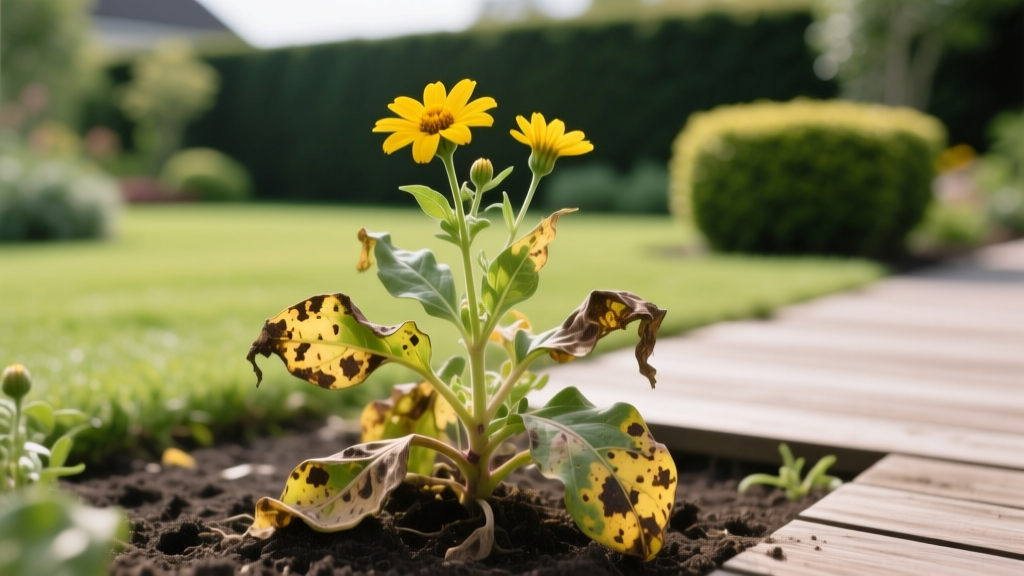
Diagnosing And Fixing Sick Annual Plants With Yellow Flowers
The Vulnerability of Yellow-Flowering Annuals
Annual plants with yellow flowers—such as Tagetes (marigolds), Zinnia elegans, Helianthus annuus (sunflowers), and Calendula officinalis—rely on specific carotenoid and xanthophyll pigments to produce their vibrant gold, lemon, and orange hues. When these pigments degrade or fail to synthesize, the visual symptoms are immediate: washed-out petals, interveinal chlorosis, and premature bud drop. Diagnosing the exact failure point requires distinguishing between nutritional lockouts, sap-sucking pests, and vascular pathogens. This guide provides targeted rescue protocols for the most common afflictions striking yellow annuals mid-season.
Symptom 1: The 'Washed-Out' Petal & Leaf Chlorosis
When the foliage of your yellow annuals turns pale green or yellow while the veins remain green (interveinal chlorosis), or when bright yellow petals look bleached and papery, you are likely dealing with either a micronutrient deficiency or a micro-pest infestation.
Iron Deficiency vs. High Soil pH
Yellow annuals require iron for chlorophyll synthesis and overall vigor. However, iron becomes chemically locked out and unavailable to plant roots when soil pH exceeds 7.0. Applying standard iron sulfate to alkaline soil is useless because it instantly oxidizes and precipitates.
- The Rescue Fix: Use a chelated iron product containing Fe-EDDHA (such as Sequestrene 138). Unlike Fe-EDTA, which breaks down above pH 7.0, Fe-EDDHA remains stable and bioavailable in soils with a pH up to 9.0. Apply as a soil drench at a rate of 1 teaspoon per gallon of water. You should see foliar greening within 7 to 10 days.
- Long-Term Adjustment: Lower the soil pH by incorporating elemental sulfur at a rate of 1 pound per 100 square feet to drop the pH by roughly 0.5 points over the next three months.
Two-Spotted Spider Mites (Tetranychus urticae)
Spider mites pierce plant cells and extract the chlorophyll-rich contents, leaving behind a stippled, bleached appearance that mimics nutrient deficiency. According to the University of Minnesota Extension, mite populations explode during hot, dry, and dusty conditions, rapidly destroying the aesthetic value of zinnias and marigolds.
- The Rescue Fix: Blast the undersides of the leaves with a strong jet of water to dislodge the mites and destroy their webbing. Follow up with an application of insecticidal soap or horticultural oil (like Bonide All Seasons Oil) at a 2% solution rate. Apply strictly at dusk to prevent phytotoxicity (leaf burn) caused by the sun reacting with the oil.
Symptom 2: Deformed Blooms & Bud Drop
If your yellow annuals are producing twisted, greenish, or deformed flowers, or if flower buds form but drop before opening, the issue is usually pathological or caused by specific thrip species.
⚠️ Critical Warning: Aster Yellows Phytoplasma
Aster yellows is a systemic, incurable disease spread by aster leafhoppers. It causes 'witches' broom' (clusters of weak, spindly shoots) and transforms yellow flower petals into deformed, green, leaf-like structures. There is no chemical cure. You must immediately rogue (uproot and destroy) the infected plants in the household trash. Do not compost them, as the phytoplasma can survive in plant debris. For more on identifying this pathogen, consult the Penn State Extension guide on Aster Yellows.
Western Flower Thrips (Frankliniella occidentalis)
If the buds are dropping cleanly or opening with scarred, streaked, and silvery petals, thrips are the culprit. They hide deep inside the unopened buds, rasping the delicate petal tissue.
- The Rescue Fix: Prune off all heavily scarred buds and drop them into a bag of soapy water. Spray the remaining plants with a Spinosad-based product (such as Monterey Garden Insect Spray) at a rate of 2 fluid ounces per gallon of water. Spinosad is highly effective against thrips and is safe for pollinators once the spray has completely dried on the leaf surface.
Diagnostic Matrix: Yellow Annual Symptom Checker
| Visual Symptom | Primary Suspect | Confirmatory Test | Immediate Rescue Action |
|---|---|---|---|
| Yellow leaves, green veins | Iron Chlorosis (High pH) | Soil pH test reads > 7.0 | Drench with Fe-EDDHA chelate |
| Stippled, dusty-looking leaves | Spider Mites | Tap leaf over white paper; look for moving dust | Water blast + Horticultural oil at dusk |
| Green, deformed petals | Aster Yellows | Witches' broom growth present | Rogue and trash plant immediately |
| Silvery streaks on petals, bud drop | Thrips | Shake unopened bud over white paper | Prune damaged buds + Spinosad spray |
| Stem pinching at soil line | Damping Off / Crown Rot | Brown, mushy tissue at soil interface | Stop overhead water; apply Trichoderma |
Symptom 3: Stem Collapse & Crown Rot
Marigolds and zinnias are highly susceptible to soil-borne fungal pathogens like Pythium and Rhizoctonia. These pathogens cause the stem to pinch, turn brown, and collapse right at the soil line. The University of Wisconsin-Madison Extension notes that marigolds are particularly sensitive to heavy, poorly drained soils that remain saturated for more than 24 hours.
Temperature-Dependent Pathogens
Understanding the soil temperature helps narrow down the exact fungus:
- Pythium (Cool/Wet): Thrives when soil temperatures are below 65°F and moisture is high. Causes a soft, watery rot.
- Rhizoctonia (Warm/Dry-to-Moist): Thrives when soil temperatures exceed 75°F. Causes a dry, sunken, wire-stem canker.
The Trichoderma Rescue Protocol
Chemical fungicides are largely ineffective once crown rot has invaded the vascular tissue. Instead, use a biological fungicide containing Trichoderma harzianum (such as RootShield WP). This beneficial fungus colonizes the root zone and outcompetes Pythium and Rhizoctonia.
- Peel back any mulch touching the base of the infected plants to allow the soil surface to dry.
- Mix Trichoderma harzianum at a rate of 1.5 ounces per 10 gallons of water.
- Apply as a heavy soil drench (approx. 1 pint per square foot) around the base of the remaining healthy plants to create a protective biological barrier.
- Switch from overhead watering to drip irrigation to keep the lower stems and foliage completely dry.
Nutrient Ratios for Vibrant Yellow Pigmentation
To sustain the intense yellow pigments in annuals through the end of the growing season, you must manage the Nitrogen-Phosphorus-Potassium (NPK) ratio carefully. Excess nitrogen promotes lush, dark green foliage but suppresses flower production and dilutes carotenoid pigments, resulting in pale, weak blooms.
- Ideal NPK Ratio: Use a fertilizer with a 1-2-2 or 1-3-2 ratio, such as a 5-10-10 or 10-30-20 bloom-booster formula. Apply at half the recommended label strength every 14 days during peak bloom.
- Magnesium Sulfate Boost: Magnesium is the central atom in the chlorophyll molecule and is vital for overall plant energy. If older leaves are yellowing and curling, apply a foliar spray of Epsom salts (magnesium sulfate) mixed at 1 tablespoon per gallon of water. Spray early in the morning for optimal stomatal absorption.
Quick-Reference Troubleshooting FAQ
Why are my yellow marigold flowers turning brown in the center?
Brown centers on marigolds are typically caused by Botrytis cinerea (gray mold), which attacks the dense, moisture-trapping petals of double-bloom varieties. Remove the spent, browning blooms immediately (deadheading) to prevent the spores from spreading to healthy buds. Improve air circulation by thinning crowded plants to at least 8 inches apart.
Can I save a sunflower that is wilting from the top down?
If a sunflower wilts from the top down while the base remains firm, it is likely suffering from a localized water deficit or sunscald during peak summer heat (above 90°F). Provide a deep, slow watering of 2 to 3 gallons directly at the root zone using a drip emitter. If the plant does not recover by the following morning, suspect a stem-boring insect like the sunflower head-clipping weevil; inspect the stem for small entry holes and sawdust-like frass.

