
Gardening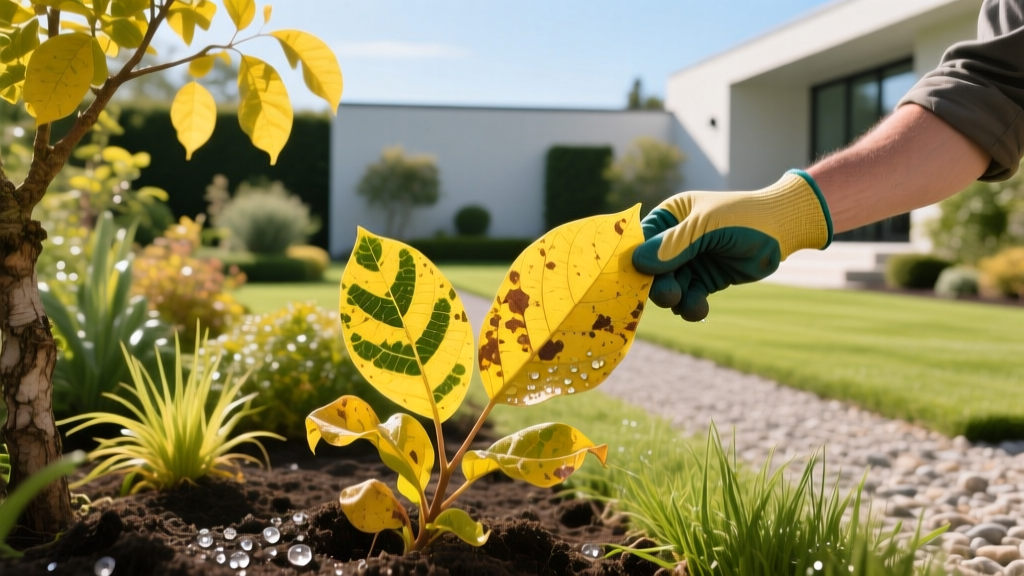
Yellow Plant Leaves: Symptom Diagnosis and Fast Rescue Fixes
The Chlorosis Decision Tree: Where is the Yellowing?
When a gardener encounters a yellow plant, the immediate reaction is often to apply a generic, all-purpose fertilizer or increase watering. This shotgun approach frequently worsens the problem. Chlorosis—the technical term for the loss of chlorophyll that turns foliage yellow—is a highly specific distress signal. To execute a successful rescue, you must first map the symptom to the plant's vascular transport system.
Diagnostic Quick-Check:
1. Are the older, lower leaves turning yellow first? (Mobile nutrient deficiency or drought stress).
2. Are the newer, top leaves turning yellow while old leaves stay green? (Immobile nutrient deficiency or high pH lockout).
3. Are the leaves yellow but the veins remain bright green? (Interveinal chlorosis: Iron, Manganese, or Magnesium).
4. Is the yellowing accompanied by crispy, brown margins? (Potassium deficiency, salt burn, or underwatering).
1. Are the older, lower leaves turning yellow first? (Mobile nutrient deficiency or drought stress).
2. Are the newer, top leaves turning yellow while old leaves stay green? (Immobile nutrient deficiency or high pH lockout).
3. Are the leaves yellow but the veins remain bright green? (Interveinal chlorosis: Iron, Manganese, or Magnesium).
4. Is the yellowing accompanied by crispy, brown margins? (Potassium deficiency, salt burn, or underwatering).
Mobile vs. Immobile Nutrient Deficiencies
Understanding phloem mobility is the cornerstone of plant symptom diagnosis. Nutrients are categorized by whether the plant can actively relocate them from older tissues to support new growth.
Mobile Nutrients (Nitrogen, Magnesium, Potassium)
When soil reserves of nitrogen or magnesium are depleted, the plant cannibalizes its older, lower leaves to sustain the growing tips. If your yellow plant shows uniform yellowing on the lower canopy, suspect a nitrogen deficit. If the lower leaves show interveinal chlorosis (green veins on a yellow background), suspect magnesium.
- Nitrogen Rescue: Apply a fast-acting organic nitrogen source like blood meal (12-0-0) at a rate of 1 to 2 pounds per 100 square feet. For immediate foliar correction on container plants, use a liquid fish emulsion (5-1-1) diluted at 2 tablespoons per gallon of water, applied every 14 days until color returns.
- Magnesium Rescue: Dissolve 1 tablespoon of Epsom salts (magnesium sulfate) per gallon of water. Apply as a foliar spray in the early morning to avoid leaf scorch, and drench the root zone with the remaining solution.
Immobile Nutrients (Iron, Zinc, Manganese)
Immobile nutrients are locked into cell walls once assimilated; the plant cannot move them. Consequently, deficiencies manifest exclusively in the newest growth at the top of the canopy or on new lateral branches. Iron deficiency is the most common culprit, particularly in acid-loving plants like azaleas, blueberries, and gardenias.
The Silent Killer: Soil pH Lockout
You can dump pounds of iron sulfate into a garden bed, but if the soil pH is too high, the yellow plant will never absorb it. Soil pH dictates the chemical solubility of minerals. In alkaline soils (pH above 7.0), iron binds with oxygen and calcium to form insoluble ferric oxide, rendering it completely unavailable to root hairs.
According to research from Texas A&M AgriLife Extension, selecting the correct chelating agent is critical when treating iron chlorosis in high-pH environments. Standard EDTA chelates fail in soils with a pH above 6.5. For alkaline soils, you must use EDDHA chelated iron, which remains stable and bioavailable up to pH 9.0.
| Amendment | Target pH Shift | Application Rate (per 100 sq ft) | Time to React |
|---|---|---|---|
| Elemental Sulfur (90%) | Lower pH by 1.0 | 1.5 to 2.0 lbs | 3 to 6 months |
| Agricultural Lime (Calcitic) | Raise pH by 1.0 | 5.0 to 8.0 lbs | 2 to 4 months |
| EDDHA Chelated Iron (6%) | N/A (Bypasses pH) | 1 to 2 tsp per gallon | 7 to 14 days |
Moisture Extremes: Asphyxiation vs. Drought Stress
Water management errors are responsible for over 70% of unexplained chlorosis in container and raised-bed gardens. Both overwatering and underwatering result in a yellow plant, but the physiological mechanisms differ drastically.
Root Asphyxiation (Overwatering)
Roots require oxygen to perform active transport—the energy-intensive process of pulling nutrients from the soil into the root cortex. When soil pores are flooded with water, oxygen is displaced. The roots suffocate, active transport halts, and the plant starves despite sitting in nutrient-rich soil. The leaves turn a pale, uniform yellow and often droop simultaneously.
Rescue Protocol: Cease watering immediately. For potted specimens, remove the plant from the waterlogged container, gently tease away the outer 2 inches of anaerobic, sour-smelling soil, and repot into a fresh mix amended with 20% #3 or #4 horticultural-grade perlite to permanently increase macro-porosity. Do not use fine vermiculite, which retains too much moisture.
Drought Stress (Underwatering)
When soil moisture drops below the permanent wilting point, the plant closes its stomata to conserve water. This halts photosynthesis and transpiration, leading to yellowing that typically begins at the leaf margins and progresses inward, accompanied by a dry, brittle texture.
Rescue Protocol: Implement bottom-watering for hydrophobic container plants. Submerge the pot in a basin of water mixed with 1 drop of liquid dish soap (to break surface tension) for 45 minutes until bubbles cease. For in-ground gardens, apply a 2-inch layer of arborist wood chips to reduce surface evaporation and retain subsurface moisture.
Biotic Vectors: Pests and Pathogens
Not all yellowing is abiotic. Sap-sucking insects and soil-borne pathogens disrupt the vascular system, mimicking nutrient deficiencies.
- Spider Mites: These arachnids pierce individual plant cells and drain the chloroplasts, leaving behind a stippled, dusty yellow appearance. Fix: Apply a 2% horticultural oil spray or a Spinosad-based insecticide at dusk to avoid harming foraging pollinators.
- Pythium Root Rot: A water-mold that thrives in soggy soils, destroying the fine root hairs responsible for nutrient uptake. Fix: Drench the soil with a biological fungicide containing Bacillus amyloliquefaciens or Trichoderma harzianum to outcompete the pathogen, and drastically improve soil drainage.
Symptom-to-Rescue Master Matrix
Use this rapid-reference matrix to cross-check your garden observations and deploy the correct intervention.
| Visual Symptom | Primary Location | Probable Cause | Immediate Action |
|---|---|---|---|
| Uniform pale yellowing | Older, lower leaves | Nitrogen Deficiency | Apply blood meal or liquid fish emulsion |
| Yellow leaves, bright green veins | Newest top growth | Iron Chlorosis / High pH | Apply EDDHA chelated iron; test soil pH |
| Yellowing with brown, crispy edges | Leaf margins overall | Potassium Deficit / Salt Burn | Leach soil with deep watering; apply kelp meal |
| Dusty, stippled yellow micro-dots | Randomized across canopy | Spider Mite Infestation | Spray with horticultural oil at dusk |
| Pale yellow, drooping, heavy soil | Entire plant wilting | Root Asphyxiation | Stop watering; aerate soil; add coarse perlite |
Expert Warning on Foliar Sprays: While foliar feeding (spraying liquid nutrients directly onto leaves) provides a rapid cosmetic green-up, it is strictly a band-aid. As noted by University of Minnesota Extension, foliar applications cannot fulfill the plant's total macronutrient demands. Always diagnose and correct the underlying soil chemistry or irrigation flaw to ensure the next flush of growth emerges healthy.

