
Gardening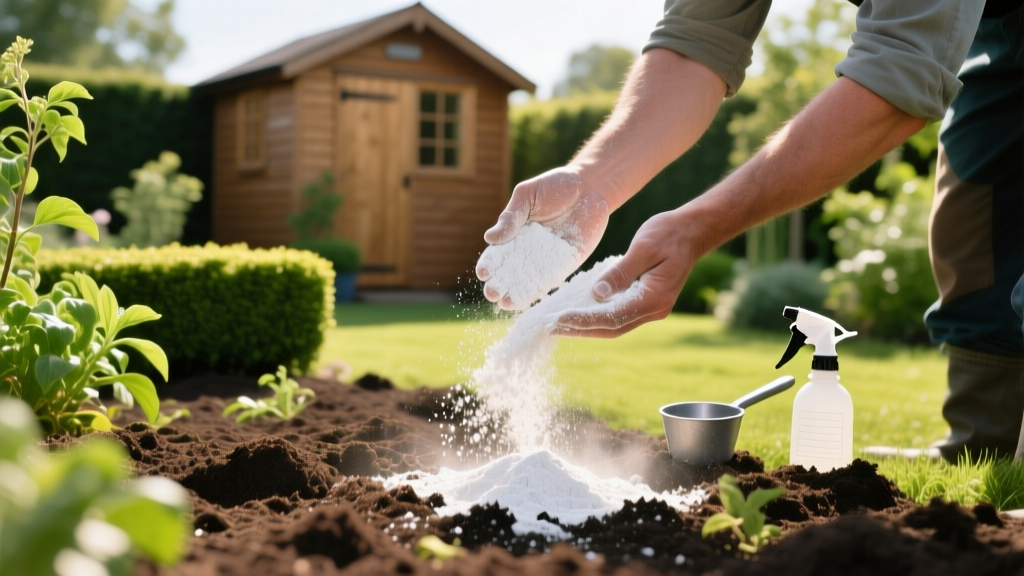
Diatomaceous Earth Garden Application & Safety Guide
For beginner gardeners navigating the overwhelming aisles of chemical pesticides, diatomaceous earth (DE) offers a compelling, natural alternative. Sourced from the fossilized remains of microscopic aquatic organisms called diatoms, this chalky white powder has become a staple in organic pest management. However, treating your diatomaceous earth garden applications like a magical, foolproof cure-all is a common beginner mistake that leads to poor results and wasted money.
DE is not a chemical poison; it is a mechanical desiccant. Understanding exactly how it works, when it fails, and how to apply it with precision is the difference between a thriving, pest-free vegetable bed and a frustrated gardener washing useless white sludge off their lettuce. This guide provides the exact specifications, tool recommendations, and environmental limitations you need to use DE effectively in 2026.
The Microscopic Mechanism: How DE Actually Works
To use DE effectively, you must understand its physical properties. The powder is primarily composed of amorphous silicon dioxide. Under a microscope, diatom particles look like jagged shards of glass. When insects with exoskeletons (like beetles, ants, and earwigs) or soft, waxy bodies (like slugs and snails) crawl over the powder, these microscopic sharp edges pierce their protective outer layer.
Once the cuticle is compromised, the highly porous nature of the DE particles absorbs the insect's epicuticular lipids and bodily fluids. The pest essentially dies of dehydration, not toxicity. Because this is a physical process rather than a chemical one, insects cannot develop biological resistance to diatomaceous earth, making it a highly sustainable long-term pest control strategy.
Food-Grade vs. Filter-Grade: The Critical Safety Distinction
The most dangerous mistake a beginner can make is buying the wrong type of DE. Diatomaceous earth is mined and processed for various industrial uses, and the processing method drastically alters its safety profile.
⚠️ CRITICAL SAFETY WARNING: Never use 'Filter-Grade' or 'Pool-Grade' DE in your garden. This type is heat-treated (calcined), which converts the amorphous silica into crystalline silica. Inhaling crystalline silica causes silicosis, a severe and irreversible lung disease. Always verify that your product is explicitly labeled as 'Food-Grade' or 'OMRI Listed' for organic use, which guarantees it contains less than 1% crystalline silica.
Even with food-grade DE, the CDC's National Institute for Occupational Safety and Health (NIOSH) advises against inhaling any fine silica dust. While food-grade DE will not cause silicosis, inhaling large quantities of the fine amorphous dust can still cause mechanical irritation to the respiratory tract. Always wear an N95 or P100 respirator mask and safety goggles when applying dry DE.
Target Pests vs. Beneficial Insects
DE is non-selective, meaning it does not distinguish between a destructive flea beetle and a beneficial ground beetle. According to the National Pesticide Information Center (NPIC), DE is highly effective against pests with high surface-area-to-volume ratios, but it must be used strategically to protect your garden's ecosystem.
| Target Pests (Highly Susceptible) | Non-Targets & Beneficials (Protection Required) |
|---|---|
| Slugs, Snails, Earwigs, Flea Beetles, Aphids, Ants, Japanese Beetles | Earthworms (unaffected due to moist habitat), Ladybugs, Praying Mantises |
| Cabbage Loopers, Cutworms, Fungus Gnats (soil surface) | Honeybees, Native Pollinators (highly susceptible if dusted directly) |
The Pollinator Rule: Never apply DE to the blossoms or flowers of your plants. Bees and butterflies frequently land on blooms, and direct contact will dehydrate them just as it does pests. Restrict applications to the soil surface, plant stems, and the undersides of lower leaves.
Step-by-Step Application for Maximum Efficacy
Pouring DE from the bag or sprinkling it by hand creates thick, useless clumps that blow away in the wind and waste your supply. Proper application requires creating a fine, barely visible dusting.
- Select the Right Tool: Invest in a dedicated duster. A squeeze-bulb duster (approx. $10) is fine for small container gardens, but for raised beds and larger plots, a bellows hand duster like the Harris Red Bellow Hand Duster ($15–$20) is vastly superior. Bellows dusters inject air into the chamber, creating a fine, electrostatic cloud that coats leaves evenly.
- Wait for Dry Conditions: DE must be applied to completely dry foliage. If there is morning dew on your plants, wait until mid-morning after the sun has dried the leaves.
- Apply a Micro-Layer: Pump the duster to release a cloud over the target area. You are aiming for a layer no thicker than 1/16 to 1/8 of an inch. If you can see a thick, opaque white pile of powder, you have applied too much. Insects will simply walk around large piles.
- Target the Transit Routes: Create a continuous 2-inch wide barrier ring around the base of plant stems to stop crawling pests like cutworms and slugs from reaching the foliage. Dust the undersides of the lowest leaves where aphids and flea beetles hide.
- Time it for Dusk: Apply DE in the late evening when pollinators have returned to their hives and nests. By morning, the dust will have settled and adhered to the plant surfaces, minimizing the risk to daytime foragers.
Pro Tip: Never mix DE directly into your potting soil or garden beds. It requires a dry, abrasive surface to work. Once buried in moist soil, it becomes completely inert and provides zero pest control benefits while altering your soil's drainage properties.
Environmental Limitations & Failure Modes
The primary weakness of diatomaceous earth is its vulnerability to moisture. Because it works by absorbing lipids and fluids, if the DE particles are already saturated with water, they cannot absorb anything from an insect.
When to Reapply
- Rainfall: Any rainfall exceeding 0.25 inches will wash DE off plant foliage and dilute soil barriers. You must reapply immediately after the plants dry.
- Overhead Irrigation: If you use sprinklers, you will need to reapply DE every 3 to 4 days. Switching to drip irrigation or soaker hoses is highly recommended to keep the foliage and soil surface dry, extending the lifespan of your DE application to 10–14 days.
- High Humidity: In environments where relative humidity consistently stays above 85%, DE's desiccant properties are severely throttled. In these climates, DE should be used as a supplemental control method alongside neem oil or insecticidal soaps.
Frequently Asked Questions
Does diatomaceous earth expire?
No. DE is essentially fossilized rock (silica). As long as it is kept in a sealed, dry container to prevent it from absorbing ambient moisture and clumping, a bag of food-grade DE will remain effective indefinitely. A 50lb bag purchased in 2024 will be just as effective in 2028.
Is it safe for dogs and cats in the yard?
Food-grade DE is non-toxic if ingested, and it is actually used as an anti-caking agent in some commercial pet foods. However, the physical dust is an irritant. Keep pets out of the garden for 2–3 hours after application to allow the dust to settle, preventing them from inhaling the airborne particles or getting it in their eyes.
Will DE kill earthworms in my compost bin?
No. Earthworms lack the rigid exoskeleton that DE targets, and they secrete a thick, protective mucus. Furthermore, earthworms live in moist environments where DE is physically inactive. You can safely use DE around your compost bins without harming your vermicomposting population.

