
Gardening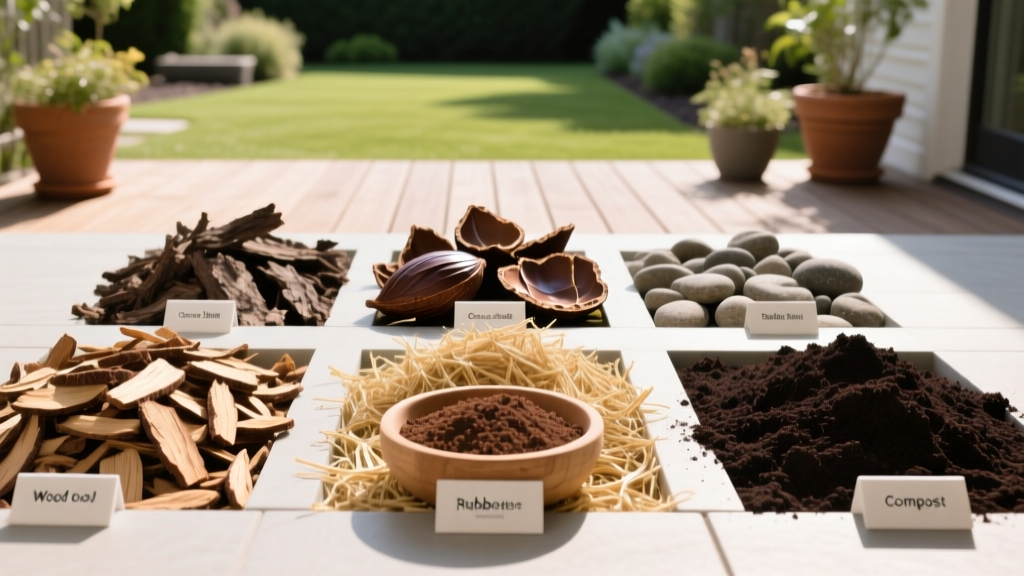
Different Types of Mulch: An Identification and Selection Guide
The Core Function of Mulch in Soil Ecology
Mulch is not merely a cosmetic landscape finish; it is a critical biological and physical interface between the soil and the atmosphere. When evaluating the different types of mulch available to homeowners, the primary metrics for success are moisture retention, temperature buffering, and weed suppression. According to research cited by the Arbor Day Foundation, a proper 2-to-3-inch layer of organic mulch can reduce soil moisture evaporation by up to 70% and keep root-zone temperatures 8°F to 10°F cooler during peak summer heat.
Selecting the correct material requires understanding the breakdown rate, carbon-to-nitrogen (C:N) ratio, and physical structure of the mulch. Applying the wrong material in the wrong environment—such as using fine, compacting mulch in poorly drained clay soils—can lead to anaerobic conditions and root asphyxiation.
Expert Insight: The Nitrogen Tie-Up Myth
A persistent gardening myth claims that wood-based mulches 'steal' nitrogen from the soil. In reality, nitrogen immobilization only occurs at the exact millimeter-thin interface where the mulch touches the topsoil, driven by fungi breaking down carbon. Because plant roots exist deeper in the soil profile, surface-applied wood mulch does not cause systemic nitrogen deficiency in established perennials, trees, or shrubs.
Identifying Organic Mulches: Materials and Breakdown Rates
Organic mulches are derived from plant materials. They improve soil structure and feed the microbial food web as they decompose, but they require periodic replenishment. Here is an identification guide to the most common organic options:
1. Double-Shredded Hardwood Bark
This is the industry standard for residential landscaping. The double-shredding process creates a fibrous texture that interlocks, making it highly resistant to washing away on slopes. As it ages, it turns a silvery-gray color.
Best for: Sloped garden beds, shrub borders, and high-traffic pathways.
2026 Bulk Pricing: $35 to $50 per cubic yard.
2. Pine Bark Nuggets (Large and Mini)
Harvested from pine trees, these chunks are highly durable and decompose very slowly. Large nuggets (2 to 3 inches in diameter) allow for excellent water infiltration but are lightweight and prone to floating away during heavy downpours.
Best for: Flat beds around acid-loving plants like azaleas, rhododendrons, and blueberries.
2026 Bulk Pricing: $45 to $65 per cubic yard.
3. Pine Straw (Needles)
Sold in compressed bales rather than by the cubic yard, pine straw does not compact, allowing exceptional air and water exchange. It interlocks lightly and settles into a matte finish.
Best for: Vegetable gardens, strawberry patches, and large-scale woodland garden restoration.
2026 Pricing: $8 to $14 per bale (covers roughly 40-50 sq ft at 2 inches deep).
4. Arborist Woodchips
A byproduct of tree trimming, these chips contain a mix of leaves, twigs, and heartwood. They are often available for free from local arborists. However, fresh chips can harbor allelopathic compounds (like juglone from black walnut) or temporarily tie up surface nitrogen.
Best for: Informal woodland paths, large rural properties, and establishing new tree rings.
Requirement: Must be aged or composted for at least 6 months before placing directly against sensitive perennial stems.
Organic Mulch Comparison Matrix
| Mulch Type | Decomposition Rate | Water Permeability | Slope Stability | Ideal Depth |
|---|---|---|---|---|
| Shredded Hardwood | Moderate (1-2 years) | Good | Excellent | 2 - 3 inches |
| Pine Bark Nuggets | Very Slow (3-5 years) | Excellent | Poor (floats) | 2 - 4 inches |
| Pine Straw | Fast (6-12 months) | Excellent | Moderate | 2 - 3 inches |
| Arborist Chips | Slow (2-4 years) | Moderate | Good | 3 - 5 inches |
Identifying Inorganic Mulches
Inorganic mulches do not decompose and offer zero nutritional value to the soil microbiome. They are selected strictly for permanence, thermal properties, or extreme weed suppression.
Crushed Gravel and River Rock
Stone mulches absorb solar radiation during the day and release it at night. This thermal mass can protect marginally hardy perennials in cold climates but will scorch shallow-rooted plants in hot, southern zones.
Sizing Rule: Use 3/4-inch to 1-inch crushed angular gravel. Avoid smooth river rock for garden beds, as its rounded edges do not interlock, allowing weeds to easily penetrate the gaps.
Landscape Fabric (Geotextile)
While heavily marketed for weed control, the National Gardening Association and university extension horticulturists widely advise against using woven landscape fabric beneath organic mulch. Within 24 months, soil particles and decomposing mulch clog the fabric's pores, destroying water permeability and blocking vital gas exchange between the soil and the atmosphere. Weeds eventually germinate in the mulch layer above the fabric, sending roots that become permanently tangled in the geotextile mesh.
Warning: The 'Mulch Volcano' Failure Mode
Piling mulch high against the trunk of a tree (a 'mulch volcano') is one of the most common and fatal landscaping errors. Tree bark is designed to be exposed to air. Burying the root flare under 6 inches of damp mulch triggers adventitious rooting (girdling roots that strangle the main trunk) and invites Phytophthora crown rot and bark-boring insects. Always maintain a strict 3-inch 'donut' gap between the mulch edge and the tree trunk.
Application Metrics: Calculating Volume and Depth
Buying mulch requires precise volume calculations to avoid the high cost of over-ordering or the aesthetic failure of under-ordering. Bulk mulch is sold by the cubic yard, while bagged mulch is sold in 2-cubic-foot or 3-cubic-foot increments.
The Coverage Formula
To calculate the exact cubic yards needed for your project, use this standard landscaping formula:
Total Square Footage × Desired Depth (in inches) ÷ 324 = Cubic Yards Required
Example: A 500 sq ft garden bed requiring a 3-inch depth equals (500 × 3) ÷ 324 = 4.63 cubic yards.
Depth Guidelines by Material
- Fine Organic Mulches (Cocoa hulls, shredded leaves): 1 to 2 inches. Applying thicker layers creates an impermeable mat that repels water.
- Coarse Organic Mulches (Bark nuggets, arborist chips): 3 to 4 inches. The large air pockets require extra depth to effectively block sunlight from reaching weed seeds.
- Inorganic Gravel: 1.5 to 2 inches. Deeper applications make it difficult to walk on and trap falling leaves, which decay and create a soil layer for weeds.
Sourcing and Quality Control: Spotting 'Sour' Mulch
When purchasing bulk organic mulch from a local supplier, always perform a sensory inspection before it is dumped on your driveway. If mulch is stored in massive, tightly packed piles without aeration, the center of the pile goes anaerobic. This produces acetic and butyric acids, dropping the pH to as low as 4.0.
This 'sour mulch' smells strongly of vinegar, ammonia, or rotting eggs. If applied directly to garden beds, the toxic acids will chemically burn plant foliage and kill fine feeder roots within 48 hours. If you receive sour mulch, spread it out in a thin layer on your driveway and water it heavily for three days to leach the acids and allow aerobic bacteria to neutralize the pH before using it in the landscape.

