
Gardening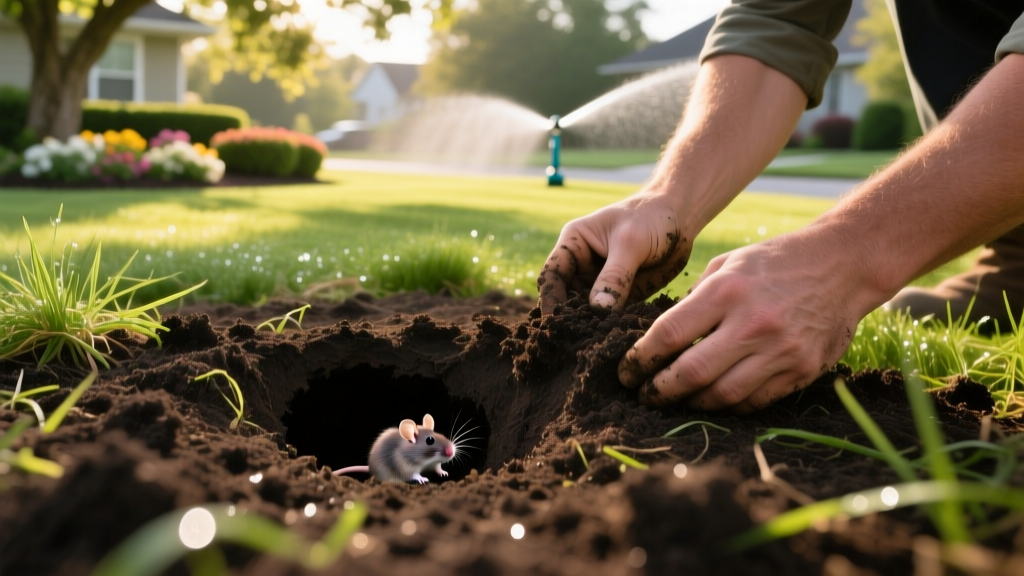
Do Rats Dig Holes in Soil? A Gardener's Identification Guide
The Short Answer: Do Rats Dig Holes in Soil?
Yes, rats do dig holes in soil, but their burrowing behavior is highly opportunistic compared to dedicated excavators like moles or ground squirrels. The brown rat (Rattus norvegicus), commonly known as the Norway rat, is the primary species responsible for soil excavation in residential gardens. Rather than creating extensive, deep tunnel networks for the sake of tunneling, Norway rats dig shallow burrows to establish nesting sites, access food sources like root vegetables, or create concealed transit routes between harborage areas and compost bins.
If you are noticing freshly turned earth in your garden beds, it is critical to accurately identify the culprit before deploying control measures. Misidentifying a vole or mole hole as a rat burrow will lead to ineffective trapping and wasted resources. According to the University of California Integrated Pest Management (UC IPM) program, understanding the specific physical dimensions and location of the hole is the first step in effective rodent management.
Burrow Identification Matrix: Rat vs. Common Garden Rodents
To determine if the holes in your soil are indeed caused by rats, compare the physical characteristics of the excavation against other common garden pests. Use the diagnostic matrix below to narrow down the species.
| Rodent Species | Hole Diameter | Hole Shape & Edges | Soil Mounding | Typical Garden Location |
|---|---|---|---|---|
| Norway Rat | 2 to 4 inches | Oval or irregular; edges often smoothed by body friction | Fan-shaped, low-profile dirt spread near entrance | Under sheds, along fence lines, beneath raised beds, near compost |
| Vole (Meadow Mouse) | 1 to 1.5 inches | Perfectly round; clean edges | No mounding; soil is pushed back into the tunnel | Middle of lawns, under thick mulch, near surface root systems |
| Mole | N/A (Surface tunnels) | Volcano-shaped mounds; hole is usually plugged with dirt | Large, symmetrical volcano mounds of fine soil | Open lawn areas, garden beds with high earthworm populations |
| Ground Squirrel | 3 to 4 inches | Round; multiple entrance holes clustered together | Pronounced, crescent-shaped mounds of coarse soil | Open sunny areas, orchards, perimeter fence lines |
| Chipmunk | 1.5 to 2 inches | Round; clean entrance | No visible mounding (soil carried away in cheek pouches) | Near rock walls, stumps, foundations, and bird feeders |
Secondary Field Indicators of Rat Activity
A hole in the soil is rarely sufficient evidence on its own to confirm a rat infestation. Rats are nocturnal and highly secretive. To verify that the 2-to-4-inch holes belong to rats, look for these secondary field indicators around your garden:
- Rub Marks (Smear Trails): Rats have poor eyesight and rely on their whiskers and fur to navigate. Look for dark, greasy smudges on wooden raised bed corners, concrete foundations, or fence posts adjacent to the soil holes.
- Droppings: Norway rat feces are capsule-shaped, blunt at both ends, and measure roughly 3/4 inch long. Finding these near the burrow entrance or along garden pathways is a definitive identifier.
- Gnaw Marks: Check wooden structures, PVC irrigation pipes, and plastic compost bins. Rats will gnaw on these materials to file their continuously growing incisors, leaving deep, parallel scratch marks about 1/8 inch wide.
- Runways: In tall grass or dense groundcover, rats create packed-down, 2-inch-wide trails connecting their burrows to food sources. You can test for active runways by sprinkling a fine layer of talcum powder or flour across the path and checking for footprints the next morning.
The L-Shaped Trenching Exclusion Method
If you have confirmed rat burrows under your raised beds or garden structures, simply filling the holes with dirt is a temporary fix; the rats will simply dig a new entrance a few feet away. Permanent exclusion requires physical barriers. The most effective, non-toxic method is the L-shaped trenching technique using heavy-duty wire mesh.
Material Requirement: Do not use chicken wire. Rats can easily squeeze through 1-inch hexagonal gaps and will chew through thin poultry netting. You must use 1/2-inch or 1/4-inch, 19-gauge galvanized steel hardware cloth.
- Excavate the Trench: Dig a trench along the vulnerable perimeter (e.g., the base of a shed or the exterior of a raised bed). The trench must be 18 inches deep and 12 inches wide.
- Cut and Bend the Mesh: Cut your hardware cloth to a width of 24 inches. Bend the bottom 12 inches of the mesh at a strict 90-degree angle to form an "L" shape.
- Install the Barrier: Place the mesh into the trench. The vertical 12-inch section should press flush against the structure or raised bed wall. The horizontal 12-inch section must lay flat at the bottom of the trench, pointing away from the structure and into the garden soil.
- Backfill and Secure: Fill the trench with soil. When rats attempt to dig down along the wall, they will hit the horizontal wire mesh and cannot dig backward to bypass it. Secure the top edge of the vertical mesh to the wooden bed or foundation using heavy-duty galvanized staples.
Strategic Trapping Protocols for Garden Environments
Exclusion prevents future burrowing, but you must eliminate the existing population. The Centers for Disease Control and Prevention (CDC) strongly advises against the use of toxic rodenticides in outdoor garden settings due to the high risk of secondary poisoning to owls, hawks, domestic cats, and dogs. Instead, utilize mechanical trapping.
Trap Selection and Placement
Standard wooden snap traps (like the Victor Easy Set) or high-impact plastic traps (like the Tomcat Press 'N Set) are highly effective and cost between $3 and $8 per unit. Place traps directly in the active runways or within 2 feet of the burrow entrance. Rats are neophobic (fearful of new objects), so trap placement requires a specific protocol:
- Pre-baiting (Days 1-3): Place unset traps near the burrows with a high-value bait (peanut butter mixed with birdseed, or a small piece of dried fruit). This conditions the rats to view the trap as a safe food source.
- Setting the Traps (Day 4+): Once the bait is consistently stolen, bait the traps again and set the trigger mechanism. Position the trigger end facing the wall or burrow entrance so the rat must step on the pedal to reach the bait.
- Trap Density: Deploy a minimum of 6 to 10 traps for every visible burrow entrance. Rats live in colonies, and catching only one or two will not collapse the local population.
⚠️ Wildlife Safety Warning: If birds or non-target wildlife are interfering with your snap traps, place the traps inside a tamper-resistant bait station (such as the Protecta LP Rat Bait Station) or inside a 5-gallon bucket with a 2-inch entry hole cut into the side. The Environmental Protection Agency (EPA) mandates specific safety standards for outdoor pest control devices to protect local ecosystems.
Garden Habitat Modification to Deter Burrowing
Rats dig in soil because your garden provides their two primary survival requirements: cover and calories. Altering the garden environment makes it inhospitable for nesting.
- Compost Bin Management: Open compost piles are a massive attractant. Transition to a fully enclosed, tumbling compost bin made of heavy-gauge plastic or metal. If using a stationary bin, ensure the lid locks securely and the base is seated on 1/2-inch hardware cloth to prevent upward burrowing.
- Mulch Depth Control: While mulch is excellent for soil moisture retention, layers thicker than 3 inches provide ideal cover for rats to dig shallow nesting pockets. Keep mulch depth at 2 inches and pull it 6 inches away from wooden foundations and fence posts.
- Harvest Root Crops Promptly: Norway rats will actively tunnel through garden soil to feed on carrots, potatoes, and beets. Harvest root vegetables as soon as they reach maturity, and avoid leaving fallen produce on the soil surface overnight.
- Eliminate Harborage Debris: Clear away piles of lumber, unused terracotta pots, and dense ivy or English ivy groundcover. Rats require physical structures to anchor the entrances of their soil burrows; removing these anchor points forces them to relocate to less desirable environments.
Frequently Asked Questions
Will filling a rat hole with mothballs or ammonia keep them away?
No. Using mothballs (naphthalene) or ammonia in outdoor soil is highly ineffective, environmentally hazardous, and illegal in many jurisdictions. The active gases dissipate rapidly in open soil, and the chemicals will leach into your garden beds, potentially contaminating root vegetables and harming beneficial soil microbiomes.
How deep do rat burrows go in garden soil?
Norway rat burrows in garden soil are typically shallow, extending only 12 to 18 inches below the surface. They usually consist of a main nesting chamber lined with shredded plant material or paper, with one or two secondary escape tunnels leading back to the surface a few feet away from the primary entrance.
Can ultrasonic repellents stop rats from digging in my raised beds?
Field tests consistently show that ultrasonic rodent repellents are ineffective for outdoor soil applications. The high-frequency sound waves are rapidly absorbed by dense soil, foliage, and wooden raised bed walls, creating shadow zones where rats can comfortably dig and nest without being affected by the audio deterrent.

