
Gardening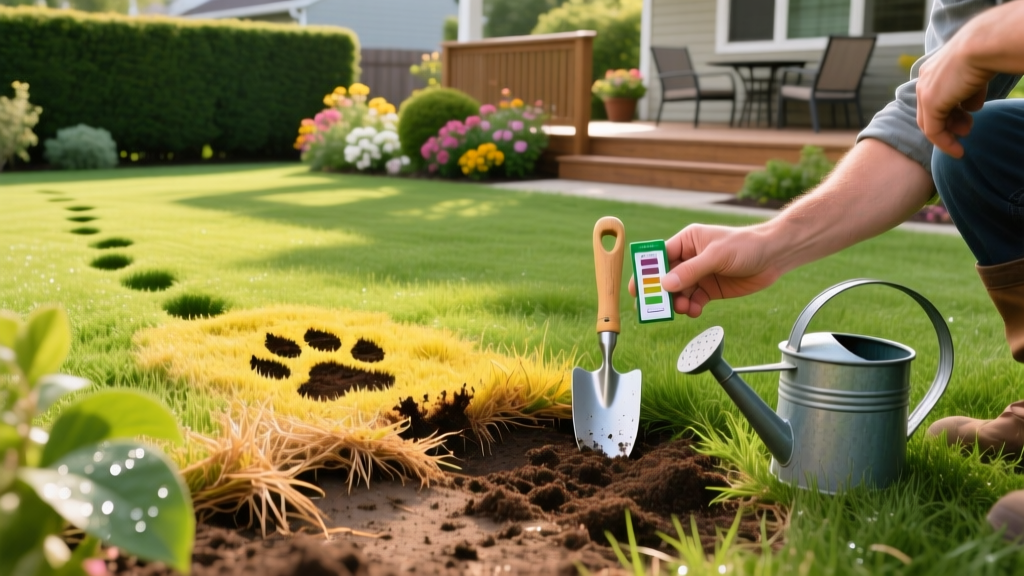
Does Dog Pee Kill Plants? Identifying Urine Burn and Soil Recovery
The Chemistry of Canine Urine in Garden Soil
The direct answer to 'does dog pee kill plants' is yes, but the mechanism is widely misunderstood. Canine urine does not kill plants because it is too acidic. The average pH of dog urine ranges from 6.0 to 6.5, which is slightly acidic but well within the tolerable range for most turfgrasses and ornamental plants. The actual culprits are nitrogen toxicity and osmotic salt stress.
Dog urine is essentially a highly concentrated liquid fertilizer. It contains urea, which breaks down into ammonia and then into nitrate. A single urination event deposits the nitrogen equivalent of applying 15 to 25 grams of pure nitrogen per square meter. To put this in perspective, a standard lawn fertilization application targets roughly 1 to 1.5 pounds of nitrogen per 1,000 square feet. A dog's localized deposit overloads the plant's cellular capacity to process nitrogen, leading to rapid tissue necrosis.
Data Highlight: Urine vs. Commercial Fertilizer
• Dog Urine (per spot): Equivalent to a 46-0-0 Urea application at 10x the recommended rate.
• Salt Content: High concentrations of sodium and potassium salts draw water out of plant roots via osmosis, causing localized drought stress even in wet soil.
• Volume: Female dogs typically release 150-300mL in a single squat, concentrating the entire nitrogen load into a 6-to-8-inch diameter circle.
• Dog Urine (per spot): Equivalent to a 46-0-0 Urea application at 10x the recommended rate.
• Salt Content: High concentrations of sodium and potassium salts draw water out of plant roots via osmosis, causing localized drought stress even in wet soil.
• Volume: Female dogs typically release 150-300mL in a single squat, concentrating the entire nitrogen load into a 6-to-8-inch diameter circle.
Identifying Dog Urine Burn vs. Fungal Diseases
Before applying treatments, you must accurately diagnose the damage. Urine burn is frequently misidentified as fungal pathogens like Brown Patch (Rhizoctonia solani) or Dollar Spot. The most reliable visual indicator of urine damage is the 'Halo Effect'. Because the outer edges of the urine splash zone receive a diluted, non-lethal dose of nitrogen, the grass at the perimeter of the dead spot often grows faster and greener than the surrounding lawn.
| Symptom | Dog Urine Burn | Brown Patch Fungus | White Grub Damage |
|---|---|---|---|
| Lesion Shape | Perfect circles (6-12 inches) | Irregular, coalescing patches | Large, irregular brown areas |
| Perimeter Color | Dark green 'halo' ring | Smoke-gray or dark brown border | No distinct colored border |
| Root Attachment | Roots remain firmly anchored | Roots may rot; blades pull easily | Turf rolls back like a carpet |
| Time of Day | Anytime (correlates with pet access) | Expands during humid mornings | Late summer/early fall |
Botanical Triage: Susceptible vs. Resistant Plants
Not all plants react to canine urine equally. Broadleaf ornamentals and certain turfgrasses lack the cellular resilience to handle sudden nitrogen and salt spikes. If you have an active dog, restructuring your garden beds with urine-tolerant species is the most effective long-term prevention strategy.
Highly Susceptible Species (Avoid in Dog Zones)
- Hostas (Hosta spp.): Fleshy leaves absorb salts rapidly, leading to immediate marginal scorch and tissue collapse.
- Roses (Rosa spp.): Highly sensitive to soil salinity; urine exposure causes rapid leaf yellowing and cane dieback.
- Boxwood (Buxus sempervirens): Shallow root systems are easily burned by surface-level salt accumulation.
- Kentucky Bluegrass (Poa pratensis): The most urine-sensitive of the common cool-season turfgrasses.
Urine-Resistant Species (Recommended for Dog Zones)
- Fescue (Festuca arundinacea): Tall fescue has deep roots and high salt tolerance, making it the best cool-season grass for dog owners.
- Perennial Ryegrass (Lolium perenne): Germinates rapidly and recovers from nitrogen burn faster than bluegrass.
- Creeping Thyme (Thymus serpyllum): A tough, low-growing groundcover that handles salt and foot traffic exceptionally well.
- Elf Orpine (Sedum spurium): Succulent leaves and high drought/salt tolerance make it ideal for border plantings.
Step-by-Step Soil Recovery and Neutralization Protocol
When damage occurs, immediate intervention is required to flush the soil profile and restore the cation exchange capacity (CEC) of the soil. Follow this exact protocol to save the affected area.
- Immediate Dilution (0-12 Hours): If you catch the dog in the act, immediately apply 1.5 to 2 gallons of water directly to the spot. This dilutes the urea concentration below the phytotoxic threshold and pushes the salts past the primary root zone (top 4 inches of soil).
- Gypsum Application (24-48 Hours): Apply Calcium Sulfate (Gypsum) at a rate of 2 to 3 lbs per 100 square feet. Gypsum does not alter soil pH; instead, the calcium ions displace the sodium ions left by the urine, allowing the sodium to be flushed out of the soil structure without destroying soil aggregation.
- Deep Flushing (Day 3): Water the area with 1/2 inch of irrigation to drive the displaced sodium down into the subsoil, away from the active root zone.
- Microbial Inoculation (Day 7): Apply a liquid soil aerator or humic acid supplement (e.g., Simple Lawn Solutions Liquid Aerating Soil Loosener, approx. $25) to stimulate microbial breakdown of residual urea.
Warning: Debunking the Diet Myths
Do not feed your dog tomato juice, baking soda, or DL-Methionine supplements to 'neutralize' their urine. According to veterinary toxicologists and the American Kennel Club, altering a dog's systemic pH or adding unnecessary salts via baking soda can cause severe urinary tract issues, including calcium oxalate bladder stones. The problem is nitrogen volume, not acidity.
Do not feed your dog tomato juice, baking soda, or DL-Methionine supplements to 'neutralize' their urine. According to veterinary toxicologists and the American Kennel Club, altering a dog's systemic pH or adding unnecessary salts via baking soda can cause severe urinary tract issues, including calcium oxalate bladder stones. The problem is nitrogen volume, not acidity.
Physical and Botanical Deterrents
If training your dog to use a specific gravel or mulch zone is unsuccessful, physical deterrents offer a reliable secondary defense for vulnerable garden beds.
- Motion-Activated Sprinklers: The Orbit 62100 Yard Enforcer (approx. $85) uses an infrared sensor to detect motion up to 70 feet away and releases a 3-second burst of water. It is highly effective for keeping dogs out of specific perennial beds without causing harm.
- Botanical Repellents: Products containing methyl nonyl ketone or essential oils like citronella and white pepper create an olfactory barrier. Liquid Fence Dog & Cat Repellent Ready-to-Use (approx. $18) must be reapplied every 2 weeks and immediately after heavy rainfall to maintain the scent barrier.
- Physical Barriers: For newly seeded lawn patches or delicate ornamental beds, install 12-inch galvanized steel garden edging or chicken wire laid flat on the soil surface. Dogs dislike the tactile sensation of wire on their paws and will avoid the area.
Frequently Asked Questions
Will dog urine kill my vegetable garden?
Yes, dog urine can severely damage vegetable crops, particularly leafy greens like lettuce and spinach, which accumulate nitrates rapidly. Furthermore, raw canine feces and urine can harbor pathogens like E. coli and roundworms. The RSPCA strongly advises keeping dogs out of active food-production zones to prevent zoonotic contamination.
How long does it take for dog urine to break down in soil?
In active, biologically healthy soil with adequate moisture, soil microbes will break down the urea from a single urination event within 7 to 14 days. However, the salt residue can persist for months, requiring physical flushing or gypsum amendment to fully restore the soil's health.

