
Gardening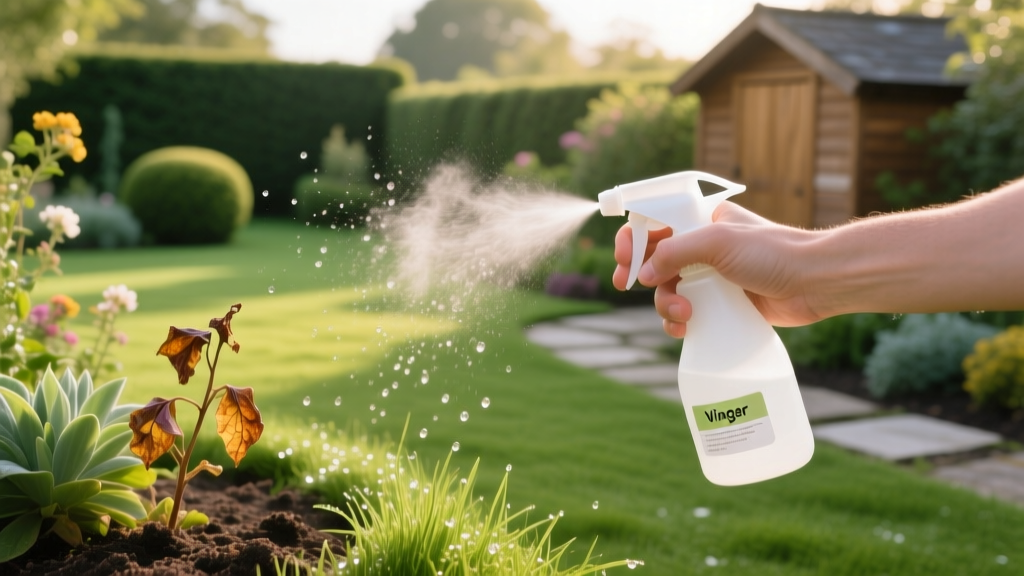
Does Vinegar Kill Plants? How Acetic Acid Affects Garden Roots
The Short Answer: Contact Desiccation vs. Systemic Death
When gardeners ask, "does vinegar kill plants?", the answer requires a distinction between foliage and root systems. Vinegar (acetic acid) is a highly effective contact herbicide, but it is entirely non-systemic. When sprayed on leaves, it rapidly destroys plant tissue. However, it does not translocate through the phloem down to the roots. For annual weeds with shallow fibrous root systems, this foliage burn-down is fatal. For deep-rooted perennials like bindweed, dandelion, or Canada thistle, vinegar merely burns off the top growth while the taproot remains completely unharmed and ready to resprout within 7 to 14 days.
The Biochemistry of Acetic Acid on Plant Tissue
To understand why vinegar works—and where it fails—you must look at its cellular impact. Acetic acid (CH3COOH) is a weak acid, but in concentrated forms, it acts as a potent desiccant. Upon contact with a leaf, the acid rapidly penetrates the cuticle and dissolves the lipid bilayer of the plant's cell membranes.
Once the membrane integrity is compromised, the cell's cytoplasm leaks out, and the plant loses its ability to retain water. This results in rapid, visible desiccation (browning and wilting) often within 2 to 4 hours of application under direct sunlight. Because the acid breaks down quickly in the environment, it leaves no toxic residual in the plant's vascular system, which is exactly why it fails to kill the roots.
Vinegar Concentrations: Kitchen vs. Horticultural
The standard white vinegar sitting in your pantry contains roughly 5% acetic acid. This concentration will singe the leaves of young, tender seedlings but will rarely kill established weeds. Effective weed control requires horticultural-grade acetic acid. Below is a breakdown of concentrations, efficacy, and current 2026 market pricing.
| Concentration | Classification | Target Weeds | Avg. Cost (Per Gallon) | PPE Required |
|---|---|---|---|---|
| 5% Acetic Acid | Household / Culinary | Tiny annual seedlings (under 2 inches) | $3.00 - $5.00 | None |
| 20% Acetic Acid | Horticultural | Established annuals, broadleaf weeds | $30.00 - $40.00 | Gloves, Eye Protection |
| 30% Acetic Acid | Industrial / Heavy Ag | Mature grasses, tough brush (top-growth only) | $45.00 - $60.00 | Face Shield, Acid-Resistant Gloves, Long Sleeves |
The Soil Impact: Will Vinegar Ruin Your Garden Bed?
A common myth is that pouring vinegar on weeds will permanently sterilize the soil or drastically alter the soil pH for years. This is chemically false. While applying 20% acetic acid will temporarily drop the soil pH in the immediate splash zone, soil possesses a property known as Cation Exchange Capacity (CEC).
CEC is the soil's ability to hold onto positively charged ions and buffer against rapid pH changes. In soils with decent clay or organic matter content, the buffering capacity will neutralize the acetic acid within 48 to 72 hours. The acid breaks down into water and carbon dioxide through microbial action. According to the National Pesticide Information Center (NPIC), acetic acid degrades rapidly in soil and water, posing no long-term threat to soil microbiomes or future planting viability.
⚠️ WARNING: The Danger of 30% Concentrations
While 5% vinegar is harmless to skin, 30% acetic acid is a severe corrosive. It can cause irreversible corneal damage and severe chemical burns on contact. The EPA notes that high-concentration acetic acid products are often classified as restricted-use or require heavy hazard labeling. Never spray 30% solutions on a windy day, and always wear a full face shield.
Precision Application Protocol for Maximum Kill Rate
Because vinegar relies entirely on contact desiccation, your application technique dictates success. Follow this protocol to maximize efficacy without wasting expensive horticultural vinegar.
- Time the Weather: Acetic acid requires heat and UV radiation to accelerate cell membrane breakdown. Apply only when temperatures are above 70°F (21°C) and skies are clear. Spraying on a cool, cloudy day reduces efficacy by up to 60%.
- Add a Surfactant: Plant leaves have a waxy cuticle that repels water-based liquids. Add 1 to 2 teaspoons of a non-ionic agricultural surfactant (or cheap, non-antibacterial liquid dish soap) per gallon of 20% vinegar. This breaks the surface tension, allowing the acid to coat the leaf completely rather than beading up and rolling off.
- Use the Right Nozzle: Do not use a misting nozzle, which creates dangerous airborne drift that can damage desirable plants. Use a flat-fan or cone nozzle adjusted to a solid stream or heavy droplet pattern.
- Spray to the Point of Runoff: Coat the entire weed, focusing heavily on the central growth crown (the meristem). You do not need to drench the soil; focus purely on the foliage.
- Follow-Up Strategy: For perennials, expect the weed to resprout from the taproot in 10 days. You must repeatedly spray the new top-growth every time it reaches 2 inches tall. This eventually exhausts the root's stored carbohydrate reserves, killing the plant through starvation rather than chemical toxicity.
When to Avoid Vinegar Entirely
Vinegar is an excellent tool for hardscape weed control (driveways, patio cracks, fence lines). However, avoid using it in the following scenarios:
- Alkaline Soils: If your soil pH is already above 7.5, repeated heavy applications of acetic acid can cause localized, albeit temporary, nutrient lockout for nearby desirable plants.
- Near Shallow-Rooted Desirables: Because vinegar is non-selective, accidental overspray on the surface roots of shallow-rooted shrubs (like azaleas or hydrangeas) can cause localized root tip burn.
- Pre-Emergent Control: Vinegar has zero pre-emergent properties. It will not stop weed seeds in the soil from germinating. Do not waste it as a soil drench before planting.
Frequently Asked Questions
Does vinegar kill grass permanently?
No. Grass has a protected growing point (the crown) located at or just below the soil surface. Vinegar will burn off the grass blades, but the crown will generate new blades within a week. To kill grass permanently, you must physically remove the sod or use a systemic herbicide.
Can I mix vinegar and salt to kill plants?
Adding sodium chloride (table salt) to vinegar will kill plants and their roots, but it is highly discouraged for garden beds. Salt does not break down or leach away easily; it accumulates in the soil, creating a toxic environment that will prevent anything from growing in that spot for years. Reserve salt-vinegar mixtures strictly for gravel driveways where no future planting is planned.
How long does vinegar last in the soil?
In a healthy garden bed with active microbial life and adequate moisture, 20% acetic acid breaks down into harmless water and carbon dioxide within 2 to 3 days. It does not leave a toxic residual.

