
Gardening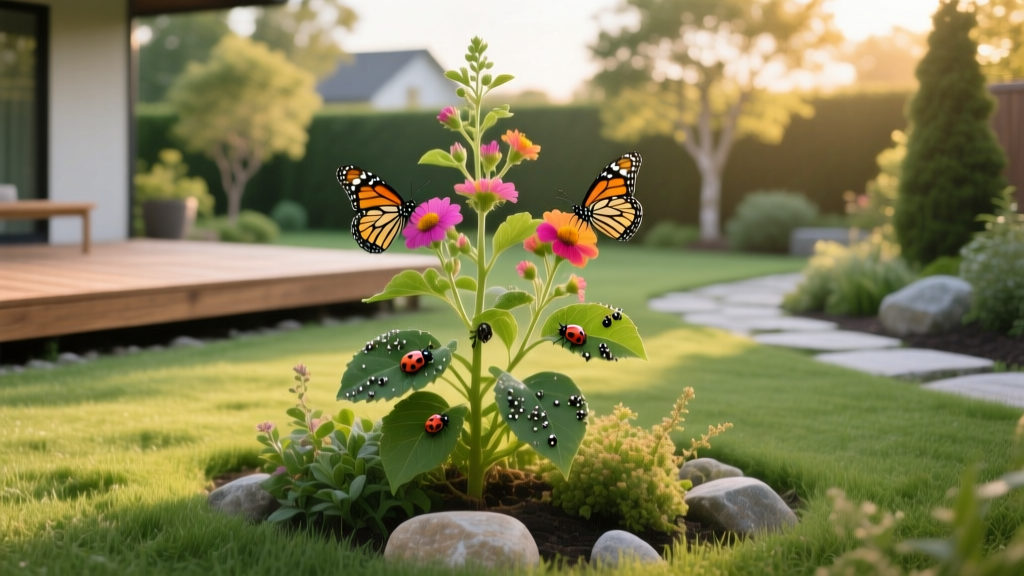
Dual-Purpose Plant for Butterflies Attraction and Pest Defense
The Paradox of Defensive Pollinator Gardening
Designing a garden requires balancing ecological invitations with perimeter defense. When you select a plant for butterflies attraction, you are intentionally drawing insects into your yard. However, a poorly planned pollinator garden can inadvertently attract destructive herbivores, sap-sucking pests, and foraging rodents. The solution is not to abandon pollinator gardening, but to pivot toward dual-purpose botanicals. By leveraging specific volatile organic compounds (VOCs) and root exudates, homeowners can cultivate a landscape that serves as a sanctuary for Lepidoptera while acting as a biological fortress against voles, mice, and destructive nematodes.
⚠ Critical Sourcing Warning: Before purchasing any host or nectar plant, verify it is free of systemic neonicotinoids. Nurseries often treat plants with imidacloprid, which persists in plant tissue for up to two years and is lethal to butterfly caterpillars. Always demand neonic-free certification or propagate from verified seed sources. For detailed guidelines on safe sourcing, consult the Xerces Society for Invertebrate Conservation.
Matrix: Top Dual-Purpose Plants for Pollinators and Pests
The following species have been selected based on their high nectar value for adult butterflies, their utility as larval host plants, and their proven efficacy in deterring specific yard pests. When implementing these, precise cultivar selection and spacing are critical to activate their defensive properties.
| Species & Cultivar | Target Butterfly | Defensive Target | Defensive Spacing | Est. Cost (1-Gal) |
|---|---|---|---|---|
| Allium 'Millennium' | Fritillaries, Hairstreaks | Meadow Voles, Mice | 12 in. on-center | $14 - $18 |
| Lavandula angustifolia 'Munstead' | Swallowtails, Painted Ladies | Rodents, Flea Beetles | 18 in. on-center | $12 - $16 |
| Asclepias syriaca (Common Milkweed) | Monarchs (Obligate Host) | Root-knot Nematodes | 24 in. on-center | $10 - $14 |
| Foeniculum vulgare (Bronze Fennel) | Black Swallowtails (Host) | Aphids (Trap Crop) | 36 in. on-center | $8 - $12 |
| Tagetes patula (French Marigold) | General Nectar Foragers | Soil Nematodes, Whiteflies | 8 in. on-center | $4 - $6 (Flat) |
Strategic Spatial Zoning: Building the Perimeter
Planting these species randomly will not yield defensive results. To maximize both pollinator attraction and pest deterrence, you must implement a three-zone spatial layout. This framework disrupts rodent foraging pathways while creating a safe corridor for butterflies.
Zone 1: The Rodent Buffer (Outer Perimeter)
The outermost 3 feet of your garden bed should be dedicated to high-density Alliums and Lavender. Meadow voles (Microtus pennsylvanicus) rely on surface runways and shallow tunneling to navigate. By planting Allium 'Millennium' at a strict 12-inch on-center spacing, the dense network of allyl sulfide-rich bulbs creates an impenetrable olfactory and physical barrier. Voles will actively route around this zone rather than burrow through it. Intersperse with 'Munstead' lavender; the high camphor content masks the scent of desirable seeds and roots located deeper in the garden.
Zone 2: The Trap Crop Shield (Mid-Perimeter)
Place your Bronze Fennel and French Marigolds in the middle layer. Fennel acts as a powerful trap crop for aphids, drawing them away from your prized vegetable beds or delicate ornamentals. However, a trap crop requires management. If aphid populations explode before natural predators arrive, the fennel will collapse. To prevent this, preemptively release Hippodamia convergens (convergent lady beetles) at a rate of 1,500 per 500 square feet as soon as the first aphid colonies appear on the fennel fronds.
Zone 3: The Core Sanctuary (Interior)
The innermost zone is reserved for your primary host plants, such as Common Milkweed and Joe-Pye Weed. Because Zones 1 and 2 have filtered out rodents and trapped sap-sucking pests, this core area remains a safe nursery for butterfly caterpillars. For comprehensive native plant selection tailored to your specific ecoregion, utilize the National Wildlife Federation's Native Plant Finder to ensure your core sanctuary species are ecologically appropriate for your zip code.
Biological Pest Control: Managing Edge Cases Without Chemicals
Even with a defensive layout, you will encounter pest pressures. The cardinal rule of pollinator gardening is the absolute prohibition of broad-spectrum insecticides, including organic options like neem oil or insecticidal soaps, which can suffocate butterfly eggs and harm developing larvae. Instead, deploy targeted biological controls.
Managing Milkweed Aphids (Aphis nerii)
Common milkweed is highly susceptible to oleander aphids, which cluster densely on new growth. While they rarely kill an established plant, they can stunt growth and reduce nectar production.
- Mechanical Control: Use a pressurized nozzle to blast aphids off the stems with a sharp jet of water. This must be done in the early morning so the plant foliage dries quickly, preventing fungal pathogens like powdery mildew.
- Biological Control: Introduce Aphidoletes aphidimyza (aphid midge). The larvae of this midge are voracious aphid predators that inject a paralyzing toxin into the aphid before consuming it. Apply at a rate of 1 to 2 larvae per square foot. A commercial package of 1,000 midges costs approximately $35 to $45 and is highly effective without risking Monarch eggs.
Deterring Deer and Rabbit Browsing
While rodents are deterred by Alliums, larger mammals like deer and rabbits frequently browse on young pollinator plants. Rather than using chemical repellents that alter the taste of nectar, utilize physical and botanical deterrents. Surround young Milkweed and Coneflower transplants with a 24-inch ring of coarse, sharp-edged gravel (3/4-inch crushed granite). Rabbits dislike digging or resting on the sharp substrate. For deer, interplant highly aromatic Agastache foeniculum (Anise Hyssop), which emits a strong licorice-mint scent that disrupts the deer's olfactory foraging cues.
Budgeting and Soil Preparation for Defensive Beds
Establishing a 50-linear-foot dual-purpose perimeter requires specific soil preparation and financial investment. Pollinator plants, particularly Mediterranean natives like Lavender, require exceptional drainage to prevent root rot, which compromises their defensive VOC production.
- Soil Amendment: Do not use heavy topsoil. For the Zone 1 perimeter, amend the native soil with 30% coarse horticultural sand and 10% compost by volume. This mimics the lean, well-draining conditions that concentrate the essential oils in Lavender and Alliums.
- Mycorrhizal Inoculation: When planting bare-root or gallon-sized perennials, dust the root balls with a granular mycorrhizal inoculant containing Glomus intraradices. This symbiotic fungus expands the root mass by up to 400%, accelerating the establishment of the physical root barrier needed to block voles. Expect to pay $25 for a 1-lb shaker bag, which treats roughly 100 plants.
- Total Material Cost: For a 50-foot bed (3 feet wide), you will need approximately 40 Alliums ($600), 20 Lavenders ($280), and 10 Fennels ($100). Total plant investment ranges between $980 and $1,100, excluding soil amendments and mulch.
By treating your garden as an integrated ecological system rather than a collection of isolated ornamentals, you achieve a landscape that is visually stunning, ecologically vital, and inherently defended against the most common yard pests. According to research on pollinator-safe practices published by the University of Minnesota Extension, gardens that rely on botanical defense and biological controls establish a resilient predator-prey balance within two growing seasons, drastically reducing the need for manual intervention.

