
Gardening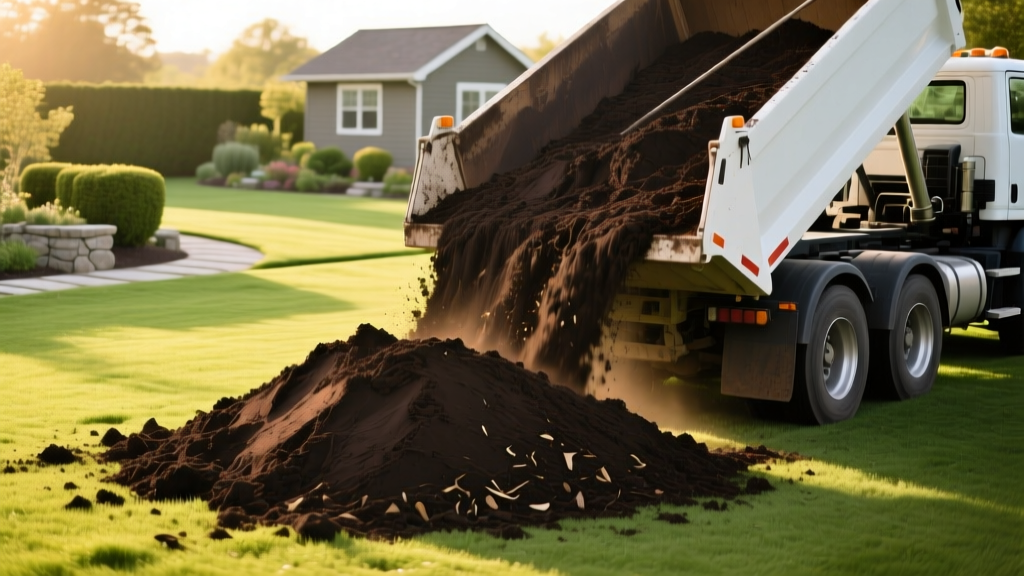
How Many Yards in a Dump Truck of Soil? Coverage & Cost Guide
When ordering bulk materials for landscaping or raised bed construction, understanding exactly how many yards in a dump truck of soil is critical for budgeting and project planning. A standard tandem-axle dump truck typically carries between 10 and 14 cubic yards of soil. However, capacity varies significantly based on the truck classification, the specific type of soil being hauled, and local weight restriction laws.
Ordering too little delays your project, while ordering too much leaves you with heavy, immovable piles of dirt that can damage your lawn or driveway. This guide breaks down exact truck capacities, 2026 bulk soil pricing, coverage mathematics, and the structural weight limits you must consider before scheduling a delivery.
Quick Reference: Dump Truck Soil Capacities
- Single-Axle Dump Truck: 5 to 7 cubic yards
- Standard Tandem-Axle Dump Truck: 10 to 14 cubic yards
- Super Dump Truck: 15 to 25 cubic yards
- Transfer Dump Truck (Trailer): 20 to 30+ cubic yards
Dump Truck Sizes and Soil Capacity Breakdown
The term 'dump truck' encompasses several vehicle classes. Hauling companies dispatch specific trucks based on your total yardage and the accessibility of your drop site. According to the United States Department of Agriculture (USDA), soil composition and moisture content heavily dictate transport logistics, meaning trucks are often limited by weight before they are limited by physical bed volume.
| Truck Type | Bed Dimensions (L x W x H) | Cubic Yards | Max Payload (Tons) |
|---|---|---|---|
| Single-Axle | 10' x 7' x 2.5' | 5 - 7 | 5 - 8 |
| Tandem-Axle (Standard) | 14' x 8' x 3.5' | 10 - 14 | 12 - 15 |
| Super Dump | 18' x 8' x 4' | 15 - 25 | 20 - 25 |
| Transfer Dump | Truck + 16' Trailer | 20 - 30+ | 25 - 30 |
Calculating Your Soil Needs: The Coverage Formula
Knowing how many yards in a dump truck of soil is only half the equation; you must accurately calculate your project's requirements. One cubic yard equals 27 cubic feet. The standard coverage rule is that one cubic yard of soil will cover 100 square feet at a depth of 3 inches.
The Mathematical Formula
To find your exact cubic yardage, use this formula:
(Length in feet × Width in feet × Depth in feet) ÷ 27 = Cubic Yards
Example: You are filling three raised garden beds that are 4 feet wide, 8 feet long, and 1.5 feet (18 inches) deep.
- Volume of one bed: 4 × 8 × 1.5 = 48 cubic feet.
- Total volume for three beds: 48 × 3 = 144 cubic feet.
- Cubic yards needed: 144 ÷ 27 = 5.33 cubic yards.
The 15% Compaction Rule
Bulk soil is aerated during the loading process at the supply yard. Once dumped, watered, and tamped down, it will settle significantly. Always add a 10% to 15% compaction buffer to your final calculation. For the 5.33 cubic yard raised bed example above, you should order 6.1 cubic yards to ensure the beds are completely full after settling.
2026 Bulk Soil Delivery Cost Analysis
Bulk soil pricing fluctuates based on regional availability, the specific blend you choose, and fuel surcharges. As of 2026, here is what homeowners can expect to pay for bulk soil deliveries from local landscape supply yards.
- Screened Topsoil: $25 to $45 per cubic yard. Best for general grading, filling low spots, and establishing new lawns.
- Premium Garden Blend (Topsoil + Compost): $40 to $75 per cubic yard. Pre-mixed with organic matter, ideal for vegetable gardens and raised beds.
- Fill Dirt: $10 to $20 per cubic yard. Unscreened, high-clay content subsoil used strictly for structural filling and grading, not for planting.
- Delivery Fees: $75 to $150 flat rate for local deliveries (usually within a 10 to 15-mile radius of the supply yard). Some yards waive the delivery fee if you order 10+ cubic yards.
When comparing bulk delivery to bagged soil from a big-box store, the savings are massive. A standard 1.5 cubic foot bag of garden soil costs around $4.00. To equal one cubic yard (27 cubic feet), you would need 18 bags, totaling $72.00. Ordering bulk premium blend at $50 per yard yields a 30% savings before factoring in the convenience of not hauling dozens of plastic bags.
Weight Limits and Driveway Damage Risks
The Environmental Protection Agency (EPA) highlights that soil density varies wildly based on moisture content and organic makeup. This directly impacts the structural load placed on your property during delivery.
One cubic yard of dry, screened topsoil weighs approximately 2,000 pounds (1 ton). However, if the soil is wet or has a high clay and compost content, that same cubic yard can weigh up to 2,700 pounds. A standard 10-yard dump truck delivery can easily drop 10 to 13.5 tons of material onto your driveway.
Protecting Your Property
- Concrete Driveways: Standard 4-inch thick residential concrete can usually support a fully loaded tandem-axle dump truck, provided the truck does not drop the payload and drive forward, which creates immense shear force.
- Asphalt Driveways: Asphalt is highly susceptible to cracking and sinking under 13-ton loads, especially in warm weather when the binder softens. Require the driver to dump the load on the street or directly on the lawn.
- Septic Systems: Never allow a loaded dump truck to drive over or dump soil near a septic tank or drain field. The extreme point-load weight can crush subterranean tanks and compact the leach field.
Pro Tips for Ordering and Receiving Bulk Soil
Executing a smooth bulk soil delivery requires precise site preparation. Follow this checklist to avoid common logistical failures:
- Mark Underground Utilities: Call 811 before the truck arrives to mark shallow irrigation lines, gas lines, and buried internet cables. The vibration of a heavy truck can damage shallow PVC irrigation pipes.
- Lay Down a Tarp: If the soil must be dumped on a driveway or street, lay down a heavy-duty 10x12 foot poly tarp. This prevents the soil from staining concrete and makes shoveling the pile significantly easier.
- Use Plywood for Soft Ground: If the truck must drive onto a soft lawn to drop the load, lay down 3/4-inch CDX plywood sheets to distribute the tire weight and prevent deep ruts.
- Verify the Moisture Content: Call the supplier the morning of delivery. If it rained heavily the night before, the soil will be saturated, heavier, and prone to severe clumping. Reschedule if you are planning to screen or till the soil immediately.
Frequently Asked Questions
Can a dump truck dump soil over a fence?
Standard dump trucks can elevate their beds to a height of about 10 to 12 feet. If you have a standard 6-foot privacy fence, the driver can often elevate the bed and drop the soil directly over the fence into your backyard, provided there are no overhead power lines or tree branches blocking the bed's ascent.
How many wheelbarrows are in a cubic yard of soil?
A standard contractor-grade wheelbarrow holds about 6 cubic feet when filled to the brim. Therefore, one cubic yard (27 cubic feet) equals roughly 4.5 full wheelbarrow loads. A 10-yard dump truck delivery will require approximately 45 wheelbarrow trips to move manually.
Is it cheaper to buy soil in bulk or in bags?
Bulk soil is almost always cheaper for projects requiring more than 2 cubic yards. While bagged soil offers convenience for tiny container gardens, the per-cubic-foot cost of bagged soil is 40% to 60% higher than bulk delivery once you factor in retail markups, though you save on the flat-rate delivery fee for very small quantities.

