
Gardening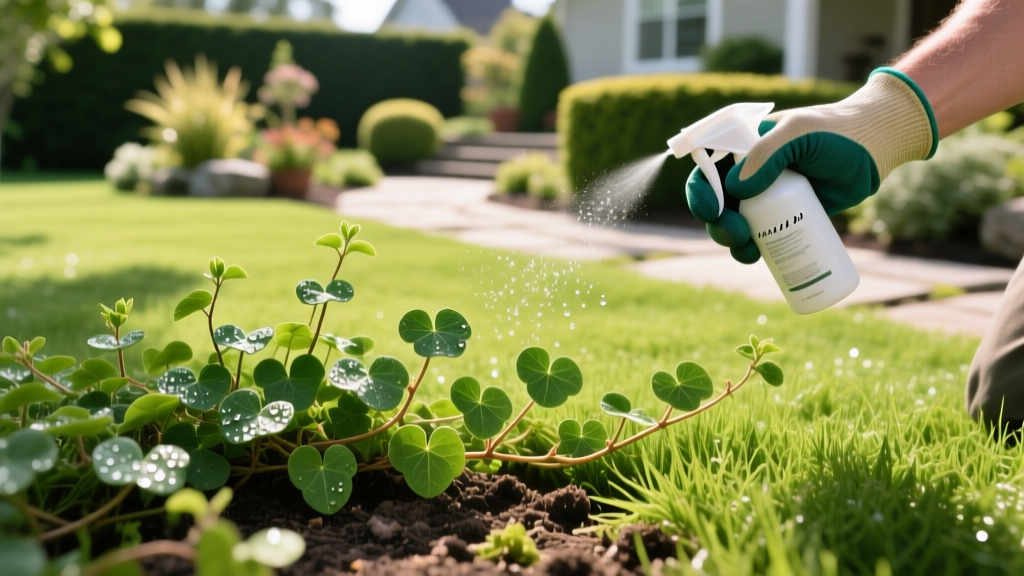
How Do You Get Rid of Ground Ivy? Proven Spot-Treatment Strategies
Understanding the Enemy: Why Creeping Charlie is So Stubborn
Ground ivy (Glechoma hederacea), widely known as Creeping Charlie, is a perennial broadleaf weed in the mint family. If you crush its scalloped leaves, it emits a distinct minty odor, but its aggressive growth habit is anything but pleasant for turfgrass enthusiasts. When homeowners ask, "how do you get rid of ground ivy permanently?", the answer requires understanding its dual reproductive biology.
Ground ivy spreads via two mechanisms: above-ground stolons (runners) and below-ground rhizomes. Every single node (joint) along these stems can take root, anchor into the soil, and spawn a new plant. If you merely pull the vines or apply a contact herbicide that only burns the foliage, the surviving root nodes will regenerate the weed within weeks. Furthermore, its waxy leaf cuticle repels water-based sprays, making adjuvants a mandatory component of any chemical treatment plan.
The Borax Myth: A Warning Against Internet Hacks
⚠️ CRITICAL WARNING: Avoid the popular internet remedy of mixing Borax (sodium borate) with water to kill ground ivy. While high concentrations of boron will indeed kill the weed, it also creates severe soil toxicity. Boron does not break down easily and will prevent grass or any other plants from growing in that spot for years. According to the Iowa State University Extension, borax treatments are not recommended for residential lawn care due to the long-term damage to soil health.
When to Treat: The Fall Advantage
Timing is the most common failure point in ground ivy eradication. Most homeowners attempt treatment in mid-summer when the weed is most visible. This is a mistake. Summer heat causes herbicides to volatilize (evaporate into the air), damaging surrounding desirable plants and reducing efficacy.
The optimal window for systemic herbicide application is early fall (September through November). During this period, ground ivy is actively pulling carbohydrates down into its root system to prepare for winter dormancy. Systemic herbicides applied to the leaves will hitch a ride on this nutrient flow, traveling deep into the rhizomes and killing the root nodes. A secondary, lighter application can be done in spring (April to May) to catch any late germinators before they flower and set seed.
Chemical Spot-Treatments: Active Ingredients That Actually Work
Standard 2,4-D herbicides, which work well on dandelions and plantain, are largely ineffective against ground ivy when used alone. To successfully eradicate Glechoma hederacea, you need products containing Triclopyr or a specialized three-way blend that includes Carfentrazone for rapid burn-down alongside systemic translocators.
| Active Ingredient | Efficacy on Ground Ivy | Action Type | Example Product |
|---|---|---|---|
| Triclopyr | Excellent (Gold Standard) | Systemic | Ortho WeedClear for Tough Weeds |
| Carfentrazone-ethyl | Very Good (Fast Burn) | Contact + Systemic | SpeedZone Broadleaf Herbicide |
| 2,4-D + Dicamba + MCPP | Moderate (Requires Repeat) | Systemic | Trimec Classic |
| Quinclorac | Poor (For Grassy Weeds) | Systemic | Drive XLR8 |
Pro-Grade Application Protocol
For severe infestations, professional-grade concentrates yield the best results. SpeedZone (containing 2,4-D, MCPP, Dicamba, and Carfentrazone) typically costs around $65 for a 16 oz bottle, which treats up to 22,000 square feet.
- Mix the Solution: In a 1-gallon pump sprayer, combine 1.5 fluid ounces of SpeedZone with 1 gallon of water.
- Add a Surfactant: Ground ivy leaves are hydrophobic. Add 0.5 teaspoons (approx. 2.5 ml) of a non-ionic surfactant (like Southern Ag Surfactant, ~$12/bottle) to break the water's surface tension and ensure the herbicide coats the waxy leaves.
- Spot Spray: Apply directly to the ground ivy patches until the leaves are wet but not dripping. Avoid broadcast spraying if the infestation is localized to save money and protect soil biology.
- Wait: Do not mow the lawn for 48 hours before or 48 hours after application. Do not water the lawn for 24 hours post-application to allow the chemical to translocate.
Organic and Manual Eradication Protocols
If you maintain an organic lawn or are treating areas near sensitive vegetable gardens where chemical drift is a concern, manual and organic methods are viable, though they demand significantly more labor and patience. The University of Wisconsin-Madison Extension notes that organic control relies heavily on physical removal and altering the environment to favor turfgrass over weeds.
Step-by-Step Hand-Pulling (The Node Rule)
Hand-pulling is only effective if you extract the nodes. Wait for a heavy rain or irrigate the area deeply the night before. Wet soil loosens the grip on the rhizomes. Use a specialized tool like a CobraHead weeder or a dandelion fork to slide under the stolon, lifting it gently. If the vine snaps, use the fork to dig out the remaining node in the soil. Dispose of all plant material in municipal yard waste bags; never compost ground ivy, as home compost piles rarely reach the 140°F+ temperatures required to kill the rhizomes.
Smothering and Solarization
For dense mats of ground ivy where the underlying grass is already dead, smothering is highly effective. Mow the area as low as your mower will allow. Cover the patch with overlapping layers of heavy, uncoated brown cardboard. Top the cardboard with 3 to 4 inches of arborist wood chips or compost. Leave this barrier in place for a minimum of 8 to 10 weeks. The lack of sunlight will starve the root system, and the cardboard will eventually decompose, leaving you with a clean, weed-free bed ready for sod or seed.
The Reality of Horticultural Vinegar
Many organic gardeners turn to 20% or 30% acetic acid (horticultural vinegar). While this will rapidly burn down the foliage of ground ivy within hours, it is strictly a contact herbicide. It will not penetrate the soil to kill the rhizomes. To achieve full eradication with vinegar, you must reapply every 7 to 10 days for 4 to 6 cycles to exhaust the plant's root energy reserves. Furthermore, 20% acetic acid is highly corrosive and requires full PPE (goggles, respirator, heavy gloves) to apply safely.
Post-Eradication: Reclaiming the Bare Spots
Ground ivy thrives in thin, shaded, and poorly drained turf. Eradicating the weed is only half the battle; if you do not fix the underlying environmental deficit, the ivy will return from neighboring properties via wind-blown seeds or creeping stolons.
- Aerate and Top-Dress: Ground ivy loves compacted, moist soil. Core aeration improves drainage and oxygen flow to grass roots.
- Overseed with Shade-Tolerant Grass: If the area is shaded, overseed with Fine Fescue or a shade-tolerant Tall Fescue blend 14 days after your final herbicide application (always verify the reseeding interval on your specific herbicide label).
- Adjust Mowing Height: Raise your mower deck to 3.5 or 4 inches. Taller grass blades cast deeper shade on the soil surface, physically blocking sunlight from reaching creeping weed stolons.
Ground Ivy Treatment FAQ
Will ground ivy kill my grass completely?
Ground ivy does not typically produce allelopathic chemicals that poison grass. Instead, it outcompetes turfgrass for sunlight, water, and soil nutrients, eventually forming a dense mat that chokes out thin or weak grass blades.
Can I use a weed-and-feed product to kill ground ivy?
Most granular weed-and-feed products rely on 2,4-D and MCPP, which are too weak to kill established ground ivy. Liquid spot-treatments containing Triclopyr or Carfentrazone are vastly superior for this specific weed.
How long does it take for systemic herbicides to show results?
Systemic herbicides like Triclopyr take time to move through the plant's vascular system. You will typically see leaf curling and yellowing within 7 to 10 days, with complete browning and root death occurring within 21 to 28 days, according to research from the University of Minnesota Extension. Patience is critical; do not reapply prematurely.

