
Gardening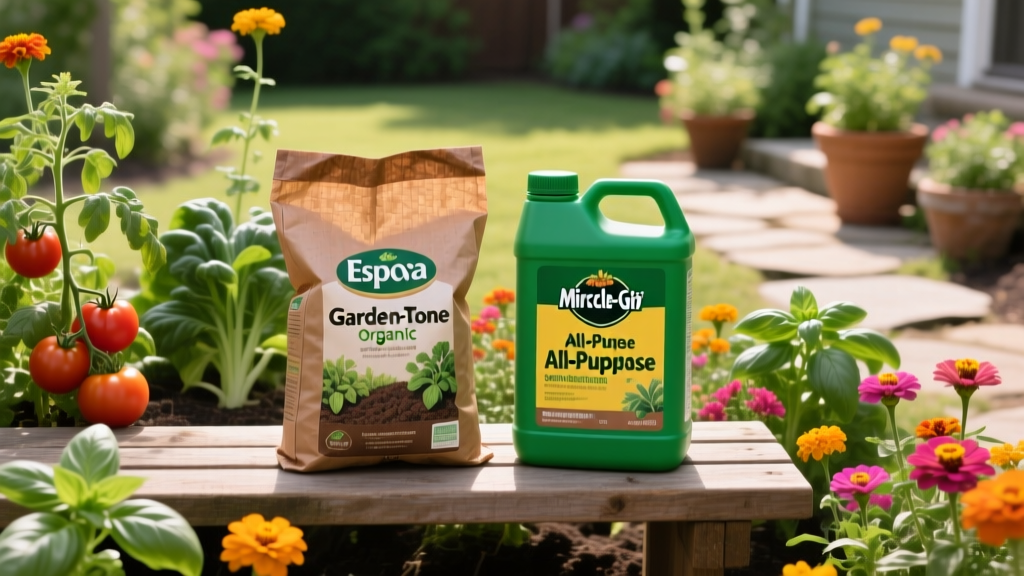
Espoma Garden-tone vs Miracle-Gro: Which Fertilizer Wins?
Robert HayesPublished
The Great Fertilizer Debate: Organic vs. Synthetic
When planning your vegetable patch or flower beds, selecting the right fertilizer is one of the most critical decisions you will make. The market is saturated with options, but the debate almost always boils down to two distinct philosophies: slow-release organic amendments versus fast-acting synthetic nutrients. For decades, home gardeners have found themselves caught in the crossfire between two of the most popular products on the market: Espoma Garden-tone and Miracle-Gro All Purpose Plant Food.
Both products promise lush foliage, vibrant blooms, and bountiful harvests, but they achieve these results through fundamentally different mechanisms. Understanding the chemical composition, soil impact, and long-term viability of each product is essential for any serious gardener. In this comprehensive comparison, we will break down the science, cost, and practical application of Espoma Garden-tone versus Miracle-Gro to help you decide which fertilizer deserves a spot in your garden shed.
Product A: Espoma Garden-tone (4-6-6) Profile
Espoma Garden-tone is a premier organic fertilizer designed specifically for vegetable and herb gardens. With an NPK (Nitrogen-Phosphorus-Potassium) ratio of 4-6-6, it provides a balanced, gentle dose of macronutrients that won't burn delicate plant roots. What sets Garden-tone apart is its complex ingredient list and the inclusion of Espoma's proprietary 'Biotone' microbes.
- Primary Ingredients: Feather meal, bone meal, alfalfa meal, greensand, humates, and sulfate of potash.
- Release Rate: Slow-release. Nutrients are broken down by soil microbes over 4 to 6 weeks.
- Soil Impact: Actively builds soil structure, increases cation exchange capacity (CEC), and feeds the soil food web.
- Pros: Environmentally friendly, virtually impossible to over-apply, improves long-term soil health, safe for pets and wildlife.
- Cons: Takes longer to show visible results, has a strong earthy odor upon application, requires soil moisture and warmth to activate.
Product B: Miracle-Gro All Purpose (24-8-16) Profile
Miracle-Gro All Purpose Plant Food is the quintessential synthetic fertilizer. Boasting a high NPK ratio of 24-8-16, it is engineered for immediate nutrient uptake. The nutrients are derived from highly soluble synthetic salts, meaning they dissolve instantly in water and are available to plant roots the moment they are applied.
- Primary Ingredients: Urea, ammonium phosphate, potassium chloride, and chelated micronutrients.
- Release Rate: Fast-acting. Nutrients are available immediately but deplete within 1 to 2 weeks.
- Soil Impact: Feeds the plant directly but does nothing to improve soil structure; can lead to salt accumulation over time.
- Pros: Rapid visible results (often within days), highly concentrated, easy to mix and apply via watering can or hose-end sprayer.
- Cons: High risk of fertilizer burn if over-applied, requires frequent reapplication, can harm beneficial soil microbes, contributes to nutrient runoff.
Head-to-Head Comparison Chart
| Feature | Espoma Garden-tone (4-6-6) | Miracle-Gro All Purpose (24-8-16) |
|---|---|---|
| Fertilizer Type | Organic / Slow-Release Granular | Synthetic / Water-Soluble Powder |
| Nutrient Source | Plant and animal byproducts, mined minerals | Chemically synthesized salts and urea |
| Application Frequency | Every 4 to 6 weeks | Every 1 to 2 weeks |
| Risk of Root Burn | Extremely Low | High (if mixed incorrectly) |
| Soil Microbiome Impact | Enhances microbial activity | Can suppress microbial life via salt buildup |
| Average Cost | ~$15.00 for 4 lbs | ~$8.00 for 1.5 lbs |
Nutrient Delivery and Soil Microbiology
The most profound difference between these two products lies in how they interact with the soil ecosystem. According to research published by the University of Minnesota Extension, synthetic fertilizers like Miracle-Gro bypass the soil food web entirely. Because they are already in a soluble, ionic form, plant roots absorb them immediately. While this results in a rapid flush of green growth, it treats the soil merely as a sterile sponge holding the plant upright.
Conversely, organic fertilizers like Espoma Garden-tone rely on the soil's biological activity. The feather meal and bone meal must be decomposed by bacteria and fungi before the nitrogen and phosphorus become available to the plant. This process feeds the soil microbiome, encouraging the growth of mycorrhizal fungi that extend the plant's root system. Over multiple seasons, the organic matter in Garden-tone improves soil aeration, water retention, and drainage—benefits that synthetic salts simply cannot provide.
'Feeding the soil, rather than just feeding the plant, is the cornerstone of sustainable gardening. Organic amendments build a resilient ecosystem that can buffer plants against drought and disease.' - Principles of Sustainable Soil Management
Application Strategies and Timing
To get the most out of either product, you must adhere to specific application protocols. Timing and measurements are critical to avoid nutrient deficiencies or toxicities.
How to Apply Espoma Garden-tone
Because Garden-tone is slow-release, it should be incorporated into the soil prior to planting or scratched into the top inch of soil around established plants. For a standard 4x8 foot raised bed, you will need approximately 3 pounds of granular fertilizer per 100 square feet. This translates to roughly 1 pound for a 32-square-foot bed. Scratch the granules into the top 2 inches of soil and water deeply to activate the Biotone microbes. Reapply every 4 to 6 weeks during the active growing season.
How to Apply Miracle-Gro All Purpose
Miracle-Gro requires precise dilution. The standard measurement is 1 tablespoon of powder per 1 gallon of water. Apply this solution directly to the base of the plant, avoiding the foliage to prevent fungal diseases and leaf burn. Because the nutrients leach through the soil quickly with regular watering, you must reapply every 7 to 14 days. For heavy feeders like tomatoes and peppers, the frequent application schedule can become labor-intensive.
Cost Analysis Over a Growing Season
At first glance, Miracle-Gro appears to be the more economical choice. A 1.5 lb box costs around $8, while a 4 lb bag of Espoma Garden-tone costs around $15. However, analyzing the cost over a 5-month growing season reveals a different story.
Because Miracle-Gro must be applied every two weeks, a diligent gardener will make roughly 10 applications over the season. For a moderate-sized garden, you may go through two boxes ($16 total). Espoma Garden-tone, requiring only 3 to 4 applications over the same period, will use roughly half a bag ($7.50 worth of product). When factoring in the long-term cost savings of reduced water usage and decreased need for soil amendments due to improved soil structure, the organic option often proves more cost-effective over a multi-year horizon.
Environmental Impact and Salt Buildup
The environmental footprint of your fertilizer choice extends beyond your property line. The Penn State Extension warns that the highly soluble nature of synthetic fertilizers makes them prone to leaching. When heavy rains occur shortly after a Miracle-Gro application, excess nitrogen and phosphorus can wash into local waterways, contributing to algal blooms and aquatic dead zones.
Furthermore, the repeated use of synthetic salts alters the soil's pH and chemistry. Over time, gardeners relying exclusively on water-soluble synthetics often notice a white, crusty residue on the soil surface. This is salt accumulation, which can cause osmotic stress in plants, making it difficult for roots to absorb water even when the soil is moist. Espoma's organic ingredients do not leave behind harmful salt residues, making it the superior choice for container gardening and raised beds where drainage is limited and salt buildup is a primary concern.
The Final Verdict: Which Should You Choose?
The decision between Espoma Garden-tone and Miracle-Gro All Purpose ultimately depends on your gardening goals, timeline, and philosophy.
Choose Miracle-Gro if: You are growing short-season crops that need an immediate nutrient boost, you are trying to rescue severely nutrient-deficient plants, or you need a fast-acting liquid feed for container annuals that are discarded at the end of the season.
Choose Espoma Garden-tone if: You are building a long-term vegetable garden, you want to improve your native soil structure, you prefer an environmentally sustainable approach, and you want to reduce the frequency of your fertilizer applications.
For the vast majority of home gardeners focused on growing healthy, resilient vegetables and perennials, Espoma Garden-tone is the clear winner. By investing in the soil microbiome, you create a self-sustaining environment that will yield healthier plants and richer harvests for years to come.