
Gardening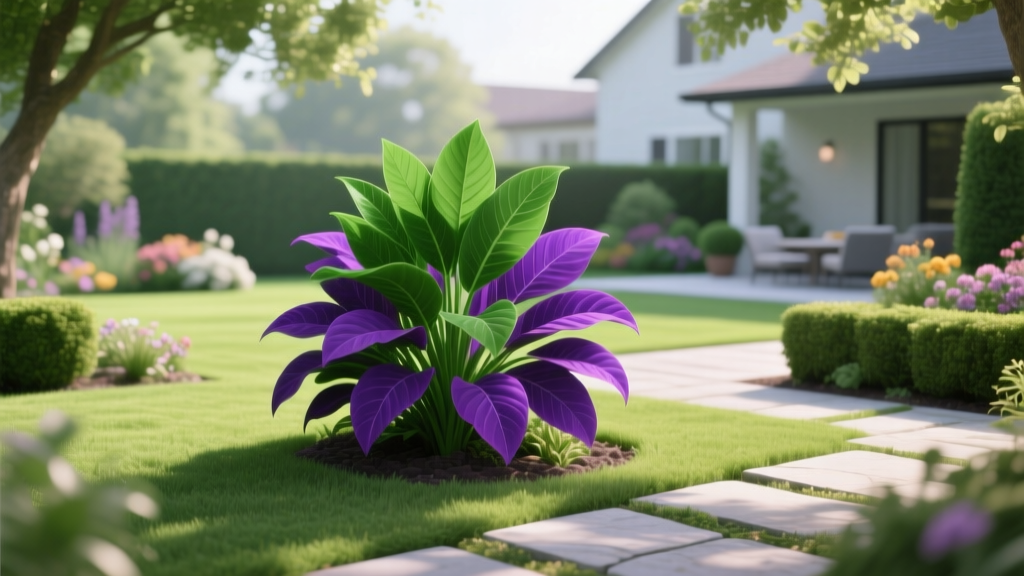
Establishing a Green Plant With Purple Foliage Outdoors
The Biology of Bicolor Foliage
When gardeners search for a striking green plant with purple accents, they are typically looking for foliage that expresses high concentrations of anthocyanins. These water-soluble vacuolar pigments mask the underlying green chlorophyll, creating vibrant gradients, purple undersides, or deep violet venation. Successfully establishing these bicolor specimens outdoors requires more than just digging a hole and watering; it demands precise calibration of light exposure, soil chemistry, and thermal regulation to maintain the delicate pigment balance.
Unlike solid green plants that thrive on heavy nitrogen and full sun, purple-variegated cultivars operate under different physiological rules. Excessive direct UV radiation can bleach the anthocyanins in shade-tolerant species, while insufficient light causes etiolation and a reversion to solid green as the plant desperately produces more chlorophyll to survive. This guide details the exact establishment protocols for the most reliable purple-foliage perennials and annuals used in modern landscape design.
Cultivar Selection Matrix
Before breaking ground, you must select the right species for your specific microclimate. The following matrix compares the four most reliable options for gardeners seeking a green plant with purple characteristics, based on data compiled from the Missouri Botanical Garden Plant Finder and regional extension trials.
| Botanical Name | Common Name | Light Requirement | Mature Spread | USDA Hardiness |
|---|---|---|---|---|
| Strobilanthes dyerianus | Persian Shield | Dappled Shade / Part Sun | 24 - 36 inches | Zones 9-11 (Annual elsewhere) |
| Tradescantia pallida | Purple Heart | Full Sun to Light Shade | 12 - 18 inches | Zones 7-10 |
| Hemigraphis alternata | Waffle Plant | Bright Indirect / Shade | 12 - 24 inches | Zones 10-11 |
| Gynura aurantiaca | Purple Passion | Part Sun (Morning only) | 18 - 24 inches | Zones 10-12 |
Soil Chemistry: Maximizing Purple Pigmentation
The intensity of purple coloration is directly tied to soil pH and phosphorus availability. Anthocyanin biosynthesis is upregulated when plants experience mild phosphorus stress or when soil pH optimizes nutrient uptake. According to research highlighted by the Royal Horticultural Society, maintaining a slightly acidic soil environment is critical for these specific cultivars.
- Target pH: 6.0 to 6.5. At this range, iron and phosphorus remain highly bioavailable without triggering toxicity.
- Phosphorus Amendment: Incorporate organic bone meal (typically a 4-12-0 NPK ratio) into the backfill soil at a rate of 2 tablespoons per gallon of soil volume. Phosphorus directly supports the metabolic pathways that produce purple pigments.
- Organic Matter: Mix 30% aged pine bark fines into the native soil. This improves drainage while slowly lowering the pH, preventing the root rot that frequently kills Strobilanthes and Hemigraphis in heavy clay beds.
The 5-Step Establishment Protocol
Follow this exact sequence when transplanting nursery-grown specimens into your garden beds to minimize transplant shock and preserve existing foliage color.
Step 1: Thermal Hardening Off
Nursery plants are grown in controlled greenhouses. Move your plants to a shaded outdoor staging area for 7 to 10 days before planting. Expose them to 2 hours of morning sun daily, increasing by 1 hour each day. This thickens the leaf cuticle and prevents immediate UV scorch upon final planting.
Step 2: Precision Trenching
Dig a planting hole exactly 1.5 times wider than the nursery pot, but no deeper than the root ball's height. Planting a green plant with purple leaves too deep buries the crown, inviting fungal pathogens like Pythium to destroy the stem base. Score the sides of the hole with a hand trowel to break up glazed soil walls, allowing lateral root expansion.
Step 3: Root Teasing and Placement
Gently tease the outer roots outward. If the plant is severely root-bound, use a sterile knife to make three vertical slices along the root ball's exterior. Set the plant in the hole so the soil line on the stem matches the surrounding grade perfectly.
Step 4: Targeted Hydration
Backfill halfway with your amended soil, then water deeply to collapse air pockets. Finish backfilling and water again using a liquid kelp extract solution (0-0-1 NPK). The cytokinins in kelp extract stimulate immediate root hair development and drastically reduce wilting in the first 48 hours.
Step 5: Mulching for Moisture Retention
Apply a 2-inch layer of shredded hardwood mulch around the base, keeping it strictly 3 inches away from the main stem. This conserves soil moisture without creating a damp microclimate against the crown.
Troubleshooting: Color Fade and Reversion
Even with perfect planting, environmental factors can alter foliage expression. Use this diagnostic framework to correct issues in the first 60 days of establishment.
Warning: Nitrogen Toxicity and Reversion
Applying high-nitrogen synthetic fertilizers (like a 20-5-5 blend) forces rapid vegetative growth. The plant will prioritize chlorophyll production over anthocyanins to support the new tissue, causing your purple foliage to revert to solid green. Always use slow-release, low-nitrogen organic amendments for bicolor foliage plants.
Applying high-nitrogen synthetic fertilizers (like a 20-5-5 blend) forces rapid vegetative growth. The plant will prioritize chlorophyll production over anthocyanins to support the new tissue, causing your purple foliage to revert to solid green. Always use slow-release, low-nitrogen organic amendments for bicolor foliage plants.
Diagnosing Sun Scorch vs. Light Starvation
If the leaves of your Strobilanthes dyerianus (Persian Shield) develop crispy, bleached margins, it is receiving too much direct afternoon UV radiation; relocate it to a spot with strict morning-only sun. Conversely, if the purple metallic sheen fades to a dull, muddy green and the internodes (spaces between leaves on the stem) stretch beyond 3 inches, the plant is light-starved. Move it to a brighter location or prune back overhead tree canopies to increase dappled light penetration.
Overwintering and Long-Term Maintenance
For gardeners in USDA Zones 8 and below, most purple-foliage tropicals will not survive freezing winter temperatures outdoors. According to Penn State Extension, proper overwintering techniques are essential for preserving these specimens year after year without repurchasing.
In late autumn, before the first frost, take 4-inch nodal cuttings from the healthiest stems. Strip the lower leaves, dip the cut ends in a 0.1% IBA (Indole-3-butyric acid) rooting hormone powder, and insert them into a sterile mix of 50% perlite and 50% peat moss. Keep the cuttings under a 6500K full-spectrum LED grow light for 14 hours a day, maintaining a humidity dome until roots emerge in 3 to 4 weeks. This guarantees you have vigorous, genetically identical stock ready to establish outdoors when soil temperatures warm to 65°F the following spring.

