
Gardening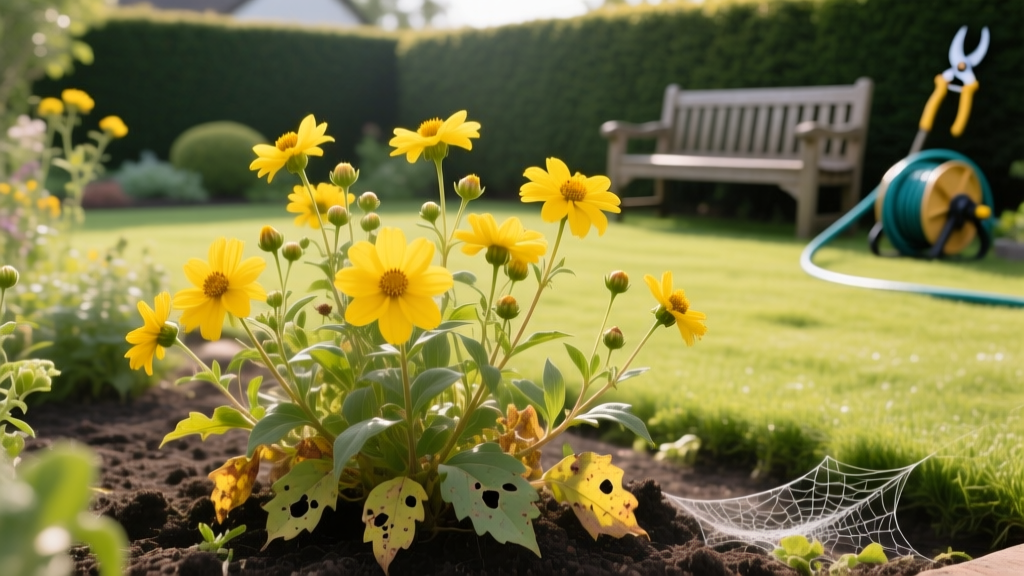
Why Your Yellow Flowers Perennials Are Fading: Diagnosis & Rescue
Watching vibrant yellow blooms lose their luster is one of the most frustrating experiences for a home gardener. When your prized yellow flowers perennials—such as Black-eyed Susans (Rudbeckia), Coreopsis, or Yarrow (Achillea)—begin to fade, develop necrotic spots, or produce distorted green petals, it is rarely a simple watering issue. These symptoms are distinct distress signals pointing to specific pathogen invasions, severe nutrient lockouts, or root-zone failures. Rather than applying a generic fertilizer and hoping for the best, successful rescue requires precise symptom diagnosis and targeted intervention.
Symptom-to-Cause Diagnostic Matrix
Before attempting any rescue, you must accurately identify the failure mode. Use this diagnostic matrix to match the visual symptoms on your yellow perennial flowers to their underlying causes.
| Visual Symptom | Probable Cause | Quick Verification Test |
|---|---|---|
| Petals turning green, deformed, and stunted | Aster Yellows (Phytoplasma) | Check for excessive leafy growth in the flower head (phyllody); no cure available. |
| Yellowing leaves with green veins (interveinal chlorosis) | Iron/Manganese Deficiency or High Soil pH | Test soil pH; if above 7.0, nutrients are locked out despite being present in soil. |
| Brown/black angular spots on lower leaves | Septoria Leaf Spot or Botrytis Blight | Inspect spots for tiny black fruiting bodies (pycnidia) using a 10x jeweler's loupe. |
| Sudden wilting, stem collapse, dark crown | Phytophthora or Verticillium Root/Crown Rot | Scratch the lower stem; if the inner tissue is dark brown and mushy, root rot is present. |
| Faded, washed-out yellow petals, weak stems | Potassium (K) Deficiency or Excessive Nitrogen | Review recent fertilizer applications; high N forces foliage at the expense of bloom pigmentation. |
Aster Yellows: The Silent Killer of Yellow Perennials
One of the most devastating issues specifically affecting yellow-blooming perennials like Echinacea and Rudbeckia is Aster Yellows. Transmitted by leafhoppers, this phytoplasma disease hijacks the plant's vascular system. The hallmark symptom is phyllody—where floral parts mutate into green, leaf-like structures. According to plant pathology research from the University of Minnesota Extension, there is no chemical cure for Aster Yellows once a plant is infected. The phytoplasma overwinters in the crown and roots.
Critical Action: If your yellow flowers perennials exhibit green, deformed flower cones, do not attempt to prune the affected blooms. The entire plant is systemically infected. Dig up and destroy the entire plant, including the root system, in the municipal trash (never the compost pile) to prevent leafhoppers from spreading the pathogen to neighboring Coreopsis or Yarrow.
Step-by-Step Rescue Protocol for Fading Blooms
If your diagnosis points to abiotic stress (soil/pH issues) or treatable fungal pathogens, follow this targeted rescue protocol to save your perennials.
Step 1: Triage and Sanitation
For fungal issues like Septoria leaf spot, which commonly turns the lower leaves of Black-eyed Susans brown and causes the yellow petals to droop prematurely, sanitation is the first line of defense. Remove all infected foliage at the base of the plant. Do not compost this material. Sterilize your bypass pruners between cuts using a 10% bleach solution or 70% isopropyl alcohol to prevent cross-contamination.
Step 2: Targeted Biological and Chemical Interventions
Once the plant is pruned, apply a biological fungicide to protect the remaining healthy tissue. Products containing Bacillus subtilis (such as Serenade Garden) colonize the leaf surface and outcompete fungal spores. Apply at a rate of 4 tablespoons per gallon of water, coating both the upper and lower leaf surfaces until runoff. If the infection is severe, alternate with a copper-based fungicide like Bonide Liquid Copper (copper octanoate) at 2 tablespoons per gallon, but wait at least 7 days between biological and copper applications to avoid killing the beneficial bacteria.
Step 3: Soil Structure and pH Remediation
Yellow perennial flowers require a soil pH between 6.0 and 6.8 for optimal nutrient uptake. If a soil test reveals a pH above 7.2, iron and manganese become chemically locked in the soil, resulting in severe interveinal chlorosis that fades the overall vigor and bloom color of the plant.
- To lower pH: Apply elemental sulfur at a rate of 1.5 pounds per 100 square feet to drop the pH by roughly one full point. Incorporate it lightly into the top 2 inches of soil and water deeply.
- Immediate rescue: Elemental sulfur takes 3 to 6 months to oxidize and lower pH. For an immediate green-up and bloom rescue, apply a chelated iron foliar spray (Fe-EDDHA) directly to the leaves at dusk. The plant will absorb the iron within 48 hours, restoring chlorophyll production.
Preventative Cultivar Selection for 2026 and Beyond
The most effective long-term rescue fix is replacing chronically failing plants with disease-resistant cultivars. When replanting areas where yellow flowers perennials have succumbed to root rot or severe foliar diseases, avoid highly susceptible legacy varieties. For example, the older Rudbeckia fulgida 'Goldsturm' is notoriously susceptible to Septoria and Angular Leaf Spot. Instead, plant Rudbeckia 'American Gold Rush', which features narrower, hairy leaves that naturally repel moisture and resist fungal pathogens. The Royal Horticultural Society consistently highlights the importance of selecting resistant cultivars to reduce reliance on chemical fungicides in home landscapes.
Frequently Asked Questions
Why are my yellow perennial flowers turning pale and dropping petals early?
Premature petal drop and color fading are often caused by a potassium (K) deficiency or heat stress. Potassium regulates water pressure within plant cells and is vital for vibrant flower pigmentation. Apply a granular fertilizer with a high K ratio (such as a 5-10-15 NPK) in early spring, ensuring you provide at least 1 pound of actual potassium per 1,000 square feet.
Can over-mulching cause my yellow perennials to fade and wilt?
Yes. Piling mulch directly against the crown of perennials like Coreopsis or Yarrow creates a dark, moist environment that invites crown rot (Sclerotinia or Phytophthora). Always maintain a 2-inch mulch-free zone directly around the central stem to allow the crown to breathe and dry out between waterings.
How often should I divide my yellow-blooming perennials to maintain vigor?
Most yellow perennial flowers, including Rudbeckia and Coreopsis, require division every 3 to 4 years. When the center of the clump dies out (forming a donut shape) and the outer edges produce smaller, faded blooms, it is time to divide. Dig up the entire clump in early fall, use a sharp spade to cut away the dead center, and replant the vigorous outer sections in amended soil.

