
Gardening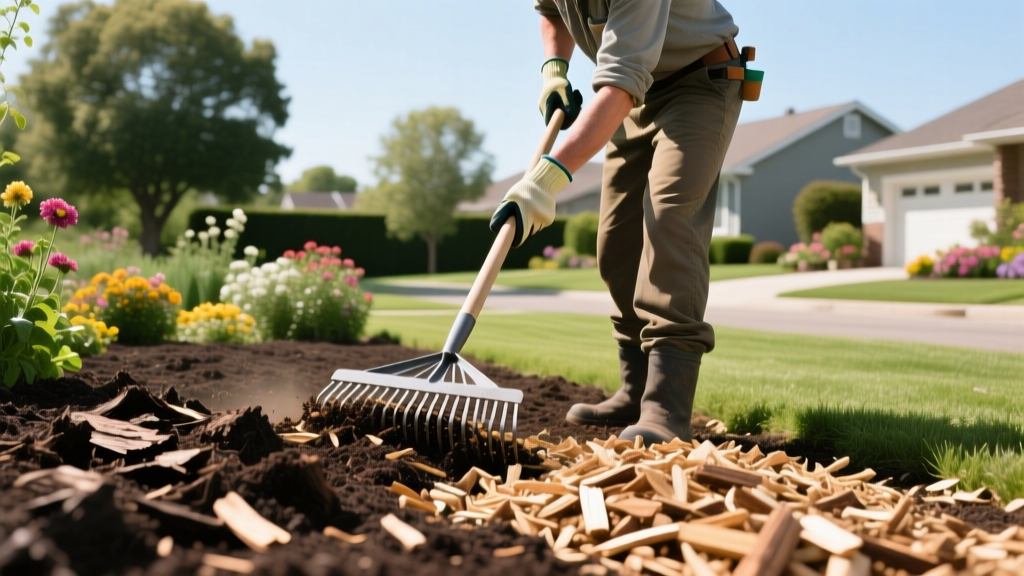
Where to Find Free Mulch and Apply It Safely in Gardens
The True Cost of Bagged Mulch vs. Free Bulk Chips
Mulching a standard 100-square-foot garden bed to a depth of 3 inches requires exactly one cubic yard of material. In 2026, premium bagged hardwood mulch retails for $4.50 to $6.00 per 2-cubic-foot bag at major home improvement centers. That equates to 13.5 bags and an out-of-pocket cost of $60 to $81 per bed. For a multi-bed landscape, this expense compounds rapidly. Conversely, bulk arborist wood chips—often available entirely for free—provide superior moisture retention, weed suppression, and long-term soil carbon building. The challenge is not just sourcing the material, but evaluating its biological safety and applying it correctly to avoid allelopathic toxicity or nitrogen immobilization.
Top 4 Sources to Score Free Mulch Locally
Securing free mulch requires tapping into municipal and commercial waste streams where wood disposal is a liability rather than a product. Here is how to access them:
- Arborist Drop Networks: Platforms like Get Chip Drop connect homeowners with local tree care companies looking to offload truckloads of wood chips. While the basic drop is free, paying a $20 to $40 priority fee guarantees a delivery within a specific timeframe and allows you to specify chip volume.
- Municipal Yard Waste Facilities: Many county solid waste departments process residential brush into compost and mulch. Residents can often load their trucks for free or a nominal $10 fee. Call your local public works department to ask about "screened" vs. "unscreened" mulch availability.
- Utility Line Clearance Crews: Companies contracted by power companies to clear rights-of-way generate massive amounts of chipped brush. If you live near a utility easement, flag down a crew and offer your driveway as a drop site. This material is heavily leafy and breaks down faster than trunk wood.
- Direct Arborist Networking: Search for local tree removal companies on community boards. Offer them a guaranteed, accessible drop zone (minimum 15x15 feet, clear of overhead wires) in exchange for free dumping. Arborists pay $30 to $50 per ton at landfills; giving it to you saves them money.
Pro Tip: The Drop Zone Requirement
Arborists drive 15-ton dump trucks. Your drop zone must be a hard surface (concrete or asphalt) or a reinforced gravel pad that can support extreme weight without sinking. Never direct a chip drop onto soft lawn grass or over septic drain fields, as the compaction and weight will cause severe structural damage.
Arborists drive 15-ton dump trucks. Your drop zone must be a hard surface (concrete or asphalt) or a reinforced gravel pad that can support extreme weight without sinking. Never direct a chip drop onto soft lawn grass or over septic drain fields, as the compaction and weight will cause severe structural damage.
Mulch Safety Matrix: Accept vs. Reject
Not all wood chips are safe for garden use. Certain species contain allelopathic chemicals that actively inhibit the growth of neighboring plants, while others pose toxicity risks for edible gardens. Use this matrix to evaluate a load before spreading it.
| Wood Type | Source / Origin | Safety Rating | Action Required |
|---|---|---|---|
| Black Walnut (Juglans nigra) | Eastern/Midwestern US urban forestry | Reject | Contains juglone; highly toxic to tomatoes, peppers, and apples. Compost for 2 years before use. |
| Oleander (Nerium oleander) | Southwestern US / California utility clearing | Reject | All parts are highly toxic if ingested. Never use in edible gardens or areas where pets forage. |
| Mixed Hardwood Arborist Chips | Residential tree removals | Accept | Ideal C:N ratio. Varied particle sizes create excellent water infiltration and weed blocking. |
| Fresh Pine / Cedar | Southern US / Pacific Northwest forestry | Conditional | Highly acidic and slow to break down. Best reserved for acid-loving perennials (azaleas, blueberries). |
Debunking the Nitrogen-Robbing Myth
A persistent gardening myth claims that fresh wood chips will "rob" your soil of nitrogen, starving plant roots. According to extensive soil science research cited by the University of Minnesota Extension, this is a fundamental misunderstanding of microbial carbon-to-nitrogen (C:N) ratios.
Wood chips have a C:N ratio of approximately 400:1. Soil microbes require a 24:1 ratio to decompose organic matter. When microbes process the chips, they do pull nitrogen from their immediate environment to balance their diet. However, this nitrogen immobilization occurs only at the soil-mulch interface—the top quarter-inch where the wood touches the dirt. It does not penetrate the root zone below. In fact, as the bottom layer of mulch slowly decomposes, it releases a steady, long-term trickle of organic nitrogen and carbon into the soil profile, vastly improving cation exchange capacity (CEC).
"The fear of nitrogen tie-up from wood chip mulches is largely unfounded in established landscape beds. The only time a supplemental nitrogen application is warranted is if you are actively tilling fresh, uncomposted sawdust or fine wood shavings directly into the topsoil, rather than leaving them on the surface as a top-dress."
5-Step Application Protocol for Garden Beds
To maximize weed suppression and soil health without suffocating plant roots, follow this precise sheet-mulching protocol:
- Mow and Smother: Do not pull existing weeds or grass; this disturbs the soil structure and brings dormant weed seeds to the surface. Mow the area as low as possible.
- Lay the Cardboard Barrier: Cover the area with plain, uncoated brown corrugated cardboard. Remove all plastic tape and staples. Overlap the edges by at least 6 inches to prevent aggressive weeds like bermudagrass from finding a seam.
- Hydrate the Base: Thoroughly water the cardboard until it is completely saturated and conforming to the soil contours. This jumpstarts the decomposition of the cardboard and attracts earthworms to the surface.
- Apply the Chips: Spread the free arborist mulch to a uniform depth of 3 to 4 inches. Do not exceed 4 inches, as deeper layers can become hydrophobic and restrict oxygen exchange to the soil microbiome.
- Enforce the Trunk Exclusion Zone: Pull the mulch back 3 to 4 inches from the base of any trees, shrubs, or perennial crowns. Piling mulch against bark (creating "mulch volcanoes") traps moisture, inviting fungal cankers and encouraging rodents to girdle the cambium layer under the snow line.
Managing the "Chip Drop" Overwhelm
When an arborist drops 15 cubic yards of free mulch, it can look like an insurmountable mountain of debris. The material will heat up rapidly in the center of the pile, reaching temperatures of 130°F to 150°F as thermophilic bacteria begin breaking down the sugars in the fresh leaves and cambium.
Do not panic, but do not let the pile sit on your lawn for more than two weeks. The heat and lack of light will kill the turf beneath it. If you cannot spread the entire load immediately, use a heavy-duty tarp to cover the pile, which retains moisture for the composting process while preventing wind from scattering the lighter leaf material across your property. Over the course of 6 to 12 months, the pile will shrink by up to 50% in volume as it breaks down into a rich, dark humus that can be screened and used as a premium potting soil amendment.

