
Gardening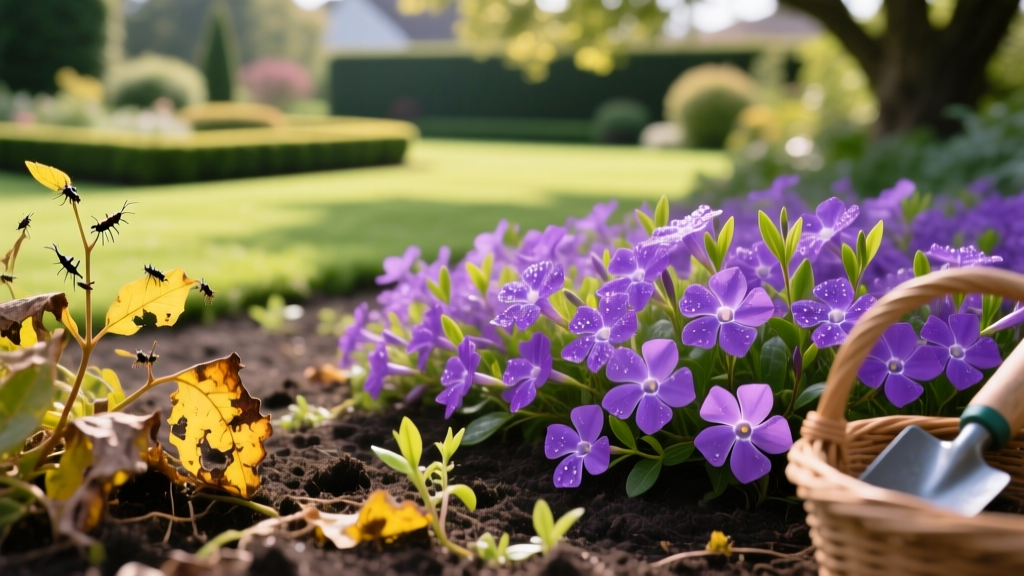
Why Your Purple Flower Ground Cover is Dying (And How to Fix It)
The Reality of Purple Ground Cover Failures
Purple flower ground covers—such as creeping phlox (Phlox subulata), bugleweed (Ajuga reptans), and purple creeping thyme (Thymus serpyllum)—are heavily relied upon for erosion control, weed suppression, and vibrant spring color. However, when these mats begin to thin, turn brown in the center, or fail to produce blooms, homeowners often default to overwatering or applying generic fertilizers. This usually accelerates the decline.
Ground cover failure is rarely random. It is almost always a diagnosable site mismatch, a specific pathogen, or a soil chemistry issue. Below is a comprehensive diagnostic framework to identify the exact cause of your failing purple ground cover and the precise, actionable steps to revive it.
Diagnostic Matrix: Symptom to Solution
Use this quick-reference table to match your plant's visual symptoms to the underlying physiological or environmental cause.
| Visual Symptom | Probable Cause | Immediate Action Required |
|---|---|---|
| Center of patch turning brown/dying while edges remain green | Crown Rot / Fungal Pathogen (e.g., Sclerotium rolfsii) | Excise dead center, apply biofungicide, improve airflow. |
| White powdery residue on leaves, premature leaf drop | Powdery Mildew (Erysiphe cichoracearum) | Apply potassium bicarbonate spray; prune for airflow. |
| Foliage fading from deep purple to pale green | Alkaline Soil / Iron Chlorosis (pH > 7.0) | Apply chelated iron; lower soil pH with elemental sulfur. |
| Stunted growth, yellowing, foul odor from soil | Root Asphyxiation (Heavy Clay / Poor Drainage) | Top-dress with expanded shale; cease overhead watering. |
| Chewed foliage edges, visible slime trails | Slugs and Snails | Apply iron phosphate bait (e.g., Sluggo) at dusk. |
Fungal Pathogens: Crown Rot and Powdery Mildew
Fungal diseases are the number one killer of dense ground covers. Because these plants form thick mats, humidity gets trapped at the soil line, creating an ideal incubator for spores.
Southern Blight and Crown Rot in Ajuga
Bugleweed (Ajuga reptans) is highly susceptible to Southern Blight, caused by the soil-borne fungus Sclerotium rolfsii. You will notice sudden wilting of individual rosettes, followed by a white, fan-like mycelial growth at the base of the stem, and eventually small, mustard-seed-like structures (sclerotia).
Warning: Do not attempt to save heavily infected Ajuga crowns. The sclerotia can survive in the soil for years. Remove the infected plant and 6 inches of surrounding soil immediately.
The Fix: Treat the remaining perimeter with a preventative biofungicide containing Bacillus amyloliquefaciens (such as Cease Biological Fungicide, typically $45-$55 per gallon). Apply as a soil drench at a rate of 2 tablespoons per gallon of water every 14 days during humid summer months.
Powdery Mildew in Creeping Phlox
Creeping phlox is a sun-lover, but when planted in areas with afternoon shade or poor air circulation, it develops powdery mildew. According to the University of Minnesota Extension, this fungus thrives in high humidity but dry foliage conditions.
The Fix: Avoid sulfur-based fungicides if temperatures exceed 85°F, as they will burn phlox foliage. Instead, use a Potassium Bicarbonate spray (like GreenCure, ~$25 for 1.5 lbs). Mix 1 tablespoon per gallon of water and apply to the top and bottom of the leaves every 10 to 14 days until the humidity drops.
Soil Asphyxiation and the Clay Trap
Purple creeping thyme (Thymus serpyllum) and creeping phlox require sharp drainage. If your soil is heavy clay (a percolation rate of less than 1 inch per hour), the roots will literally suffocate. The plant will exhibit drought-like symptoms (browning, crisping) even when the soil is wet, because the rotting roots cannot uptake water.
The Sand Myth
A common, disastrous mistake is adding sand to clay soil to improve drainage. The fine clay particles fill the voids between the large sand grains, creating a concrete-like substance that makes drainage exponentially worse.
The Fix: Top-dress the failing ground cover with 1.5 inches of expanded shale or calcined clay (such as Turface MVP, approximately $30 per 50lb bag). These porous aggregates permanently break up clay compaction without altering the soil pH. Use a garden fork to gently pierce the soil around the edges of the ground cover mat to allow the aggregate to work downward.
Nutrient Lockout: Why Your Purple Foliage is Turning Green
If you are growing purple-foliaged varieties like Ajuga 'Burgundy Glow' or purple-leafed Heuchera as ground cover, you may notice the vibrant burgundy and purple hues fading to a dull, muddy green. This is rarely a lack of sunlight; it is almost always a pH-induced nutrient lockout.
Anthocyanin production (the pigment responsible for purple/red colors) requires adequate phosphorus and iron. In alkaline soils (pH above 7.0), iron becomes chemically bound and unavailable to the plant roots.
The Fix:
- Immediate Color Boost: Apply a liquid chelated iron spray (e.g., Ironite or Bonide Liquid Iron) directly to the foliage. This bypasses the soil and will restore purple pigmentation within 7 to 10 days.
- Long-Term pH Correction: Test your soil pH. To lower the pH from 7.5 to 6.5 in a loam soil, apply 90% elemental sulfur at a rate of 1.5 lbs per 100 square feet. Incorporate it lightly into the top inch of soil around the plant margins. Note that sulfur takes 3 to 6 months to fully react, so apply it in early fall for spring results.
Pest Pressure: Spider Mites and Slugs
Ground covers provide a dense canopy that shelters specific pests. Identifying the exact pest is critical, as broad-spectrum insecticides will kill the beneficial predatory mites that naturally keep pest populations in check.
Spider Mites on Phlox
During hot, dry spells (consistently above 85°F), spider mites (Tetranychus urticae) will infest creeping phlox. Look for fine, silky webbing at the base of the stems and a stippled, bronzed appearance on the leaves. The University of Minnesota Extension notes that mites reproduce rapidly in dusty, dry conditions.
The Fix: Do not use neem oil when temperatures are above 85°F. Instead, use a horticultural oil (like Bonide All Seasons, ~$15/qt) applied at a 2% concentration (5 tbsp per gallon of water) during the cooler evening hours. Alternatively, introduce predatory mites (Phytoseiulus persimilis) for a purely biological control.
Slugs on Shade-Loving Ajuga
Bugleweed thrives in the damp shade, which is also the exact environment slugs prefer. Slugs will chew irregular holes in the broad leaves of Ajuga, leaving silvery slime trails.
The Fix: Avoid traditional metaldehyde baits, which are highly toxic to pets and local wildlife. Use an iron phosphate-based bait (such as Sluggo, ~$20 for 2.5 lbs). Apply the pellets in the evening, after watering, at a rate of 1 teaspoon per square yard. Iron phosphate is safe for pets and breaks down into a natural soil fertilizer.
The 4-Step Patch Revival Protocol
If your ground cover has large, dead voids, simply treating the edges will not close the gap fast enough to prevent weeds from taking over. Follow this protocol to rebuild the mat.
- Surgical Excision: Using a sterilized hori-hori knife, cut out all dead and diseased plant material. Cut at least 2 inches into the healthy green margin to ensure you have removed the advancing fungal edge.
- Soil Decompaction: Use a hand cultivator to break up the top 3 inches of soil in the void. Mix in 20% compost and 20% expanded shale by volume to ensure the new plugs do not succumb to the same drainage issues.
- Targeted Inoculation: Water the exposed soil with a mycorrhizal root dip (such as MycoGrow, ~$25 for 1 lb). This establishes a symbiotic fungal network that will help the new plugs uptake water and nutrients immediately.
- Replugging: Do not buy expensive 1-gallon pots. Purchase 72-count plug trays of your specific ground cover variety (typically $80-$120 per tray from commercial nurseries). Plant the 2-inch plugs on 6-inch centers in a staggered diamond pattern. This specific spacing allows the mat to knit together completely within one full growing season while maximizing airflow to prevent future fungal outbreaks.
Final Maintenance Directives
Once your purple flower ground cover is revived, shift your maintenance from reactive to proactive. Shear creeping phlox back by 30% immediately after spring blooming to prevent the center from becoming woody and susceptible to rot. For Ajuga, thin out the densest patches every three years in early spring by pulling up handfuls of the oldest rosettes, ensuring light and air can reach the soil line. By managing the microclimate at the soil surface, you eliminate the primary catalysts for ground cover failure.

