
Gardening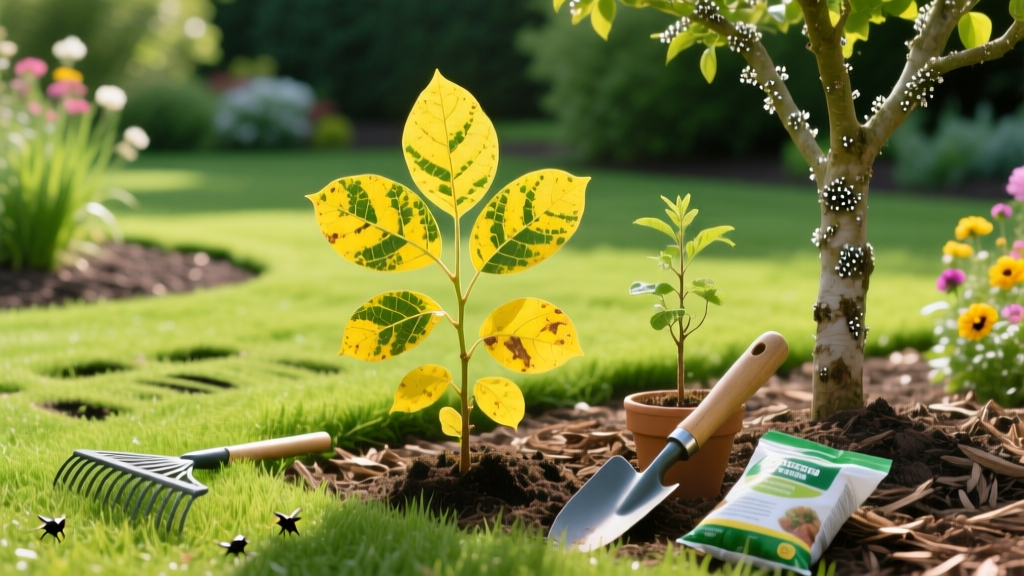
Flower Yellow Leaves: Symptom Diagnosis and Rescue Fixes
The Diagnostic Decision Tree: Pinpointing the Trigger
When flower yellow leaves appear, gardeners often panic and immediately apply a generic 10-10-10 fertilizer. This is a critical mistake. Chlorosis (the loss of chlorophyll causing yellowing) is a symptom of physiological distress, not a disease itself. Applying the wrong compound can lock out remaining nutrients or burn compromised root systems. To rescue your ornamentals, you must first map the yellowing pattern to its specific physiological failure point.
Quick Diagnostic Framework:
- New growth is yellow, veins remain green: Iron deficiency (often pH-induced lockout).
- Older, lower leaves yellow first, veins green: Magnesium deficiency or natural senescence.
- Uniform pale yellow across the entire plant: Nitrogen deficiency, severe overwatering, or root asphyxiation.
- Yellowing with brown, crispy margins: Potassium deficiency, salt accumulation, or fertilizer burn.
- Pinpoint yellow stippling (speckling): Spider mite or thrip feeding damage.
Moisture Asphyxiation: The 80% Culprit
According to horticultural extension data, improper watering accounts for roughly 80% of all houseplant and container flower yellowing. When soil remains saturated above 80% field capacity for more than 48 hours, oxygen is displaced from the soil pore spaces. The roots undergo hypoxia, effectively suffocating. A suffocating root cannot perform the active transport required to pull up iron, magnesium, or nitrogen, resulting in secondary nutrient deficiencies even if the soil is rich in fertilizers.
Rescue Fix for Waterlogged Roots
Do not simply "water less." You must physically alter the soil structure and monitoring routine.
- Aerate Immediately: Insert a wooden dowel or chopstick deep into the potting mix at 45-degree angles to create macro-pores, allowing trapped anaerobic gases to escape.
- Deploy Tensiometers: Stop guessing. Use a Blumat Tropical Soil Moisture Sensor (approx. $22) which measures actual soil tension (moisture availability to roots) rather than just surface electrical conductivity.
- Wick Excess Water: For severely saturated pots, unpot the plant and wrap the root ball in dry, unbleached paper towels or newspaper for 2 hours to rapidly draw out capillary water before repotting in a mix amended with 30% coarse horticultural pumice.
Nutrient Lockout: Iron vs. Magnesium vs. Nitrogen
If your watering is dialed in, the flower yellow leaves are likely a result of nutrient lockout. The most common manifestation is iron chlorosis, particularly in acid-loving flowering shrubs like azaleas, hydrangeas, and gardenias. However, the type of iron supplement you choose dictates your success.
| Deficiency | Symptom Location | Vein Color | Primary Trigger | Targeted Rescue Product |
|---|---|---|---|---|
| Iron (Fe) | Newest leaves / growing tips | Green (Interveinal) | Soil pH > 6.5 | EDDHA Chelated Iron (6%) |
| Magnesium (Mg) | Older, lower canopy leaves | Green (Interveinal) | High potassium competition | Epsom Salt (Magnesium Sulfate) foliar spray |
| Nitrogen (N) | Entire plant, starting lower | Yellow (Uniform) | Leaching, poor soil organic matter | Liquid Kelp + Fish Emulsion (2-4-0) |
The Chelate Trap: Why EDTA Fails in Alkaline Soils
Most commercial iron supplements on garden center shelves use EDTA (ethylenediaminetetraacetic acid) as a chelating agent. EDTA is cheap to manufacture, but it has a fatal flaw: its molecular bond with iron breaks down at a soil pH above 6.5. Once the bond breaks, the iron precipitates into iron hydroxide, a solid compound the plant cannot absorb. You are essentially watering expensive rust into the soil.
The Expert Fix: For soils with a pH between 7.0 and 9.0, you must purchase EDDHA chelated iron (ortho-ortho isomer). EDDHA remains stable and bioavailable in highly alkaline conditions. Products like Southern Ag Chelated Iron or pure EDDHA powder (approx. $35-$45 per pound) will reverse iron chlorosis in 7 to 10 days when applied as a soil drench at a rate of 1/2 teaspoon per gallon of water. The University of Minnesota Extension specifically recommends EDDHA for high-pH landscape corrections.
Pest Vectors: The White Paper Test
Before altering your soil chemistry, rule out sap-sucking insects. Spider mites and thrips destroy chloroplasts as they feed, creating a yellow stippling effect that mimics nutrient deficiency from a distance.
Execute the White Paper Test:
Hold a crisp white piece of printer paper beneath the yellowing flower foliage. Tap the leaves sharply three times. If you see tiny, slow-moving black or red specks (the size of a grain of pepper) crawling across the paper, you have a spider mite infestation. If the specks are elongated and jump or fly, you are dealing with thrips.
Rescue Fix: For mites, avoid broad-spectrum insecticides like carbaryl, which kill beneficial predatory mites and trigger mite population explosions. Instead, use a 70% clarified hydrophobic extract of neem oil (e.g., Bonide Captain Jack's Neem Oil) applied at dusk to prevent leaf burn. For severe thrip damage, spinosad-based sprays (e.g., Monterey Garden Insect Spray) are highly effective. The UC Statewide IPM Program notes that rotating spinosad with insecticidal soap prevents rapid pest resistance.
5-Step Triage Protocol for Yellowing Flowers
When confronted with an unknown yellowing event, follow this sequential triage protocol to avoid compounding stress on the plant.
- Check the Vitals (Day 1): Perform the white paper test for pests and insert a moisture probe to check for root asphyxiation. Treat pests immediately; hold off on fertilizer if soil is waterlogged.
- Measure the Matrix (Day 2): Test the soil pH and runoff EC (Electrical Conductivity). Use a reliable meter like the Milwaukee MW102 ($120) for accurate pH readings. If pH is above 7.0, prepare an EDDHA iron drench. If runoff EC is above 2.5 mS/cm, flush the pot with 3x its volume in distilled water to remove salt buildup.
- Apply Targeted Nutrition (Day 3): Based on the diagnostic tree, apply the correct chelate or foliar spray. Never mix liquid iron with liquid calcium or phosphorus fertilizers in the same tank; they will bind together and precipitate out of the solution.
- Optimize the Environment (Days 4-7): Move container plants to dappled shade. A plant with compromised chlorophyll cannot handle full, direct midday UV radiation without suffering photo-bleaching and cellular scorching.
- Prune and Monitor (Day 10): Once new growth emerges green, prune the severely yellowed lower leaves. The plant will not invest energy into repairing fully necrotic or severely chlorotic tissue; it will abandon those leaves to fuel new shoots.
By isolating the exact physiological bottleneck—whether it is oxygen deprivation, pH-induced lockout, or microscopic pest feeding—you transition from guessing to executing a precise botanical rescue. Keep your EDDHA chelates stocked, your moisture sensors calibrated, and your diagnostic framework sharp.

