
Gardening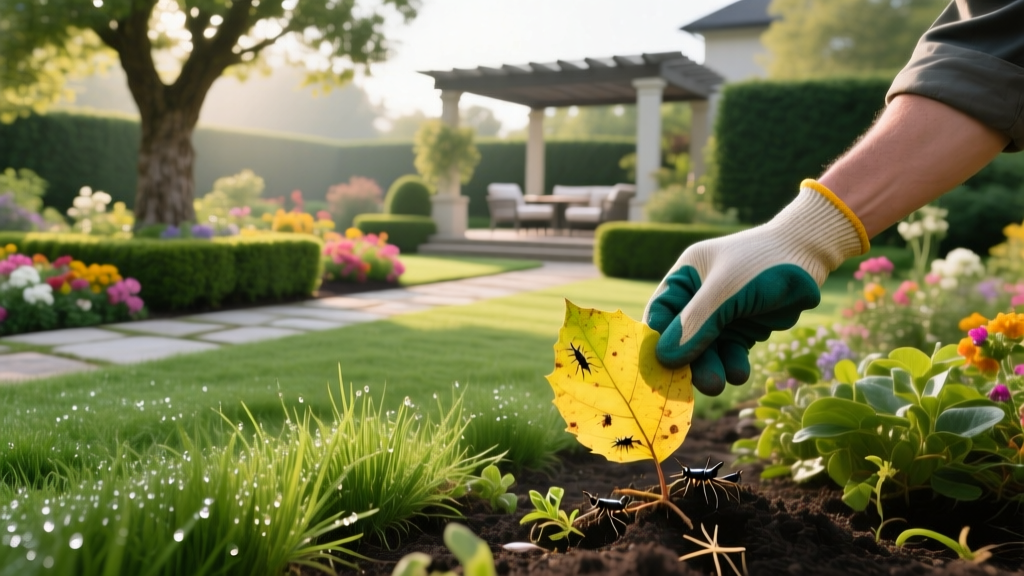
Is Your Garden Dying? Identification and Recovery Explainer
When homeowners notice declining plant health, the immediate question is often: is my garden dying? Plants rarely perish overnight. Instead, they display specific physiological stress markers long before total systemic failure occurs. Diagnosing a failing garden requires moving beyond surface-level observations and understanding the underlying abiotic (environmental) and biotic (living) stressors disrupting cellular function.
This identification and explainer guide breaks down the exact warning signs of garden decline, the physiological mechanisms behind them, and the actionable recovery protocols required to save your plants.
The 3-Step Diagnostic Triage Method:
1. Check Deep Moisture: Insert a soil probe or trowel 6 inches deep. Surface moisture is irrelevant to deep-rooted vegetables and perennials.
2. Inspect the Undersides: 80% of early pest vectors and fungal spores colonize the abaxial (lower) leaf surface.
3. Map the Damage Pattern: Uniform damage across the entire plant indicates abiotic stress (water, nutrients, chemicals). Random, localized damage indicates biotic stress (insects, pathogens).
1. Check Deep Moisture: Insert a soil probe or trowel 6 inches deep. Surface moisture is irrelevant to deep-rooted vegetables and perennials.
2. Inspect the Undersides: 80% of early pest vectors and fungal spores colonize the abaxial (lower) leaf surface.
3. Map the Damage Pattern: Uniform damage across the entire plant indicates abiotic stress (water, nutrients, chemicals). Random, localized damage indicates biotic stress (insects, pathogens).
The Diagnostic Framework: Abiotic vs. Biotic Stressors
According to plant pathology research from the University of Minnesota Extension, misdiagnosing the root cause of plant decline leads to ineffective treatments and wasted resources. Abiotic stressors are non-living environmental factors such as soil compaction, pH lockout, or herbicide drift. Biotic stressors involve living organisms like nematodes, fungi, or sucking insects. Identifying which category your garden falls into dictates your entire recovery strategy.
5 Critical Warning Signs Your Garden is Dying
1. Interveinal Chlorosis (Yellowing Between Veins)
When leaf tissue turns yellow but the veins remain green, the plant is suffering from interveinal chlorosis. This is rarely a simple lack of nutrients in the soil; it is almost always a pH-induced nutrient lockout. In soils with a pH above 7.0, iron and manganese become chemically insoluble and unavailable to plant roots. Applying standard iron sulfate will not fix this, as it will immediately bind to the alkaline soil.
- The Fix: Apply chelated iron, specifically Fe-EDDHA (such as Sequestar 6%), which remains stable in high-pH soils up to 9.0. Expect to pay around $25 to $35 per pound. Apply as a soil drench at a rate of 1 ounce per 10 gallons of water.
2. Wilting Despite Moist Soil
If your plants are wilting but the soil at the 6-inch depth is damp, you are likely dealing with root rot caused by Pythium or Phytophthora water molds, or a vascular wilt disease like Fusarium. These pathogens destroy the xylem tissue or rot the root hairs, making it physically impossible for the plant to draw water, regardless of soil moisture.
- The Fix: Halt all irrigation immediately. Improve drainage by aerating the soil crust. For active Phytophthora infections, apply a phosphorous acid-based systemic fungicide (e.g., Monterey Garden Phos Systemic Fungicide, approx. $18/pint) as a foliar spray or soil drench to halt pathogen reproduction.
3. Marginal Leaf Scorch and Cupping
Browning and crispy edges on leaves, often accompanied by upward or downward cupping, indicate either potassium deficiency or salt toxicity. In container gardens, this is frequently caused by the buildup of synthetic fertilizer salts. In in-ground gardens, it can result from excessive sodium from winter road runoff or improper manure application.
4. Stunted Growth and Mosaic Patterns
If new growth is severely stunted, twisted, and displays a mottled green-and-yellow mosaic pattern, your garden is likely infected with a viral pathogen such as Tomato Spotted Wilt Virus (TSWV) or Cucumber Mosaic Virus (CMV). These are vectored by thrips and aphids. There is no chemical cure for plant viruses.
- The Fix: Rogue (remove and destroy) infected plants immediately to prevent vector transmission. Do not compost viral-infected tissue. Control thrips using spinosad-based sprays or blue sticky traps.
5. Premature Leaf and Fruit Drop
When plants abort their leaves or unripe fruit, they are producing excess ethylene gas in response to severe stress. This is an evolutionary survival mechanism to reduce metabolic load. Common triggers include extreme temperature fluctuations (nighttime temps dropping below 55°F or exceeding 85°F during pollination) or severe drought stress that triggers the formation of an abscission layer at the petiole base.
Soil and Environmental Stressors Matrix
Understanding your soil's physical and chemical properties is the foundation of garden recovery. The Soil Health Foundation emphasizes that biological activity in the rhizosphere is the primary driver of nutrient cycling.
| Stressor | Primary Symptoms | Diagnostic Test | Corrective Action |
|---|---|---|---|
| Soil Compaction | Shallow roots, water pooling, stunted top growth | Penetrometer reading > 300 psi | Broadfork aeration; apply liquid humic acid |
| pH Lockout | Interveinal chlorosis, purple undersides | Digital pH meter or lab slurry test | Elemental sulfur (to lower) or dolomitic lime (to raise) |
| Anaerobic Soil | Sour odor, gray/blue soil mottling, root death | Visual inspection of soil gleying | Install French drains; incorporate pumice or perlite |
| Herbicide Drift | Epinasty (twisting), strap-like leaves | Bioassay using sensitive indicator plants (e.g., peas) | Apply activated charcoal to soil; heavy leaching |
Actionable Recovery Protocols
If your garden is exhibiting multiple warning signs, follow this sequential recovery protocol to stabilize the environment before attempting aggressive fertilization.
- Commission a Professional Soil Test ($20-$35): Do not rely on cheap, color-changing liquid home test kits, which are notoriously inaccurate for micronutrients. Send a composite soil sample to your local university cooperative extension lab. This will provide exact base saturation percentages for calcium, magnesium, and potassium.
- Flush Container Gardens: If plants in pots show marginal scorch, run distilled water through the containers until 20% of the total soil volume has drained out the bottom. This leaches accumulated synthetic fertilizer salts that burn root hairs.
- Prune Necrotic Tissue: Using bypass pruners sterilized with 70% isopropyl alcohol, remove all dead, brown, or heavily diseased foliage. This reduces the plant's transpiration load and removes inoculum sources for fungal pathogens.
- Apply a Mycorrhizal Inoculant: When replanting or side-dressing, use a granular mycorrhizal fungi product (such as MycoMinerals or similar strains of Glomus intraradices). These symbiotic fungi extend the root system's absorption capacity by up to 100x, crucial for plants recovering from root rot or drought stress. Expect to pay $15 to $25 for a 1 lb bag.
- Mulch for Temperature Buffering: Apply a 2-inch layer of arborist wood chips or straw around the base of the plants. According to the Missouri Botanical Garden, organic mulch reduces soil temperature fluctuations by up to 10°F and retains critical moisture during recovery phases.
Frequently Asked Questions
Can a completely brown and crispy plant be revived?
Perform the 'scratch test'. Use your fingernail to gently scrape the bark on the main stem. If the tissue underneath is green and firm, the plant is still alive and can be pruned back to living wood and watered deeply. If the tissue is brown and brittle all the way to the soil line, the vascular cambium is dead, and the plant cannot be saved.
Why is my garden dying even though I water it every day?
Daily, shallow watering encourages roots to remain in the top 1-2 inches of soil, where they are highly susceptible to rapid drying and heat stress. Furthermore, constant saturation deprives roots of oxygen, leading to anaerobic conditions and root rot. Transition to deep, infrequent watering (e.g., 1 inch of water applied twice a week) to force roots to grow downward.
Is Epsom salt a good cure for a dying garden?
Epsom salt (magnesium sulfate) is only effective if your soil test confirms a specific magnesium deficiency. In many soils, magnesium is already abundant. Adding Epsom salt to soils with high magnesium can cause a competitive lockout of calcium, leading to blossom end rot in tomatoes and peppers. Always test before amending.

