
Gardening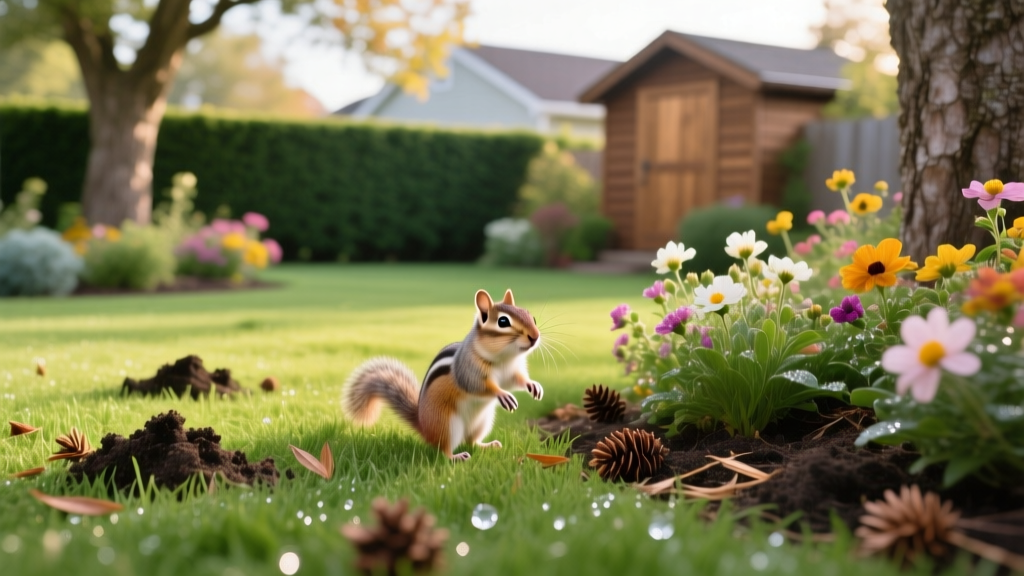
How to Get Rid of Chipmunks in Garden: A Natural Playbook
Understanding the Eastern Chipmunk Threat
The eastern chipmunk (Tamias striatus) is a highly adaptable, burrowing rodent that poses a unique threat to cultivated garden spaces. Unlike moles or voles that primarily target root systems or soil-dwelling insects, chipmunks are opportunistic omnivores. They harvest seeds, uproot newly germinated seedlings, and hollow out shallow burrows that undermine patio stones and raised bed foundations. A single adult chipmunk can consume up to 2 ounces of food per day, but their true damage comes from their caching behavior and the structural instability caused by their extensive tunnel networks.
⚠️ Critical Distinction: Do not confuse chipmunk holes with vole runs. Chipmunk burrow entrances are typically 2 to 3 inches in diameter, perfectly round, and lack the surface runways (grooved paths in the grass) that voles create. Identifying the correct pest is mandatory before deploying exclusion hardware.
Damage Profile: What Chipmunks Target vs. Ignore
Strategic planting is your first line of defense. Chipmunks have distinct foraging preferences. By replacing highly targeted plants with resistant alternatives, you can naturally reduce the caloric draw of your garden.
| High-Target Plants (Avoid or Protect) | Resistant Alternatives (Safe to Plant) |
|---|---|
| Tulip and Crocus bulbs | Daffodils, Alliums, Fritillaria |
| Strawberries and Sweet Corn | Peppers, Tomatoes, Eggplant |
| Sunflowers and Zinnias (seeds) | Marigolds, Lavender, Mint |
| Newly sown grass seed | Established sod or micro-clover |
Phase 1: Physical Exclusion and Hardware Cloth
When learning how to get rid of chipmunks in garden spaces permanently, physical exclusion yields the highest long-term return on investment. Chicken wire is entirely ineffective; chipmunks can easily compress their skulls and squeeze through 1/2-inch gaps. You must use 19-gauge, 1/4-inch galvanized steel hardware cloth.
Constructing an L-Footer for Raised Beds
Chipmunks are prolific diggers and will simply tunnel under a vertical barrier. To prevent this, install an L-footer trench around your garden perimeter or raised beds.
- Dig a trench: Excavate a 6-inch deep, 6-inch wide trench around the perimeter of the target area.
- Attach the mesh: Secure the 1/4-inch hardware cloth to the exterior of your raised bed or fence, extending it down into the trench.
- Create the L-bend: Bend the bottom 6 inches of the wire outward (away from the garden) at a 90-degree angle at the base of the trench.
- Backfill: Cover the horizontal wire extension with soil and tamp it down. When a chipmunk digs down, it hits the horizontal wire and cannot figure out to back up and dig further out.
Underground Bulb Cages
For in-ground bulb plantings, construct custom cages using the same 1/4-inch hardware cloth. Line the planting hole, place the bulbs, and cap the top with a wire lid secured with landscape staples. This allows stems to grow through the 1/4-inch gaps while completely protecting the subterranean bulb from foraging.
Phase 2: Humane Trapping and Relocation Protocols
If exclusion is not immediately viable, live trapping is the most effective population reduction method. According to the Penn State Extension, the standard for small rodent capture is a single-door or double-door gravity trap.
Recommended Equipment and Baiting Strategy
- Trap Model: Havahart 1020 (10 x 4 x 4 inches) or Captive Heart Small Animal Trap. Expect to pay between $22 and $28 per unit in 2026.
- Bait Formulation: Do not use plain seeds. Chipmunks will steal seeds without triggering the plate. Mix 1 part creamy peanut butter with 1 part rolled oats and press it firmly behind the trigger pan. The rodent must step fully onto the pan and use both paws to extract the sticky mixture, guaranteeing a trigger event.
- Placement: Set traps directly over active burrow entrances or along known runways, ideally within 3 feet of the hole.
Relocation Law Warning: Before relocating trapped chipmunks, verify your state's wildlife regulations. Many jurisdictions, including New York and Massachusetts, prohibit the relocation of rabies-vector species or require release within a specific radius (often 100 yards) to prevent the spread of disease and ecological disruption. If relocation is illegal in your area, humane euthanasia or release back onto the exact capture site (combined with immediate exclusion) is required.
Phase 3: Repellents and Sensory Deterrents
Repellents are a supplementary tactic, not a standalone cure. They must be reapplied frequently and rotated to prevent habituation.
Capsaicin and Thiram Treatments
For foliar protection, use a capsaicin-based spray like Bonide Repels-All or Miller Hot Pepper Wax. These create an intense oral burning sensation. Apply in the evening to avoid leaf burn from direct sunlight, and reapply immediately after 0.5 inches of rainfall. For dormant bulbs, soak them in a Thiram-based fungicide/repellent prior to planting. This chemical barrier deters digging and prevents fungal rot simultaneously.
Predator Urine and Granular Barriers
Products containing fox or coyote urine (e.g., Shake-Away) trigger a primal flight response. Apply granular versions around the perimeter of the garden. However, research from the Cornell NYS IPM program indicates that predator urine loses efficacy rapidly in high-moisture environments and requires bi-weekly reapplication.
The Truth About Ultrasonic Deterrents
Do not waste capital on solar-powered ultrasonic spike deterrents. Peer-reviewed studies by the University of Maryland Extension and other agricultural bodies consistently show that subterranean rodents quickly habituate to high-frequency sound waves, and soil density severely limits the acoustic range of these devices.
Phase 4: Habitat Modification
Chipmunks require complex cover to feel secure from aerial predators like hawks. Modifying the micro-habitat makes your garden inhospitable.
- Eliminate Ground Cover: Replace thick layers of shredded hardwood mulch with 2 inches of crushed gravel or river rock. Chipmunks cannot easily tunnel through sharp, heavy aggregate.
- Clear Debris Zones: Remove woodpiles, brush piles, and abandoned lumber within 30 feet of your garden beds.
- Trim Foundation Plantings: Prune shrubs so the bottom 12 inches are bare, exposing any ground-level burrow entrances to natural predators.
- Manage Bird Feeders: Chipmunks are drawn to spilled sunflower seeds. Install seed-catching trays beneath feeders or switch to safflower seed, which is less palatable to rodents.
Strategy Comparison Matrix
Select your primary intervention based on your budget, timeline, and the severity of the infestation.
| Method | Upfront Cost | Labor Intensity | Long-Term Efficacy |
|---|---|---|---|
| 1/4" Hardware Cloth Exclusion | $40 - $120 | High (Trenching) | 95%+ (Permanent) |
| Live Trapping (Havahart) | $22 - $50 | Medium (Daily checks) | 60% (Transient) |
| Capsaicin Foliar Sprays | $15 - $25 | Low (Spraying) | 40% (Temporary) |
| Gravel Mulch Replacement | $100 - $300 | High (Material moving) | 85% (Long-term) |
Frequently Asked Questions
Will mothballs keep chipmunks out of my garden?
No. Mothballs (naphthalene or paradichlorobenzene) are highly toxic, illegal to use outdoors in most jurisdictions, and completely ineffective against burrowing rodents. The gas dissipates rapidly in open air and contaminates your soil, posing severe risks to pets, children, and local groundwater. Never use mothballs as a garden repellent.
How deep do chipmunks dig their burrows?
While the entrance is at the surface, eastern chipmunk burrow systems can extend 2 to 3 feet deep and span up to 30 feet in length. They create specialized chambers for nesting, food caching, and waste. This depth is why shallow 2-inch wire barriers fail; a minimum 6-inch burial depth with an outward L-footer is required for true exclusion.
Do chipmunks hibernate in the winter?
Chipmunks do not experience true, continuous hibernation. Instead, they enter a state of torpor, sleeping for weeks at a time in their deep burrows and waking periodically to consume their cached food reserves. This means they can emerge on warm, sunny winter days to forage, potentially causing unexpected damage to early-sprouting winter crops or exposed bulbs.

