
Gardening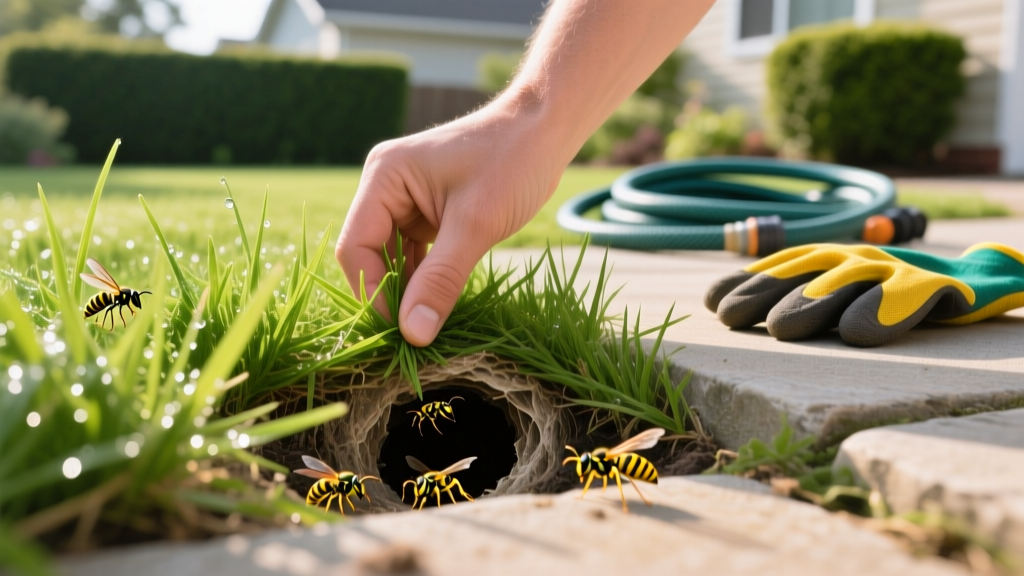
Diagnosing Ground Nests: Rescue Fixes for Killing Yellow Jackets
Symptom Diagnosis: Identifying the Yellow Jacket Threat
Yellow jackets (Vespula and Dolichovespula species) are aggressive, social wasps that peak in population and hostility during late summer and early fall. Unlike paper wasps, which build open-comb umbrella nests under eaves and rarely scavenge, yellow jackets are notorious for crashing outdoor gatherings, scavenging proteins and sugars, and defending their colonies with extreme prejudice. A mature subterranean yellow jacket colony can house up to 5,000 workers by September, making them a significant hazard in residential landscapes.
Before deploying rescue fixes, accurate symptom diagnosis is critical to ensure you are not inadvertently attacking beneficial insects or misidentifying the nest structure. According to the UC Statewide IPM Program, proper identification dictates the chemical and mechanical approach required for eradication.
Visual and Behavioral Diagnostics
- Physical Appearance: Bright yellow and black banding, lacking the fuzzy hair found on bees. They are roughly 0.5 inches long with a distinct, narrow 'pinched' waist.
- Foraging Behavior: Yellow jackets actively scavenge human food, pet food, and fallen fruit. Paper wasps primarily hunt live insects and do not hover around trash cans or picnic tables.
- Nest Architecture: Ground nests feature a 1-to-2-inch diameter entrance hole, often utilizing abandoned rodent burrows. Aerial nests are enclosed in a papery, grey or brown envelope, unlike the exposed honeycomb of paper wasps.
- Traffic Volume: A mature ground nest will exhibit high traffic, often with 1 to 3 insects entering or exiting per second during peak daytime hours.
CRITICAL WARNING: Never attempt to kill yellow jackets by pouring gasoline, diesel, or boiling water into a ground nest, and never set it on fire. These methods are highly dangerous, environmentally destructive, and frequently fail to reach the deep central comb, resulting in an enraged, displaced colony.
Triage and Rescue Fixes: Choosing the Right Active Ingredient
The most common failure mode in killing yellow jackets is using the wrong formulation for the nest type. Liquid aerosol sprays are highly effective for aerial nests but virtually useless for subterranean nests because the liquid absorbs into the soil before reaching the deep central comb. Conversely, dust formulations are lethal for ground nests but difficult to apply to hanging branches. Below is a triage matrix for selecting the correct active ingredient based on your specific symptom diagnosis.
| Active Ingredient | Product Example | Knockdown Time | Best Application | Approx. Cost |
|---|---|---|---|---|
| D-Phenothrin + Prallethrin | Spectracide Wasp & Hornet III | 1-2 seconds | Aerial / Hanging Nests | $6 (16 oz) |
| Deltamethrin (1%) | Tempo Dust 1% DP | 24-48 hours | Ground Nests / Wall Voids | $25 (1 lb) |
| Esfenvalerate + Prallethrin | Onslaught FastCap | 5-10 minutes | Large Structural Voids | $45 (16 oz) |
Rescue Fix 1: Aerial Nest Elimination (The 20-Foot Rule)
If your diagnosis confirms an aerial nest hanging from a tree branch, pergola, or roof eave, your primary objective is distance and immediate knockdown. Yellow jackets will aggressively swarm if their nest envelope is disturbed. You must use a jet-stream aerosol spray capable of reaching at least 20 feet.
Step-by-Step Aerial Eradication
- Timing: Wait until dusk or after dark. Foraging workers return to the nest at sunset, and cooler temperatures drastically reduce their flight speed and aggression.
- PPE Requirements: Wear thick, light-colored clothing, long sleeves, denim jeans, and a bee veil or head net. Avoid dark colors or floral patterns, which trigger defensive instincts.
- Application: Stand 15 to 20 feet away. Aim the jet stream directly at the nest entrance (usually located at the bottom of the envelope). Spray continuously for 10 to 15 seconds, completely saturating the opening and the lower half of the nest.
- Retreat: Immediately leave the area. Do not stand directly under the nest, as falling, dying wasps can still sting reflexively.
Rescue Fix 2: Ground Nest Eradication (The Dust Method)
Ground-dwelling yellow jackets present a unique challenge. The nest is often 12 to 36 inches below the soil surface, connected to the entrance via a long tunnel. Spraying liquid into the hole will only flood the tunnel, trapping the wasps inside and forcing them to chew a new exit hole closer to your lawn surface. The definitive rescue fix for subterranean nests is insecticidal dust.
Executing the Ground Dust Protocol
Products like Tempo Dust 1% DP (Deltamethrin) or Drione Dust (Silica gel + Pyrethrin) are ideal because they cling to the wasps' bodies. When foragers walk through the dusted tunnel, they carry the lethal powder deep into the nest, distributing it to the queen and larvae via trophallaxis (food sharing).
- Locate the Entrance: Identify the exact hole during the day, but do not approach it. Mark the location with a small rock or a stick placed a few feet away so you can find it in the dark.
- Prepare the Duster: Fill a red bulb hand duster (such as the JT Eaton 975) halfway with Tempo Dust. Do not overfill; the bulb needs air space to create a dust cloud rather than a solid clump.
- Nighttime Application: Approach the nest at night with a red-lens flashlight (yellow jackets cannot see red light well). Insert the duster tip near the entrance hole and puff 3 to 4 clouds of dust directly into the tunnel.
- Leave it Open: Do not plug the hole with dirt or rocks. The foragers must be able to enter and exit freely to track the dust down to the central comb.
Pro Tip: If the ground nest is located in a high-traffic play area, lightly cover the dusted entrance with a clear glass bowl or a heavy planter saucer immediately after application. This prevents children or pets from disturbing the dust while still allowing the wasps to crawl under the rim to enter the tunnel.
Timing and Environmental Variables for Maximum Efficacy
Environmental conditions heavily dictate the success rate of your rescue fix. According to Penn State Extension, yellow jacket colonies are highly sensitive to temperature fluctuations.
- Temperature Thresholds: Yellow jackets become noticeably sluggish when ambient temperatures drop below 50°F (10°C). If you are dealing with a severe infestation in late fall, wait for a cold snap to apply treatments, as the colony's defensive response will be severely blunted.
- Seasonal Aggression: Colonies are most aggressive in August and September when the queen stops laying eggs, and the workers shift their focus entirely to scavenging sugars. Exercise maximum caution during this window.
- Wind Conditions: Never apply dust or aerosol sprays in winds exceeding 5 mph. Wind drift can blow the insecticide back onto your skin or carry it away from the nest entrance.
Post-Treatment Protocol and Nest Removal
Patience is a mandatory component of the eradication process. After applying a dust treatment to a ground nest, you will likely still see activity for the first 24 hours. The transfer of the active ingredient throughout a 5,000-member colony takes time.
- Observation Period: Wait a full 72 hours before approaching the site. Monitor the entrance from a safe distance during peak daytime hours. If you see zero traffic for two consecutive days, the colony is neutralized.
- Aerial Nest Disposal: For hanging nests, knock the paper envelope down with a long pole, place it in a heavy-duty contractor trash bag, seal it tightly, and dispose of it in an outdoor bin. The residual insecticide on the comb will prevent any surviving larvae from maturing.
- Ground Nest Backfilling: Once a ground nest is confirmed dead, fill the entrance hole with topsoil and overseed the bare patch to prevent future rodents from claiming the existing burrow.
Frequently Asked Questions
Can I use a shop-vac to suck up yellow jackets?
While some pest control professionals use specialized vacuum setups, using a standard household shop-vac is highly dangerous. The exhaust port blows out pheromones that enrage the colony, and if the vacuum is not perfectly sealed, wasps can crawl back out of the hose. Stick to chemical dusts and aerosols for DIY rescue fixes.
Do yellow jacket traps actually kill the nest?
No. Commercial traps baited with heptyl butyrate or sugar water only catch individual foragers. While they can reduce nuisance activity around a patio, they will never kill the queen or reduce the overall population of a subterranean nest. Direct nest treatment is the only permanent solution.
What if the nest is inside my wall void?
If yellow jackets are entering through a crack in your siding or soffit, do not seal the hole. Sealing the entry point will trap thousands of wasps inside your wall, forcing them to chew through the drywall into your living space. Apply Tempo Dust directly into the crack using a hand duster, wait 48 hours for the colony to die, and then seal the structural gap with caulk or expanding foam.

