
Gardening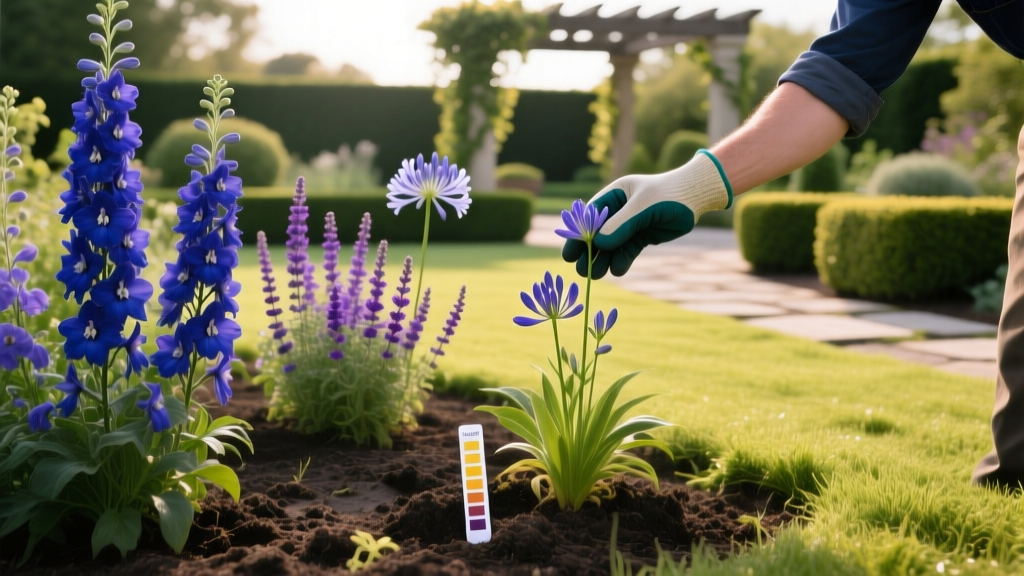
How to Grow Dark Blue Flowers: Cultivar Selection and Soil pH
True blue is the holy grail of horticulture. Less than 10% of the world’s flowering plants produce genuine blue pigments, and achieving a deep, dark blue hue in the home garden requires far more than simply planting a seed. The intensity of dark blue flowers is dictated by complex botanical chemistry, specifically the presence of delphinidin-based anthocyanins, soil alkalinity, and metal ion availability. Whether you are cultivating towering delphiniums, moody monkshoods, or pH-dependent hydrangeas, mastering the environmental variables is the only way to prevent your prized dark blue blooms from fading into muddy purples or pale pinks.
The Botanical Rarity of True Blue Pigments
To successfully grow dark blue flowers, you must first understand why they are so rare. Plants do not possess a true blue pigment. Instead, they create the illusion of blue through a combination of red-based anthocyanins (specifically delphinidin), vacuolar pH levels, and a process called copigmentation, where colorless flavonols stack with anthocyanins to reflect blue light wavelengths. According to research published by the Royal Horticultural Society, environmental stressors, soil alkalinity, and incorrect fertilization can instantly disrupt this fragile chemical stacking, causing the bloom to reflect red or purple wavelengths instead.
The Delphinidin Factor: If you want the darkest possible blue, you must select cultivars genetically predisposed to high delphinidin production and low pelargonidin (red pigment) production. Genetically purple or violet cultivars will never turn dark blue, regardless of your soil amendments.
Selecting the Right Cultivars: A Dark Blue Matrix
Not all "blue" flowers are created equal. Many marketed as blue are actually lavender or violet. Below is a curated matrix of genetically stable, dark blue cultivars that perform reliably in home landscapes when provided with the correct cultural conditions.
| Cultivar | Species | USDA Zones | Light Requirement | Blue Depth & Characteristics |
|---|---|---|---|---|
| 'Black Knight' | Delphinium elatum | 3-7 | Full Sun | Midnight blue with a dark black "bee" (center). Requires staking. |
| 'Spark's Variety' | Aconitum napellus | 3-8 | Part Shade | Deep navy/indigo hooded flowers. Highly toxic if ingested. |
| 'True Blue' | Gentiana acaulis | 3-7 | Full Sun | Intense cobalt blue trumpets. Requires sharply draining, acidic soil. |
| 'Caradonna' | Salvia nemorosa | 4-8 | Full Sun | Violet-blue blooms on stark, dark purple-black stems. |
| 'Nikko Blue' | Hydrangea macrophylla | 5-9 | Part Shade | Azure to deep navy. Strictly dependent on soil pH and aluminum. |
Step-by-Step Soil Acidification for Hydrangeas
While delphiniums and salvias will display their dark blue genetics in neutral to slightly alkaline soils (pH 6.5–7.0), Hydrangea macrophylla requires a highly specific soil environment to unlock its blue potential. The blue color in hydrangeas is actually a complex of delphinidin-3-glucoside and aluminum ions. If your soil pH is above 6.0, aluminum becomes chemically locked in the soil matrix and unavailable to the plant roots, resulting in pink blooms.
Step 1: Baseline Soil Testing
Do not guess your soil pH. Use a reliable testing kit (such as the Luster Leaf 1601 Rapitest or a lab test from your local university extension). According to University of Minnesota Extension, you need a target pH between 5.0 and 5.5 for the deepest blue hues. If your soil is naturally alkaline (pH 7.0+), growing blue hydrangeas in the ground will be an ongoing, labor-intensive battle; consider growing them in large containers where you can completely control the potting medium.
Step 2: Lowering pH Safely
To lower soil pH, apply elemental sulfur. Avoid aluminum sulfate as a primary acidifier; while it adds the necessary aluminum, repeated applications can lead to aluminum toxicity, which burns root tips and stunts growth.
- For Loam Soil: Apply 1/2 cup of elemental sulfur per 10 square feet to lower the pH by approximately 0.5 points.
- For Sandy Soil: Reduce the application to 1/4 cup per 10 square feet.
- For Heavy Clay: Increase to 3/4 cup per 10 square feet and incorporate deeply.
Step 3: The Phosphorus Trap
This is the most common failure point for home gardeners. Phosphorus binds tightly with aluminum in the soil, creating insoluble aluminum phosphate. If you use a "bloom booster" fertilizer high in phosphorus (e.g., 10-30-20) or add bone meal to your hydrangea beds, you are chemically locking the aluminum away from the roots. Switch to a low-phosphorus fertilizer, such as a 12-4-8 or an organic cottonseed meal, to keep aluminum bioavailable.
Troubleshooting Color Shift and Bloom Degradation
Even with the right genetics and soil prep, environmental factors can degrade dark blue pigments. Use this diagnostic table to correct issues mid-season.
| Symptom | Primary Cause | Actionable Fix |
|---|---|---|
| Dark blue fading to muddy purple | Soil pH creeping above 6.0 or phosphorus lockout. | Drench soil with liquid chelated aluminum. Switch to a zero-phosphorus liquid feed (e.g., 24-0-11). |
| Petal scorch or brown, crispy edges | UV degradation and afternoon sun exposure. | Relocate to dappled shade or install a 40% shade cloth during peak July/August afternoon hours. |
| Delphinium spikes snapping or bending | High nitrogen causing weak cellular walls; wind shear. | Stake using bamboo canes and twine when spikes are 12 inches tall. Switch to a balanced 10-10-10 feed. |
| Flowers opening pale green, refusing to blue | Immature blooms or extreme heat stress during bud set. | Maintain consistent soil moisture. Pigment will deepen as the flower matures and temperatures cool at night. |
Design Framework: Amplifying Dark Blue in the Landscape
Dark blue flowers have a unique optical property in the garden: they recede visually, creating an illusion of depth and distance. However, if planted against dark green foliage or in heavy shade, they become virtually invisible, reading as black shadows.
To maximize the visual impact of dark blue cultivars, apply the principle of high-value contrast. Pair your dark blue delphiniums and monkshoods with silver or glaucous foliage plants. The reflective quality of silver leaves bounces light back onto the dark blue petals, illuminating their complex tones. Excellent companion plants include Artemisia 'Powis Castle', Stachys byzantina (Lamb's Ear), and Senecio cineraria (Dusty Miller).
"To make a dark blue border truly sing, intersperse pale yellow or chartreuse blooms. The complementary color theory of soft yellow against deep navy creates a vibrating visual tension that draws the eye from across the landscape."
By combining genetically stable, delphinidin-rich cultivars with rigorous soil pH management and strategic companion planting, you can cultivate a moody, sophisticated dark blue palette that defies the typical pastel constraints of the summer garden.

